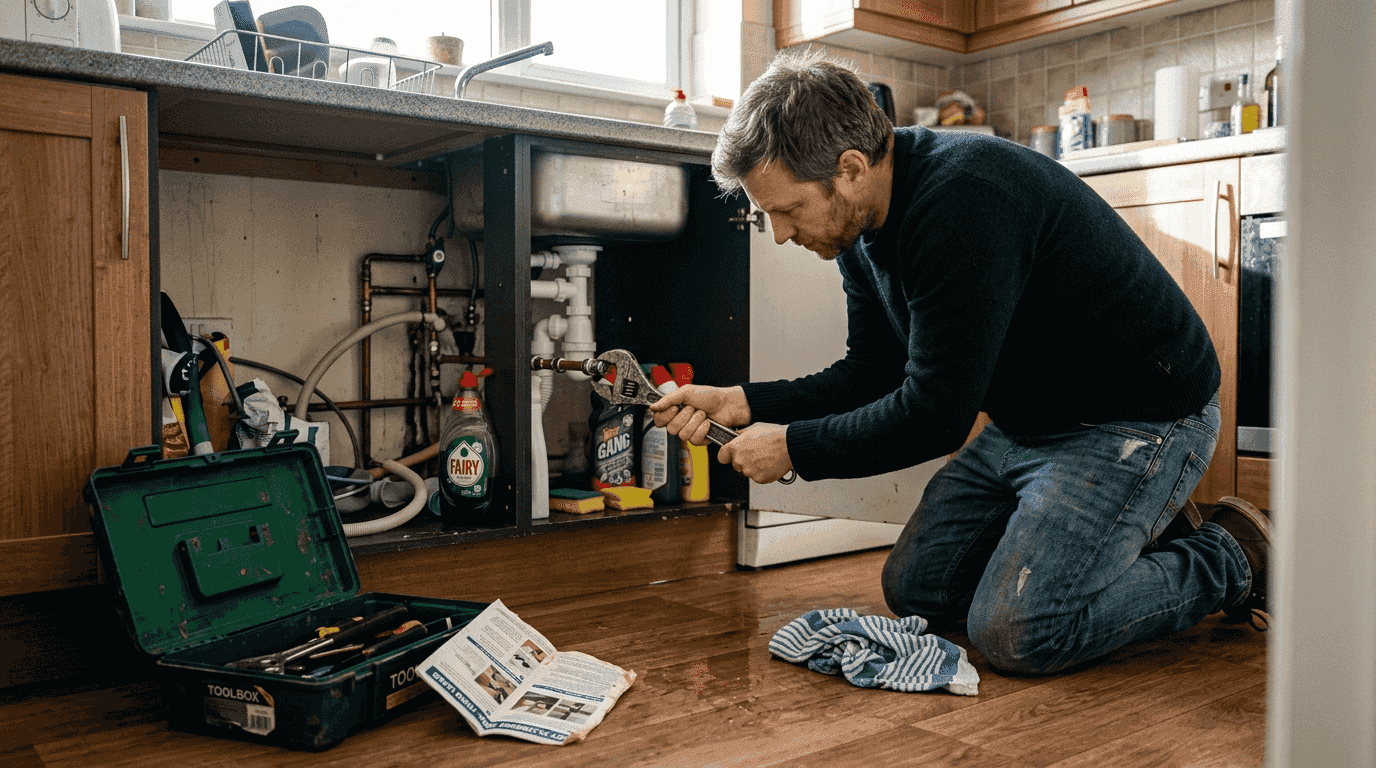
A burst pipe flooding your kitchen at 3am. A radiator leak spreading across your living room carpet. These scenarios strike fear into any homeowner's heart, yet most people lack the knowledge to respond effectively. When plumbing emergencies hit, every second counts. Water damage can escalate from minor inconvenience to major structural crisis within minutes. This guide arms you with essential preparation strategies, immediate action steps, and temporary repair techniques to minimise damage and protect your property until professional help arrives.
Table of Contents
- Understanding plumbing emergencies and preparation
- Immediate actions to take during a plumbing emergency
- Temporary repairs and common quick fixes
- Verifying the repair and when to call professionals
- Finding reliable emergency plumbing services in the UK
- Emergency plumbing repair guide frequently asked questions
Key takeaways
| Point | Details |
|---|---|
| Isolate water supply immediately | Turning off your main stopcock within seconds prevents thousands of pounds in water damage |
| Keep emergency tools ready | Pipe clamps and epoxy putty provide reliable temporary fixes until professional repairs |
| Know your stopcock location | Testing and locating your main water shut-off before emergencies saves critical response time |
| Schedule preventive inspections | Regular plumbing checks detect potential failures early, avoiding costly emergency callouts |
Understanding plumbing emergencies and preparation
Plumbing emergencies encompass any sudden failure that threatens property damage or safety. Burst pipes, pressurised leaks, and severe blockages causing overflow rank among the most common UK household crises. Water can escape at alarming rates, turning a small crack into a flooded room within minutes. The difference between minor inconvenience and catastrophic damage often hinges on your immediate response.
Your main stopcock controls water flow to your entire property. Homeowners should know the location of their main stopcock and how to operate it, yet surveys reveal most people cannot locate theirs under pressure. Test yours monthly by turning it clockwise until fully closed, then reopening it. Mark the location clearly and ensure every household member knows where it sits.
Pro Tip: Photograph your stopcock location and save the image to your phone. During an emergency, panic makes even familiar locations difficult to recall.
Preparing an emergency plumbing kit transforms chaos into manageable action. Essential items include:
- Emergency pipe clamps in various sizes
- Epoxy putty rated for wet surfaces
- Rubber patches and waterproof tape
- Adjustable wrench and pipe cutter
- Bucket, towels, and absorbent materials
- Torch with fresh batteries
Regular plumbing inspections catch vulnerabilities before they become emergencies. Professional plumbers spot corroded joints, weakened pipes, and failing seals that homeowners miss. Annual checks cost far less than emergency repairs. Areas like Lockleaze and Golden Hill benefit from preventive maintenance programmes that reduce emergency callouts significantly.
Immediate actions to take during a plumbing emergency
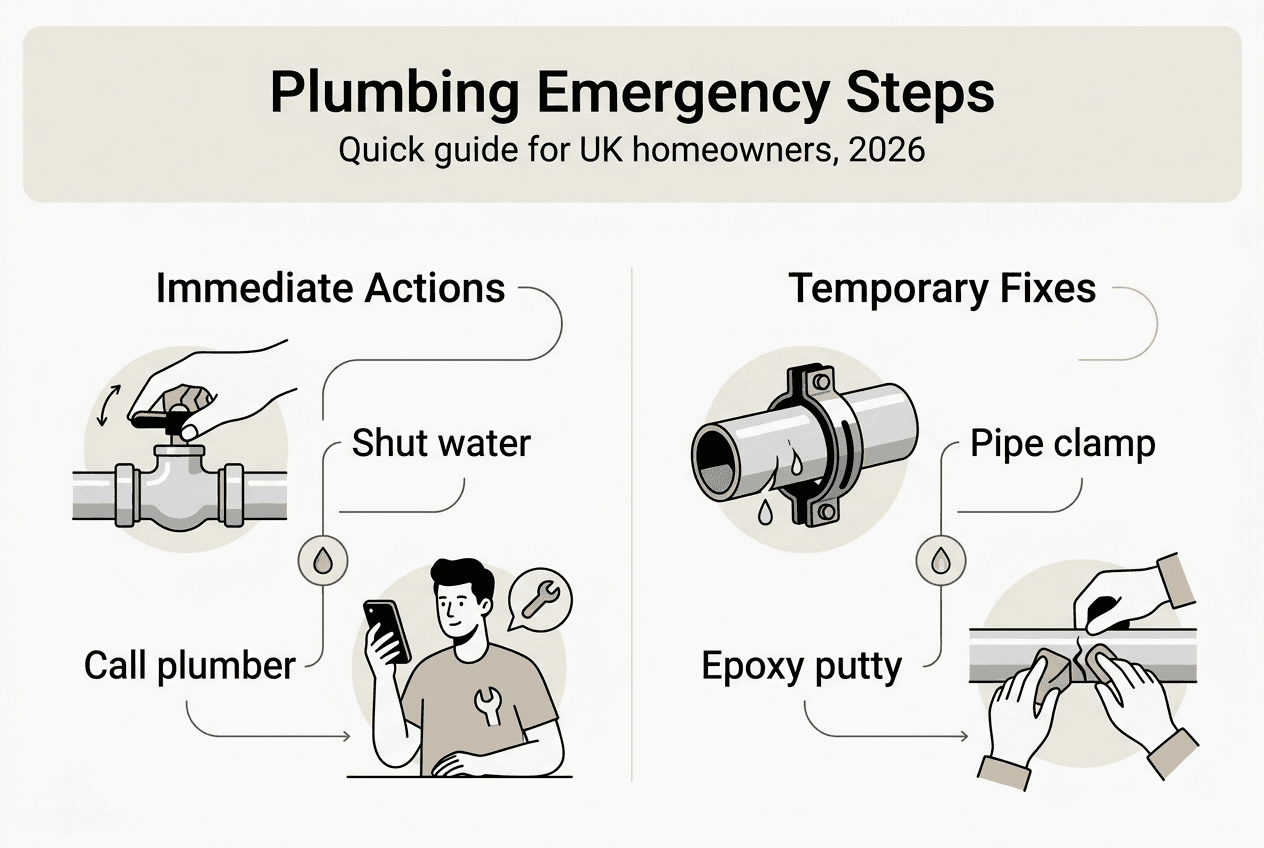
When water starts spraying or pooling unexpectedly, your first 60 seconds determine the extent of damage. Quick action in a plumbing emergency is crucial to minimise water damage. Follow this sequence without deviation:
-
Locate and shut off the main stopcock immediately. Turn clockwise until completely closed. If the leak persists, the problem sits between the stopcock and street connection.
-
Isolate electrical circuits near flooding. Water and electricity create lethal combinations. Switch off circuits at your consumer unit before entering flooded areas. Never touch electrical appliances standing in water.
-
Apply emergency pipe clamps or epoxy putty. For pressurised leaks, emergency clamps stop flow instantly. Position the rubber gasket over the leak, then tighten the clamp screws evenly. Epoxy putty works for slower leaks once water pressure drops.
-
Contain and collect escaping water. Position buckets under active leaks. Use towels and mop heads to prevent water spreading across floors. Open windows to increase ventilation and reduce moisture buildup.
-
Contact a professional plumber immediately. Temporary fixes buy time but rarely provide permanent solutions. Professional assessment identifies underlying causes and prevents recurrence.
Pro Tip: Keep your plumber's emergency number saved in your phone contacts. Searching online whilst water floods your home wastes precious minutes.
Certain situations demand immediate professional intervention. If you cannot locate the stopcock, smell gas alongside water leaks, or notice electrical sparking near wet areas, evacuate and call emergency services. Areas like Hotwells, Eastfield, and Blaise Hamlet have rapid response plumbing services available 24/7 for such critical scenarios.
Document the damage with photographs before starting cleanup. Insurance claims require evidence of both the failure and your mitigation efforts. Capture wide shots showing affected areas and close-ups of the leak source.

Temporary repairs and common quick fixes
Emergency repair materials bridge the gap between crisis and professional repair. Understanding each option's strengths helps you choose the right solution for your specific situation.
Emergency pipe clamps are a dependable method for stopping pressurised leaks. These mechanical devices consist of a rubber gasket sandwiched between metal plates. To fit one properly:
- Clean the pipe surface around the leak, removing debris and moisture
- Position the rubber gasket centred over the damage
- Place clamp halves around the pipe, aligning screw holes
- Tighten screws in a star pattern, applying even pressure
- Check for continued leakage and adjust if necessary
Epoxy putty offers versatility for various leak types. For small punctures or slow leaks, epoxy putty can provide a reliable seal. The application process requires precision:
- Turn off water and drain the affected pipe section
- Roughen the pipe surface with sandpaper for better adhesion
- Knead equal parts of the two-component putty until uniform colour appears
- Press putty firmly over the leak, extending several centimetres beyond damage
- Smooth the surface and allow full curing time before restoring water pressure
Pro Tip: Wear disposable gloves when handling epoxy putty. The compound bonds aggressively to skin and proves difficult to remove.
Different repairs suit different scenarios. This comparison helps you select appropriately:
| Repair Method | Best For | Limitations | Typical Duration |
|---|---|---|---|
| Emergency clamp | Pressurised pipe leaks | Requires accessible pipe section | 24-48 hours |
| Epoxy putty | Small punctures, slow leaks | Needs dry surface and curing time | 12-24 hours |
| Rubber patch with tape | Hairline cracks | Low pressure situations only | 6-12 hours |
| Push-fit connector | Clean pipe breaks | Requires cutting damaged section | 48-72 hours |
Safety considerations apply to all temporary repairs. Never attempt fixes on gas pipes or electrical conduit. Avoid working in standing water or confined spaces without proper ventilation. If the leak involves hot water or heating systems, allow pipes to cool before touching them. Scalding injuries compound the emergency.
For issues involving mains water leaks, contact your water supplier alongside your plumber. Mains leaks often require utility company intervention before household repairs can proceed. Your supplier may reduce charges if you report promptly and demonstrate mitigation efforts.
Verifying the repair and when to call professionals
Temporary fixes require thorough verification before you consider the crisis managed. Restore water pressure gradually, opening the stopcock quarter turns whilst monitoring the repair site. Watch for new leaks, weeping joints, or reduced flow indicating partial blockages.
Check surrounding areas for hidden damage. Water travels along pipes, joists, and through ceiling voids before appearing as visible leaks. Inspect rooms below and adjacent to the repair location. Feel walls for dampness and look for discolouration on ceilings. Moisture meters provide accurate readings if you own one.
Signs your temporary repair requires immediate professional attention include:
- Continued leaking despite multiple repair attempts
- Water discolouration suggesting pipe corrosion
- Reduced water pressure throughout the property
- Unusual noises like hammering or whistling from pipes
- Damp patches expanding rather than drying
- Visible pipe deformation or bulging
Even successful temporary repairs demand permanent professional solutions. Epoxy putty and clamps address symptoms, not causes. Corroded pipes, excessive water pressure, or installation defects will cause repeat failures. Homeowners often underestimate the importance of regular plumbing inspections. Professional assessment identifies systemic issues before they cascade into multiple emergencies.
The location of the main stopcock is crucial knowledge for every homeowner. Beyond location, verify your stopcock operates smoothly. Seized valves fail when you need them most. Annual operation prevents mineral buildup that causes sticking.
Schedule follow-up inspections within 48 hours of any emergency repair. Professional plumbers examine the entire system, not just the failure point. They test water pressure, inspect joint integrity, and assess pipe condition throughout your property. This comprehensive approach prevents the next emergency.
Areas like Golden Hill, Downend, and Headley Park have experienced local plumbers who understand regional water quality and common pipe materials. Local knowledge accelerates diagnosis and ensures appropriate repair methods.
Document everything for insurance purposes. Photograph the temporary repair, note the time of failure and your response, and retain receipts for materials purchased. Insurers appreciate detailed records and may expedite claims when you demonstrate responsible crisis management.
Finding reliable emergency plumbing services in the UK
When temporary fixes reach their limits, you need professional expertise you can trust. 777 Plumber delivers rapid emergency response across multiple UK locations, combining technical excellence with transparent pricing. Our in-house team of fully employed, certified plumbers ensures consistent quality without subcontractor uncertainty.

Whether you face a midnight pipe burst in Golden Hill or a weekend radiator leak in Hotwells, our 24/7 emergency service responds promptly. We eliminate call-out fees and operate on a fix-no-fee basis, so you only pay for successful repairs. Book online instantly or call for immediate assistance. Our gallery showcases recent emergency repairs and installations, demonstrating our commitment to quality workmanship and customer satisfaction.
Emergency plumbing repair guide frequently asked questions
How quickly should I shut off the water during a leak?
Immediately, within the first 30 seconds of discovery. Every moment water flows increases damage exponentially. Locate your main stopcock before emergencies occur so you can act without hesitation when crisis strikes.
Can I fix a burst pipe temporarily myself?
Yes, using emergency pipe clamps or epoxy putty for accessible pipe sections. These temporary solutions control damage until professional repair, but never substitute for permanent fixes. Always schedule professional assessment within 24 hours of any emergency repair.
What tools should every homeowner keep for plumbing emergencies?
Maintain emergency pipe clamps in multiple sizes, epoxy putty rated for wet surfaces, an adjustable wrench, waterproof tape, rubber patches, buckets, absorbent towels, and a reliable torch. Store these together in an accessible location every household member knows.
When is it necessary to call an emergency plumber?
Call immediately if you cannot stop the leak, smell gas alongside water damage, notice electrical hazards near flooding, or face sewage backup. Also contact professionals for any leak affecting structural elements, mains water connections, or heating systems.
How often should I have my plumbing inspected to avoid emergencies?
Schedule professional inspections annually, with additional checks before winter when freezing risks increase. Older properties or those with known issues benefit from six-monthly assessments. Preventive maintenance costs substantially less than emergency repairs and provides peace of mind.