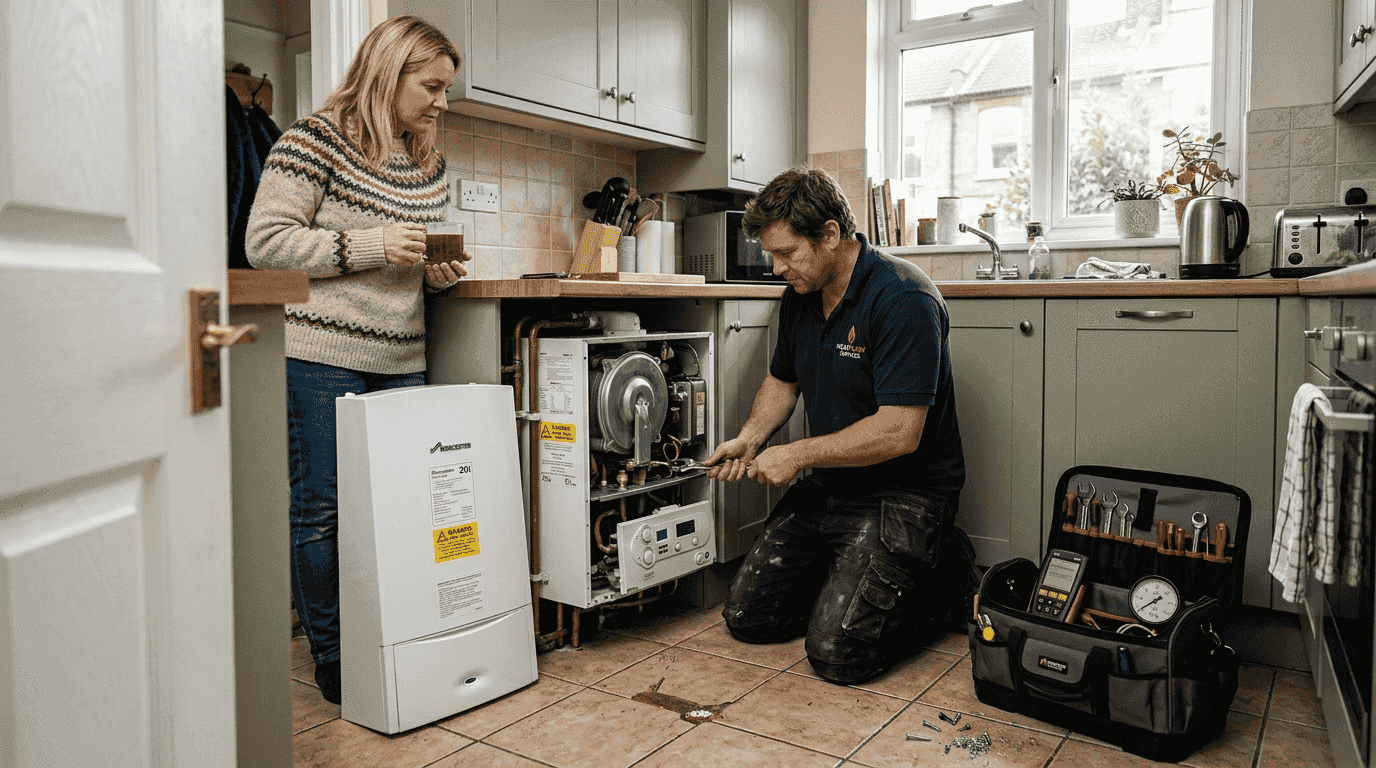
Most homeowners only think about heating engineers when their boiler breaks down on the coldest night of the year. Yet these professionals do far more than emergency repairs, they're the frontline defence against carbon monoxide poisoning, system failures, and thousands of pounds in avoidable damage. Understanding what heating engineers actually do, and when you need them, transforms how you approach home heating safety and efficiency. This guide breaks down their essential roles, legal requirements for landlords, and practical steps for choosing reliable engineers when emergencies strike or routine maintenance comes due.
Table of Contents
- What do heating engineers do? Breaking down their essential roles
- Why annual boiler servicing by Gas Safe engineers matters
- Legal responsibilities for landlords and implications for homeowners
- How to choose and work with reliable heating engineers for emergencies and maintenance
- Why choose 777 Plumber for your heating engineer needs
Key takeaways
| Point | Details |
|---|---|
| Annual servicing prevents failures | Gas Safe registered engineers must service boilers yearly to maintain warranties and prevent dangerous carbon monoxide leaks |
| Landlords face legal obligations | UK law requires landlords to obtain Gas Safety Certificates annually and maintain all heating systems for tenant safety |
| Engineers maintain entire systems | Heating professionals service boilers, radiators, pumps, valves, thermostats, and pipework, not just the boiler unit |
| Emergency preparedness saves money | Having a trusted 24-hour heating engineer contact ready prevents panic decisions during system failures |
What do heating engineers do? Breaking down their essential roles
Heating engineers maintain far more than boilers. A central heating system includes multiple components beyond the boiler, all essential to maintain. These professionals service radiators, pipework, thermostats, circulation pumps, zone valves, expansion vessels, and increasingly common additions like heat pumps and magnetic filters. Each component affects overall system performance, and neglecting any single part can trigger cascading failures that leave you without heating when you need it most.
Routine checks by qualified engineers prevent system failures before they happen. During a typical service visit, engineers test combustion efficiency, inspect heat exchangers for corrosion, verify correct gas pressure, check flue integrity, and confirm all safety devices function properly. They'll bleed radiators, balance the system for even heat distribution, and identify worn parts before they fail completely. This proactive approach improves energy efficiency by up to 15%, reduces fuel bills, and extends equipment lifespan by years.
Safety sits at the core of every heating engineer's work. Faulty boilers can leak carbon monoxide, an odourless, colourless gas that kills dozens of people in the UK each year and hospitalises hundreds more. Engineers use specialised equipment to detect even trace amounts of this deadly gas, test ventilation adequacy, and ensure combustion occurs cleanly. They also verify that pressure relief valves work correctly, preventing dangerous pressure buildups that could damage your system or property.
Pro Tip: Schedule your annual boiler service in late summer or early autumn, before the heating season begins. Engineers have more availability, you'll avoid winter price premiums, and any issues discovered can be fixed before you actually need your heating.
Qualified heating engineers offer comprehensive maintenance packages that go beyond basic servicing:
- Power flushing to remove sludge and debris that reduces efficiency
- System upgrades including smart thermostats and zoned heating controls
- Radiator replacements and repositioning for better heat distribution
- Leak detection and repair throughout the entire heating circuit
- Water treatment to prevent future corrosion and limescale buildup
Many homeowners only discover the full scope of heating engineer services when something goes wrong. A local heating engineer can assess your entire system during a routine visit, identifying potential problems and efficiency improvements you'd never spot yourself. This comprehensive approach saves money long term by preventing emergency callouts and maximising the return on your heating investment.
Why annual boiler servicing by Gas Safe engineers matters
Gas Safe registration isn't optional paperwork, it's the legal requirement that separates qualified professionals from dangerous amateurs. Only Gas Safe registered engineers can legally work on gas appliances in the UK. This certification confirms they've completed rigorous training, passed competency assessments, and maintain up to date knowledge of safety regulations and best practices. Every registered engineer carries a photo ID card listing the specific gas work they're qualified to perform.
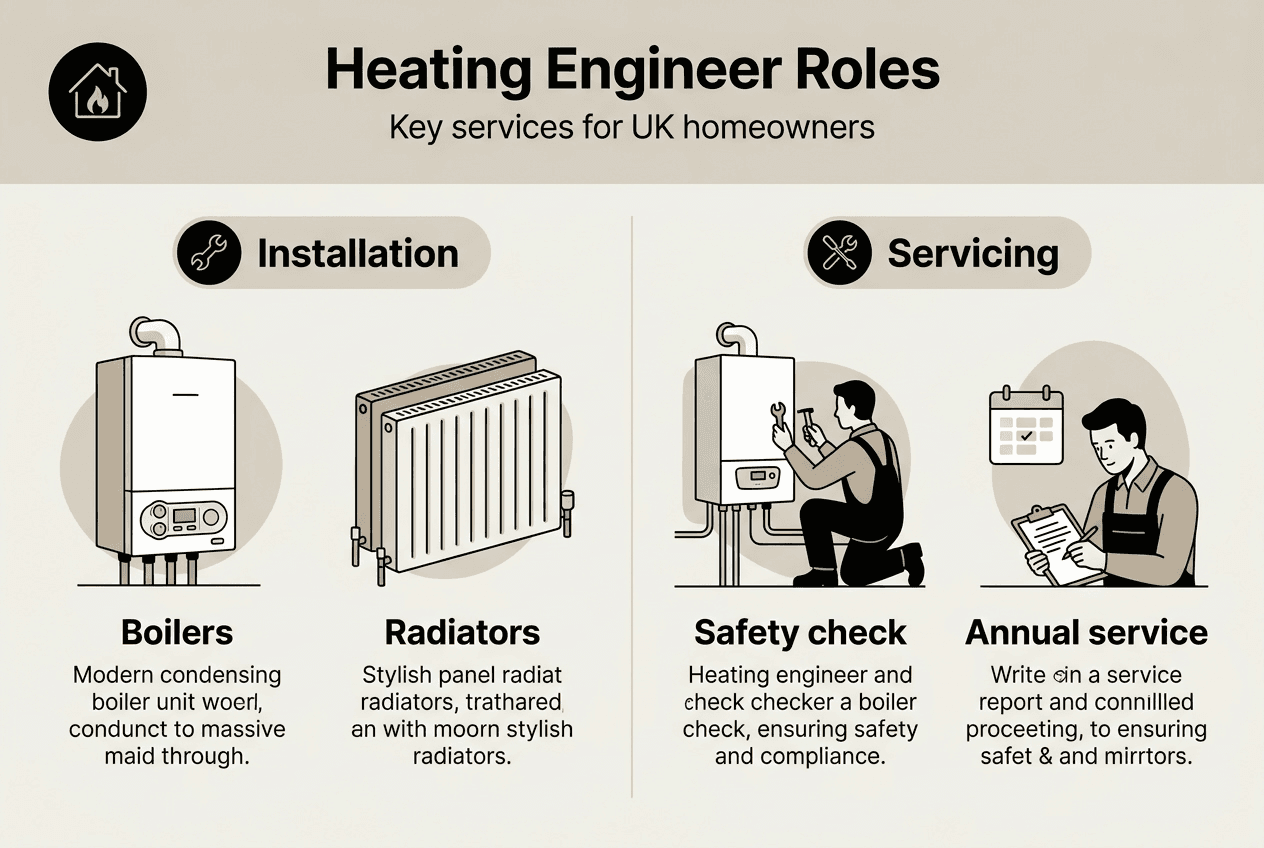
Annual boiler servicing by a Gas Safe registered engineer is essential for warranty validity, efficiency retention, and preventing carbon monoxide leaks. Most boiler manufacturers void warranties if you can't prove annual servicing by a qualified professional. Without that protection, a failed heat exchanger or other major component failure becomes your financial burden, potentially costing thousands of pounds. Regular servicing also maintains efficiency, a neglected boiler can waste 30% more fuel than a well maintained unit.
Carbon monoxide risks make professional servicing non negotiable. Incomplete combustion produces this toxic gas, and symptoms like headaches, nausea, and confusion are easily mistaken for flu. Prolonged exposure causes brain damage or death. Gas Safe engineers test for carbon monoxide during every service, checking combustion quality, flue integrity, and ventilation adequacy. They'll install or test your carbon monoxide alarm, providing a critical backup safety layer.
Annual servicing catches small problems before they become expensive emergencies. A £90 service call that identifies a worn pump bearing saves you from a £500 emergency callout on Christmas Day when that pump fails completely.
Landlords face specific legal obligations that make annual servicing mandatory, not optional. Landlords in the UK are legally obligated to obtain a Gas Safety Certificate (CP12) every 12 months. This certificate, issued only by Gas Safe registered engineers, confirms all gas appliances and flues have been safety checked. Landlords must provide copies to tenants within 28 days of the check or before a new tenancy begins. Failure to comply can result in unlimited fines, up to six months imprisonment, or both.
Working with a qualified Gas Safe engineer establishes a service history that proves compliance and protects your investment. Many engineers offer service reminders and priority booking for annual customers, ensuring you never miss your legal obligations or warranty requirements. This relationship also means faster response times when genuine emergencies occur, as established customers typically receive priority over new callers during peak demand periods.
Key benefits of annual professional servicing include:
- Maintained manufacturer warranty coverage
- 10 to 15% improvement in fuel efficiency
- Early detection of potentially dangerous faults
- Legal compliance for landlords
- Extended equipment lifespan
- Reduced risk of mid winter breakdowns
Legal responsibilities for landlords and implications for homeowners
UK law places clear, enforceable duties on landlords regarding heating system maintenance and safety. The Landlord and Tenant Act 1985 mandates landlords to maintain heating and hot water systems, failure of which leads to legal consequences. This legislation requires landlords to keep installations for space heating and water heating in proper working order, covering boilers, radiators, pipework, and controls. These aren't optional guidelines, they're statutory obligations backed by enforcement powers.
Non compliance carries serious consequences beyond financial penalties. Local authorities can issue improvement notices requiring specific repairs within set timeframes. Ignoring these notices can lead to prohibition orders preventing property rental until issues are fixed. In extreme cases involving immediate danger, councils can carry out emergency repairs themselves and bill the landlord for costs plus administrative charges. Criminal prosecution remains possible for serious breaches, particularly those involving tenant safety risks.
Landlords must follow specific timelines and documentation requirements:
- Conduct annual Gas Safety Checks by a Gas Safe registered engineer
- Issue Gas Safety Certificates (CP12) to tenants within 28 days
- Keep records of all gas safety checks for at least two years
- Arrange repairs promptly when tenants report heating problems
- Maintain adequate heating provision throughout tenancy periods
- Ensure carbon monoxide alarms are installed in rooms with solid fuel appliances
The following table outlines key legal duties and deadlines:
| Requirement | Frequency | Deadline | Consequence of Non-Compliance |
|---|---|---|---|
| Gas Safety Certificate | Annual | Within 12 months of last check | Unlimited fine, up to 6 months imprisonment |
| Certificate to tenant | Per check | Within 28 days of check | Enforcement action, potential prosecution |
| Heating system repairs | As needed | Reasonable timeframe after notification | Improvement notice, emergency repairs at landlord cost |
| Carbon monoxide alarms | At tenancy start | Before tenant moves in | Fine up to £5,000 per property |
Homeowners benefit significantly from these regulations even when not renting. The legal framework establishes clear standards for heating system safety and maintenance that protect everyone. Tenants gain assurance their heating will work reliably and safely. When you eventually sell a property, documented maintenance history and valid Gas Safety Certificates demonstrate responsible ownership and can speed transactions. Understanding landlord obligations also helps you set appropriate standards for your own home maintenance.
Working with local maintenance services that understand these legal requirements ensures compliance and protects your investment. Professional heating engineers familiar with landlord obligations can manage the entire compliance process, from scheduling annual checks to maintaining required documentation. This removes administrative burden while guaranteeing you meet every legal requirement on time.
How to choose and work with reliable heating engineers for emergencies and maintenance
Selecting the right heating engineer protects your safety, your wallet, and your peace of mind. Gas Safe registration forms the non negotiable baseline, verify every engineer's credentials on the Gas Safe Register website before allowing them near your boiler. Check their ID card matches the online record and confirms they're qualified for the specific work needed. Beyond basic registration, look for engineers with manufacturer accreditations for your boiler brand, as these specialists receive advanced training and access to technical support.

Comparing service offerings reveals significant differences between providers. Emergency response times vary dramatically, some companies guarantee arrival within two hours, others may take 24 hours or longer. Pricing structures differ too, watch for hidden charges like callout fees, hourly minimums, or weekend premiums. Service guarantees matter, reputable engineers warranty their work for at least 12 months and use quality parts with manufacturer backing. Transparent pricing and clear terms signal professional operations.
Essential questions to ask potential heating engineers include:
- Are you Gas Safe registered, and can I verify your credentials?
- What's your typical emergency response time in my area?
- Do you charge callout fees or fix no fee guarantees?
- Are you accredited by my boiler manufacturer?
- What warranty do you provide on repairs and parts?
- Do you offer annual service contracts with priority emergency response?
- Can you provide recent customer references or reviews?
Annual servicing packages often provide better value than ad hoc appointments. Many engineers offer discounted rates for customers who commit to yearly maintenance, typically saving 15 to 25% compared to one off service costs. These agreements usually include priority emergency callouts, meaning you'll jump the queue when your boiler fails during a cold snap. Some packages bundle additional benefits like free safety checks, discounted repairs, or extended warranties on parts and labour.
Pro Tip: Keep your heating engineer's contact details saved in your phone and posted near your boiler. During an emergency, you'll avoid frantic internet searches and the risk of calling unqualified operators who exploit desperate homeowners with inflated prices.
Emergency preparedness requires planning before problems occur. Have contact details ready for 24hr local heating engineer services that cover your area. Know where your boiler isolation valve and main gas shutoff are located, you may need to turn these off if you smell gas or suspect a leak. Keep your boiler manual accessible, it contains model specific troubleshooting steps that might resolve minor issues without requiring an engineer visit.
The following comparison helps evaluate different service approaches:
| Service Type | Best For | Typical Cost | Response Time | Key Benefit |
|---|---|---|---|---|
| Annual service contract | Regular maintenance, priority emergencies | £80-120/year | 2-4 hours emergency | Cost savings, priority response |
| One-off service | Occasional maintenance | £90-150/visit | Standard booking | Flexibility, no commitment |
| Emergency callout | Urgent repairs | £150-300+ | 1-2 hours | Immediate assistance |
| Manufacturer service | Warranty compliance | £100-180/year | Varies | Warranty protection |
Building a relationship with trusted local heating engineers creates long term value beyond individual service visits. Engineers familiar with your system can diagnose problems faster, recommend appropriate upgrades, and provide personalised maintenance advice. They'll remember your boiler's quirks and service history, avoiding duplicate diagnostics and unnecessary part replacements. This continuity improves service quality while often reducing overall costs through efficiency and trust.
Why choose 777 Plumber for your heating engineer needs
When your heating fails or annual servicing comes due, you need engineers who combine technical expertise with genuine reliability. 777 Plumber provides certified Gas Safe heating engineers available 24 hours a day, 7 days a week across Bristol and surrounding areas. Our in house team means consistent quality, no subcontractors, no variability in service standards. We employ our engineers directly, ensuring accountability and professionalism on every job.

Our transparent pricing eliminates nasty surprises. No callout fees, no hidden charges, just honest quotes before work begins. Whether you need emergency repairs, annual boiler servicing, or complete system installations, our engineers bring the skills and equipment to complete jobs right the first time. We maintain heating systems of all types, from traditional gas boilers to modern heat pumps, with manufacturer accreditations ensuring warranty compliant service.
Booking is simple through our online booking system, or call for immediate emergency assistance. Our 24hr local plumber in Hotwells and surrounding areas can typically reach you within two hours for urgent situations. Check our gallery to see the quality of our work and read customer testimonials. We build long term relationships with homeowners and landlords who value dependable heating services backed by proper qualifications and genuine care.
FAQ
What qualifications must heating engineers have in the UK?
Heating engineers must be Gas Safe registered to legally service gas appliances in the UK. This registration confirms they've completed approved training and passed competency assessments covering safety regulations and technical skills. Always verify registration on the Gas Safe Register website before hiring any engineer.
How often should I have my boiler serviced?
Boilers require annual servicing by a Gas Safe registered engineer to maintain manufacturer warranties and ensure safe operation. Yearly checks prevent breakdowns, maintain efficiency, and detect potential safety hazards like carbon monoxide leaks before they become dangerous. Schedule services in late summer for best availability and pricing.
What should I do if my heating fails in an emergency?
Immediately turn off your boiler and gas supply if you smell gas or suspect a dangerous fault. Ventilate your property by opening windows and doors. Contact an emergency heating engineer straightaway for safe repairs. Never attempt DIY fixes on gas appliances, as this risks carbon monoxide poisoning, explosions, or invalidating insurance coverage.
Are landlords responsible for heating system maintenance?
Yes, UK law requires landlords to maintain all heating and hot water systems in proper working order throughout tenancies. Landlords must obtain annual Gas Safety Certificates from Gas Safe registered engineers and provide copies to tenants within 28 days. Failure to comply can result in unlimited fines, imprisonment up to six months, or both. These obligations protect tenant safety and ensure reliable heating provision.