TL;DR:
- UK homeowners frequently face unexpected charges from tradespeople, especially call-out fees, during urgent repairs.
- A no call-out fee model offers transparent pricing, prevents bill shock, and fosters trust with reliable providers.
Every year, UK homeowners face a frustrating pattern: a burst pipe or failed boiler at the worst possible moment, an emergency call to a tradesperson, and then a bill inflated by unexpected charges that were never mentioned upfront. Over 37,000 annual complaints on home maintenance in the UK are linked to unclear fees and extra costs, and a significant portion of those complaints trace back to call-out fees that caught homeowners completely off guard. This article explains exactly what call-out fees are, why the no call-out fee model genuinely protects your wallet, and how to tell whether a service's pricing is truly transparent before you commit.
Table of Contents
- What are call-out fees and why do they cause confusion?
- How no call-out fee policies protect homeowners
- Are there drawbacks to no call-out fee services?
- How to spot genuine no call-out fee offers and avoid scams
- The real reason no call-out fee matters: beyond the headline
- Find a trusted plumber with no call-out fee
- Frequently asked questions
Key Takeaways
| Point | Details |
|---|---|
| Transparent pricing | No call-out fee policies help you understand exactly what you’re paying for emergency repair services. |
| Budget protection | Avoiding hidden fees means you can budget more confidently for urgent home repairs. |
| Reduced risk | No call-out fee reduces the chance of falling victim to rogue traders who inflate upfront charges. |
| Know the exceptions | Some genuine services may use minimum charges or set hourly rates instead of a call-out fee. |
What are call-out fees and why do they cause confusion?
A call-out fee is a fixed charge that a plumber, heating engineer, or electrician applies simply for travelling to your property and carrying out an initial assessment. It is separate from any labour costs or materials. Whether the tradesperson fixes your problem in twenty minutes or decides the job needs a follow-up visit, that upfront fee is typically non-refundable.
On the surface, charging for travel time and diagnostic work makes business sense. Trades professionals have overheads: van costs, fuel, insurance, and the time spent getting to you rather than completing another job. However, the problems start when that fee is not communicated clearly, or when homeowners assume a quoted price already includes it.
Here is where call-out fees explained in plain terms becomes genuinely useful. Common situations where call-out fees are charged include:
- Emergency or out-of-hours visits (weekend or evening call-outs)
- A visit where no repair is ultimately carried out
- Short diagnostic jobs where the problem turns out to be minor
- First visits to new customers, particularly for heating and boiler assessments
The confusion usually arises because many trades do not volunteer the call-out fee information until the invoice arrives. A homeowner in Bristol rings a plumber at 9 pm because their hot water has stopped working. They get a yes, we can come out tonight response, no mention of a separate £80 to £120 call-out charge, and then a shock when the bill arrives. Undeclared fees in emergencies are among the most frequent sources of post-service disputes.
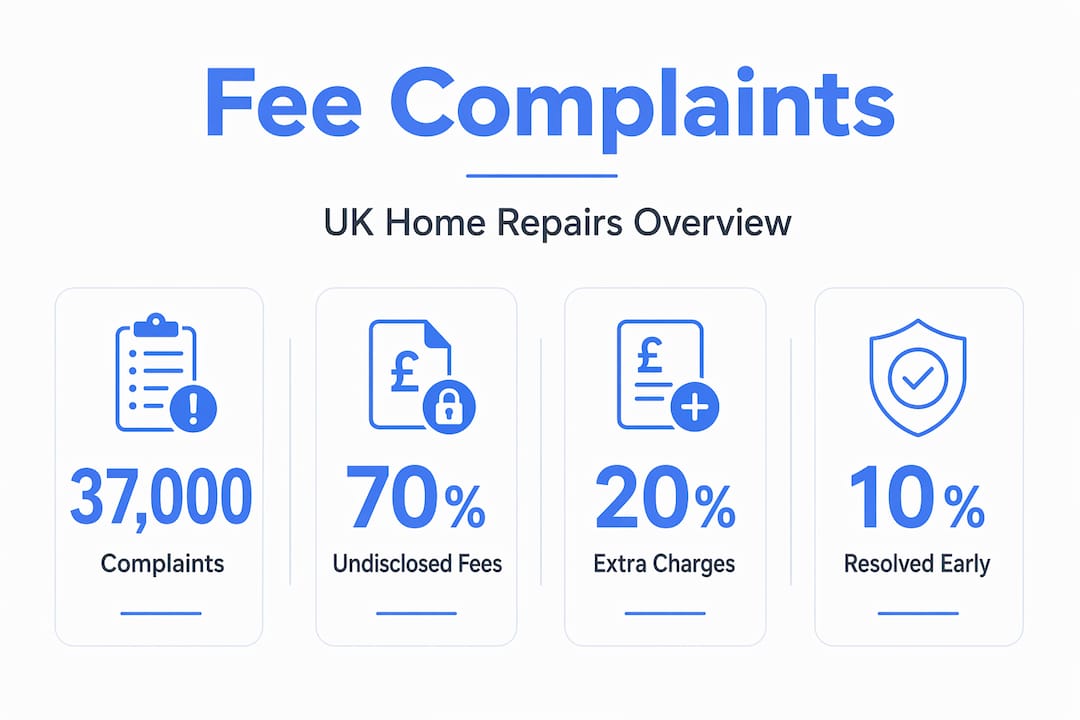
UK home maintenance complaints total more than 37,000 per year, with undisclosed fees and extra charges consistently cited as a primary cause. That number represents real families who trusted a tradesperson, felt overcharged, and had little recourse once the work was done.
How no call-out fee policies protect homeowners
When a provider genuinely operates a no call-out fee model, the dynamic shifts in your favour immediately. You are not paying for someone to simply show up. Every pound you spend goes towards the actual work being done on your property.
Transparent no call-out models such as a minimum charge or an included first hour prevent overcharging on short jobs or visits where no repair is ultimately possible. That means if the engineer arrives, diagnoses a minor blockage, and clears it in thirty minutes, you pay for thirty minutes of work. Nothing more.
For homeowners, this model delivers several clear advantages:
- No bill shock: You know what you are paying for before any work begins
- Fairer treatment on short jobs: A twenty-minute fix should not cost the same as a two-hour repair
- Protection against rogue traders: Legitimate businesses with clear, published pricing have less room to inflate invoices
- Easier emergency budgeting: When a pipe bursts at midnight, the last thing you need is financial uncertainty on top of the stress
Citizens Advice data on home maintenance disputes reinforces why this matters so much. A no call-out fee structure ensures predictable budgeting for emergency plumbing, heating, and electrical repairs, directly addressing the rogue trader problem that has grown notably in recent years.
Here is a straightforward comparison of the most common fee structures you will encounter:
| Fee model | What you pay on arrival | Risk of surprise charges |
|---|---|---|
| Standard call-out fee | £60 to £150 regardless of outcome | High if not disclosed upfront |
| Minimum charge | Set minimum (e.g. one hour's labour) | Low if stated clearly |
| First hour included | No separate fee for the first hour | Low, transparent from the start |
| No call-out fee | Nothing for the visit itself | Very low with reputable providers |
"A clear no call-out fee policy is not just about saving money on one job. It is about establishing the kind of trust that means you will call the same tradesperson again when something else goes wrong."
The no call out charge policy at reputable providers demonstrates that the business is confident enough in its work to absorb the cost of a visit within fair, transparent pricing. That confidence is itself a quality signal. Compare this to recognising fair pricing practices across home services more broadly, where the same principles of openness and accountability separate reliable businesses from opportunistic ones.
Are there drawbacks to no call-out fee services?
It is fair to acknowledge that trades professionals face real business pressures. Fuel costs, insurance, vehicle maintenance, and lost earning time when a job turns out to be too small to cover expenses, these are genuine financial challenges. This is why trades need call-out fees to cover travel and overheads, particularly on short jobs, though a no-fee model remains viable through minimum charges or higher volume.
Some providers resolve this tension by charging a minimum labour fee rather than a separate call-out charge. This is arguably more honest: you pay for at least one hour of skilled work, which is a reasonable expectation. The fee covers the tradesperson's time and overheads without the sleight of hand of a mysterious "call-out" line on an invoice.
Where the no call-out fee model can become misleading is when providers use the phrase as marketing language but bury a minimum charge or a higher-than-average hourly rate in the small print. Always read the detail. A £0 call-out fee paired with a £180 per hour labour rate is not necessarily better value than a £70 call-out fee with a £60 per hour rate.
Here is how common fee models compare in terms of business impact and homeowner experience:
| Model | Works for trades when... | Works for homeowners when... |
|---|---|---|
| Standard call-out fee | Lots of diagnostic-only visits | Clearly disclosed before booking |
| Minimum charge | Short jobs are frequent | Minimum is reasonable and stated |
| No call-out fee | High job completion rate | No hidden higher rates elsewhere |
| First hour inclusive | Jobs regularly exceed one hour | Policy is published and guaranteed |
Reputable providers who use a professional plumber model with direct employment rather than subcontractors often absorb call-out costs as part of their operational efficiency. When a business employs its own team, schedules efficiently, and operates locally, it does not need to charge every homeowner for the cost of a long drive. That operational structure benefits you directly. Similarly, being aware of extra charges in home services across the board means you are better equipped to compare quotes fairly.
Pro Tip: Before booking any plumber, heating engineer, or electrician, ask two direct questions: "Is there any charge if no repair is carried out?" and "Is there a minimum charge per visit?" The answers will tell you everything you need to know about their pricing approach.
How to spot genuine no call-out fee offers and avoid scams
Rogue traders are a persistent problem in UK home services. They often use attractive headline offers, including "no call-out fee," to lure customers in before adding charges at every possible stage of the job. Protecting yourself is straightforward if you follow a consistent process.
- Check the website for a published pricing policy. Any legitimate business with a genuine no call-out fee offer will state it clearly, not bury it under layers of terms and conditions.
- Ask for a written estimate before any work begins. Even for emergency jobs, a reputable tradesperson can give you a verbal estimate followed by a written confirmation before starting.
- Confirm whether 'no call-out fee' covers all visit types. Does it apply on weekends? After hours? For assessments where no work is done? Pin down the specifics.
- Check independent reviews. Look for patterns in reviews that mention billing transparency, not just the quality of the work.
- Ask if the first hour of labour is included. Some providers include the first hour within their pricing, making short jobs genuinely affordable. Others start the clock from the moment they leave their depot, not when they arrive at your door.
- Verify registration and insurance. Gas Safe registration for heating engineers, NICEIC or NAPIT registration for electricians. These bodies have complaints processes and accountability standards that unregistered traders simply do not.
The 37,000 UK home maintenance complaints per year represent the consequences of skipping these checks. Most disputes involve surprise charges that could have been avoided by asking the right questions before the work started.
For emergencies specifically, having a pre-checked, trusted provider already bookmarked is the smartest approach. Our guide to urgent repairs walks through how to prepare before a plumbing or heating crisis hits, because the worst time to research a tradesperson is when water is pouring through your ceiling. Knowing how to identify reputable services in advance takes the panic out of emergency decisions entirely.
Pro Tip: Request a written breakdown that separates labour, parts, and any additional charges. Legitimate tradespeople do this routinely. Those who resist providing written estimates are a significant red flag.
The real reason no call-out fee matters: beyond the headline
Here is something that most homeowner guides will not tell you: the no call-out fee is not actually the most important part of the pricing question. It is a signal, not a guarantee.
A provider can offer zero call-out fees and still overcharge you. They can absorb that small cost and inflate hourly rates, mark up parts significantly, or recommend unnecessary work. The call-out fee itself is the visible, easy-to-market number. What actually protects you is the full culture of transparency behind it.
The businesses that earn long-term trust from homeowners are not simply those with the cheapest entry point. They are the ones who give you a clear estimate before touching anything, explain exactly what they are doing and why, charge what they quoted without last-minute additions, and follow up when something does not go to plan.
We have seen this across thousands of jobs. The homeowners who end up most satisfied are those who chose a provider based on reputation, clear policies, and direct employment of skilled staff, rather than the most attractive-sounding headline offer. The advantages of local plumbers are significant here: a locally based team with a genuine stake in community reputation simply cannot afford to behave badly. Rogue traders operate in anonymity. Established local businesses operate in plain sight.
When an emergency strikes at 2 am, you are not shopping around. You are calling the number you already trust. That is the real value of choosing carefully before something goes wrong.
Find a trusted plumber with no call-out fee
When you need a plumber, heating engineer, or electrician who will turn up on time, charge what they quote, and never add a surprise call-out fee, 777 Plumber offers exactly that. Our team is fully employed, never subcontracted, and covers Bristol and surrounding areas with a genuine commitment to transparent pricing from the first phone call.
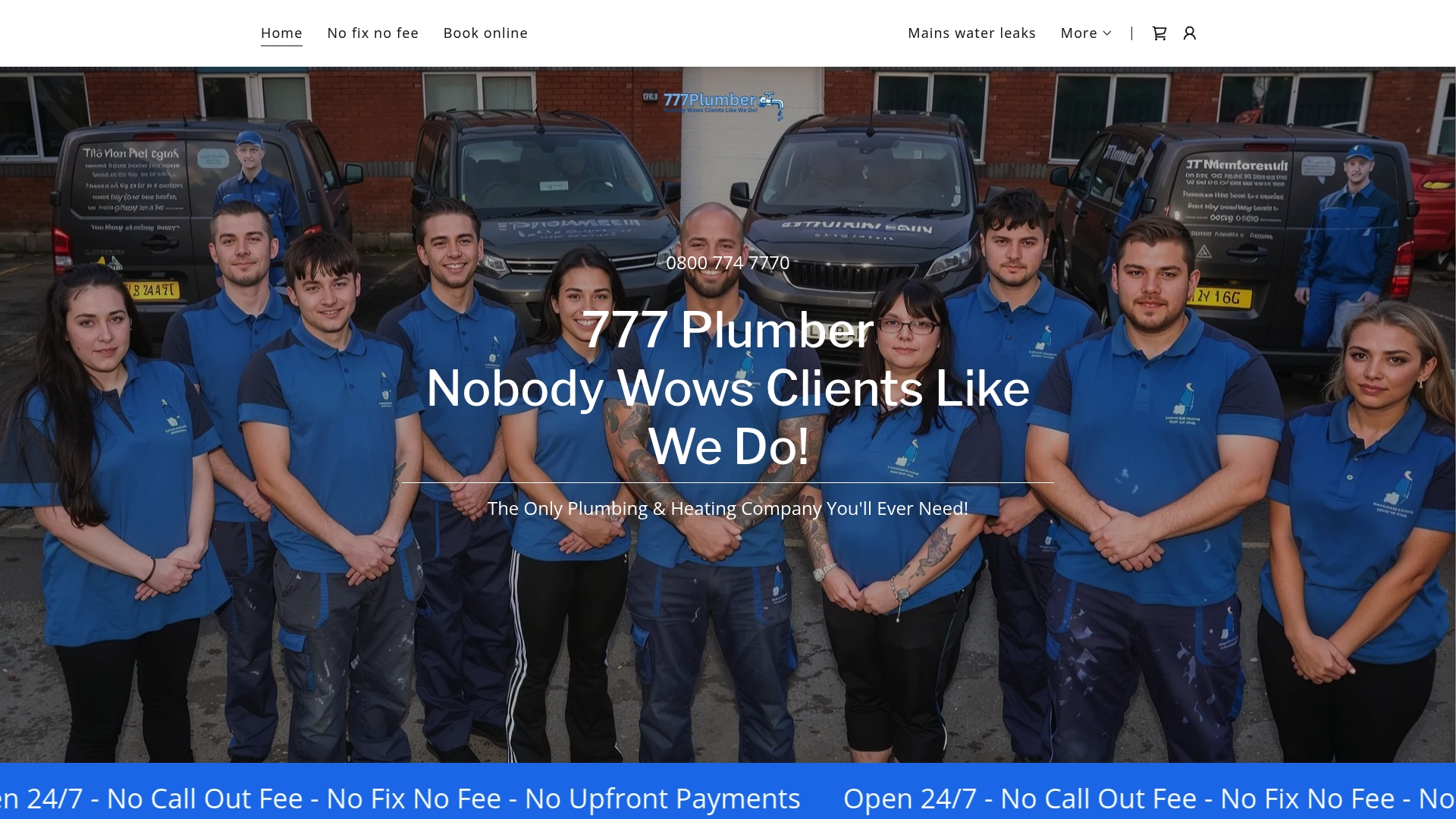
Whether you have a burst pipe, a boiler that has stopped working, or an electrical fault that needs urgent attention, our no call out fee policy means you pay for skilled work, not for the privilege of having someone visit. You can book online, get a clear estimate upfront, and reach our 24hr local plumber any time of day or night. No junk fees. No surprises. Just reliable home repairs carried out by people who take pride in their work.
Frequently asked questions
What is a call-out fee and when is it usually charged?
A call-out fee is a fixed charge for a tradesperson to visit your home, covering travel and the initial assessment. It is usually applied to emergency or out-of-hours requests, and 37,000 UK complaints each year relate to unclear or unexpected charges of this kind.
Are no call-out fee offers really free?
No call-out fee offers typically mean you only pay for the work carried out, but always check for minimum charges or hourly rates applied in their place. Transparent models such as an included first hour are the clearest way to avoid being overcharged on short visits.
How can I tell if a call-out fee policy is genuine?
Ask for the policy in writing before booking and ensure all charges are itemised clearly. Undisclosed fees are among the leading causes of home maintenance disputes in the UK, so any hesitation to provide written confirmation is a warning sign.
Why do some plumbers still charge a call-out fee?
Tradespeople charge call-out fees to cover travel time and vehicle costs, especially when a visit results in no repair. This is a legitimate business need, though viable alternatives such as minimum charges or efficient scheduling can replace the need for a separate upfront fee.
Is it safer to choose a plumber with no call-out fee?
A no call-out fee policy makes emergency budgeting more predictable and reduces the risk of bill shock, though you should always check for hidden costs and verify the provider's reputation. Citizens Advice data consistently shows that transparent pricing is one of the strongest indicators of a trustworthy home services provider.