
TL;DR:
- Emergency plumbing involves urgent issues that risk home safety, health, or water supply.
- Call a professional immediately if water floods, sewage backs up, or gas leaks occur.
- Costs vary based on location, time, and severity, often covered by home insurance for sudden emergencies.
Plumbing emergencies strike without warning, and when they do, most homeowners freeze. Should you call someone immediately? Can it wait until morning? Will your insurance cover it? These questions feel overwhelming when water is pouring through your ceiling or a pipe has just burst behind your kitchen wall. The reality is that plumbing emergencies are far more common than people expect, and the cost of hesitation can be steep. This guide cuts through the confusion, helping you identify a genuine emergency, understand what to do next, and know exactly what to expect from a professional emergency plumber in the UK.
Table of Contents
- What qualifies as emergency plumbing?
- When and why should you call an emergency plumber?
- How emergency plumbing services operate
- Cost breakdown and insurance: What you need to know
- The reality of emergency plumbing in the UK: Hard-won lessons
- Find trusted emergency plumbers in your area
- Frequently asked questions
Key Takeaways
| Point | Details |
|---|---|
| Emergency plumbing definition | Emergency plumbing covers urgent issues like burst pipes, flooding, or water loss needing immediate repair. |
| When to call | Contact an emergency plumber as soon as risk to property, health, or major systems is detected. |
| Costs and insurance | Expect call-outs from £80–£300; check if sudden events are covered by your home insurance. |
| Choosing a provider | Pick a local, reputable plumber for fastest response and reliable service. |
| Preparation advice | Keep key contacts ready and confirm insurance eligibility before urgent repairs. |
What qualifies as emergency plumbing?
Not every dripping tap or slow-draining sink counts as an emergency. Emergency plumbing refers to situations that pose an immediate risk to your home, your health, or your water supply. These are problems that cannot safely wait for a routine appointment booked days in advance.
Some situations are obvious. A burst pipe flooding your hallway is not something you can ignore until Monday morning. Others are less clear-cut. A toilet that won't flush is inconvenient, but if it's the only toilet in the house and raw sewage is backing up, that becomes urgent very quickly.
Here are the most common situations that genuinely qualify as plumbing emergencies:
- Burst pipes causing active flooding or significant water damage
- Severe blockages resulting in sewage backing up into the home
- Gas leaks or the smell of gas near pipework (call the National Gas Emergency line first)
- Complete loss of water supply with no clear cause
- Overflowing toilets that cannot be stopped manually
- Boiler failure during winter months, particularly in homes with elderly or vulnerable residents
- Leaks near electrics, which create serious risk of electric shock
As a useful reference for signs of plumbing emergencies, the key distinction is whether the problem is actively worsening or creating secondary damage. A slow drip under the sink is a problem. A pipe spraying water into your living room is an emergency.
Delaying action on a genuine emergency is where costs escalate fast. Burst pipe repairs can reach £700 once you factor in the repair itself and any resulting water damage. Understanding the difference between the various types of plumbing repairs helps you make better decisions under pressure.
The golden rule: if the problem is getting worse by the minute and you cannot stop it yourself, it is an emergency. Call a professional immediately.
Routine plumbing work, such as replacing a tap washer, fitting a new shower, or clearing a mildly slow drain, can wait for a standard appointment. Emergency plumbing is specifically for situations where waiting causes real harm.
When and why should you call an emergency plumber?
Knowing what counts as an emergency is one thing. Knowing when to actually pick up the phone is another. Many homeowners waste precious time trying to diagnose the problem themselves or searching online for DIY fixes while water continues to spread through their property.
The following signs mean you should call an emergency plumber without delay:
- Water is actively flooding a room or flowing into walls and floors
- You can smell gas near any plumbing or heating equipment
- Your boiler has failed completely in cold weather
- Sewage is backing up into sinks, toilets, or bath drains
- You have no running water and cannot identify why
- A leak is near any electrical fittings or consumer units
The risks of waiting go beyond the obvious. Water damage spreads rapidly into floorboards, joists, and plasterwork. What might cost a few hundred pounds to fix today can turn into thousands in structural repairs if left overnight. There are also health risks: damp conditions encourage mould growth within 24 to 48 hours, and raw sewage exposure carries serious bacterial hazards.
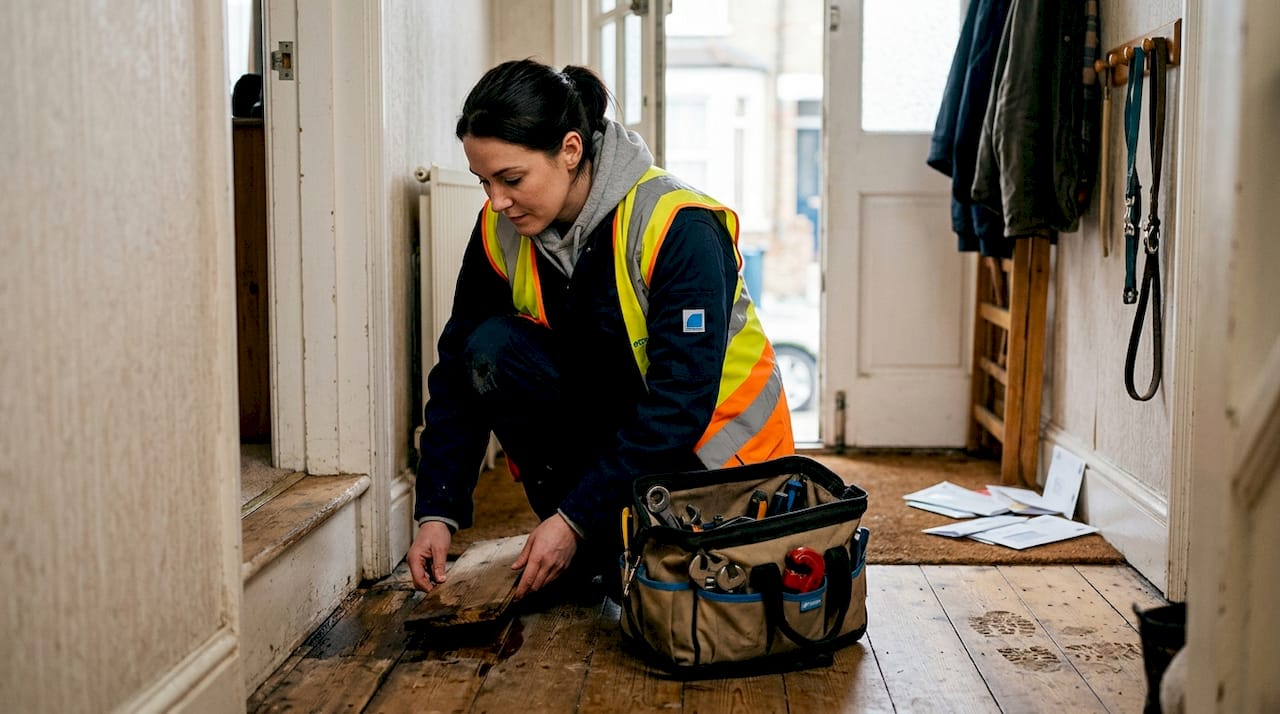
While you wait for the plumber to arrive, there are a few practical steps you can take. Turn off your main water supply immediately. This is usually located under the kitchen sink or near the water meter. If there is any risk of water reaching electrics, switch off the relevant circuit at your consumer unit. Mop up standing water where possible to limit spread.
One often-overlooked point: your home insurance may cover sudden plumbing emergencies. Check your policy documents or call your insurer while you wait. Keep a record of the damage with photographs before any repair work begins.
For a fuller picture of what to expect, our emergency plumbing repair guide walks through the process step by step. It is also worth noting that plumbers play a role in home refurbishments beyond emergencies, so building a relationship with a trusted local professional pays off long-term.
Pro Tip: Save the number of a reliable local emergency plumber in your phone before you ever need one. Searching for someone trustworthy in a panic rarely ends well.
How emergency plumbing services operate
When you call an emergency plumber, the process moves quickly. Most reputable services will take your details, assess the urgency of your situation over the phone, and give you an estimated arrival time. In most UK cities and towns, response times for genuine emergencies range from one to four hours, though this varies by location and time of day.
Here is what typically happens from first call to completed repair:
- Initial call: You describe the problem; the plumber assesses urgency and confirms availability
- Arrival and assessment: The plumber inspects the issue, identifies the cause, and gives you a quote before starting work
- Repair: The work is carried out, usually in a single visit for straightforward emergencies
- Post-repair check: A professional will test the repair and check for secondary issues before leaving
Transparency in pricing matters enormously here. Reputable emergency plumbers will quote before they start, not after. Be cautious of any tradesperson who refuses to give a price upfront. Understanding call-out fees explained in advance helps you avoid bill shock.
Here is a straightforward comparison between emergency and routine plumbing services:
| Feature | Emergency plumbing | Routine plumbing |
|---|---|---|
| Response time | 1 to 4 hours | Days to weeks |
| Call-out fee | £80 to £300 | Often included or lower |
| Hourly rate | £60 to £150 | £40 to £100 |
| Availability | 24 hours, 7 days | Standard working hours |
| Scope | Immediate fix | Planned repair or installation |
For common plumbing problems that do not meet the emergency threshold, booking a standard appointment will save you money. Emergency rates exist because of the speed and out-of-hours nature of the service, not because the work itself is fundamentally different.
Always confirm whether the plumber charges a flat call-out fee, an hourly rate, or a combination. Knowing this upfront, as outlined in emergency plumber costs, prevents misunderstandings once the job is done.
Cost breakdown and insurance: What you need to know
Cost is the thing most homeowners worry about when calling an emergency plumber, often to the point where they delay calling and make the situation worse. Understanding the actual numbers removes that barrier.
In 2026, typical emergency plumber costs in the UK break down as follows:
| Cost type | Typical range |
|---|---|
| Call-out fee | £80 to £300 |
| Hourly rate | £60 to £150 |
| Burst pipe repair | £300 to £700 |
| Drain unblocking | £80 to £250 |
| Boiler emergency | £150 to £500 |
Location makes a real difference. London averages up to £520 for burst pipe repairs, while costs in smaller cities and rural areas tend to be lower. Time of day also matters significantly. Calling at 2am on a Sunday will cost more than calling at 10am on a Tuesday, simply because out-of-hours work carries a premium.
Regarding insurance, many standard home insurance policies include emergency plumbing cover as part of a home emergency add-on. These policies typically cover sudden and unexpected events, meaning a pipe that bursts without warning is far more likely to be covered than a leak that has been slowly developing for months. Always photograph the damage before the plumber arrives, and keep all invoices and reports.
Pro Tip: Before you pay out of pocket, call your insurer. Ask specifically whether the event qualifies as a sudden plumbing emergency under your policy. Many homeowners pay unnecessarily because they assume they are not covered.
Choosing a professional plumber with transparent pricing protects you from inflated bills. Ask for a written quote before work begins, and confirm whether parts are included or charged separately.
The reality of emergency plumbing in the UK: Hard-won lessons
Here is something most guides will not tell you: the biggest mistake homeowners make is not calling too early. It is calling too late, or not calling at all, because they are worried about cost or convinced the problem will sort itself out.
Water does not sort itself out. It finds the path of least resistance, and that path usually runs through your floorboards, your ceiling, and eventually your structural timbers.
Price shopping during an active emergency is another costly error. Spending 45 minutes comparing quotes while a pipe leaks is a false economy. The extra damage caused in that time will far exceed any saving you might make on the call-out fee. Local expertise matters far more than finding the cheapest rate. A plumber who knows your area, your type of housing stock, and your local water pressure issues will diagnose and fix the problem faster.
After the repair, always ask the plumber to check the surrounding pipework. A burst pipe is rarely an isolated event. It often signals wider issues with pipe age or water pressure. Knowing how to recognise spotting emergency signs early means you can act before a small warning becomes a full crisis. Keep all records of repairs for insurance purposes and future reference.
Find trusted emergency plumbers in your area
When a plumbing emergency hits, you need someone local, reliable, and ready to respond fast. At 777 Plumber, we operate with fully employed, in-house technicians who arrive on time, quote transparently, and get the job done right the first time.

Whether you are in need of a local plumber in Hotwells or searching for a local plumber in Eastfield, our team is ready to respond to genuine emergencies around the clock. We do not use subcontractors, so you always know who is coming to your home. Want to see the quality of our work before you book? Browse our previous plumbing projects and see real results from real jobs. Book online or call us directly for an immediate response.
Frequently asked questions
What is considered a plumbing emergency?
A plumbing emergency is any situation causing immediate risk to your home, health, or water supply, such as burst pipes, flooding, or gas leaks. For a clear breakdown of what qualifies, see this guide to signs of plumbing emergencies.
How much does an emergency plumber cost in the UK?
Emergency plumber call-out fees range from £80 to £300, with hourly rates usually £60 to £150. Repairs to burst pipes can cost £300 to £700 depending on location and severity.
Does home insurance cover urgent plumbing repairs?
Insurance typically covers sudden and unexpected plumbing emergencies, but routine repairs and gradual leaks are often excluded. Check your policy's home emergency add-on for specific terms, and always photograph damage before work begins.
Can I fix a plumbing emergency myself?
For serious emergencies, call a professional plumber immediately. You can turn off the main water supply as a temporary measure, but attempting repairs without the right skills can make the situation significantly worse. This homeowner's guide explains what you can safely do while waiting.
Why do costs increase at night or weekends?
Emergency plumbers charge higher rates outside normal hours due to increased demand and additional call-out charges. As detailed in emergency plumber costs, out-of-hours premiums are standard across the UK industry.