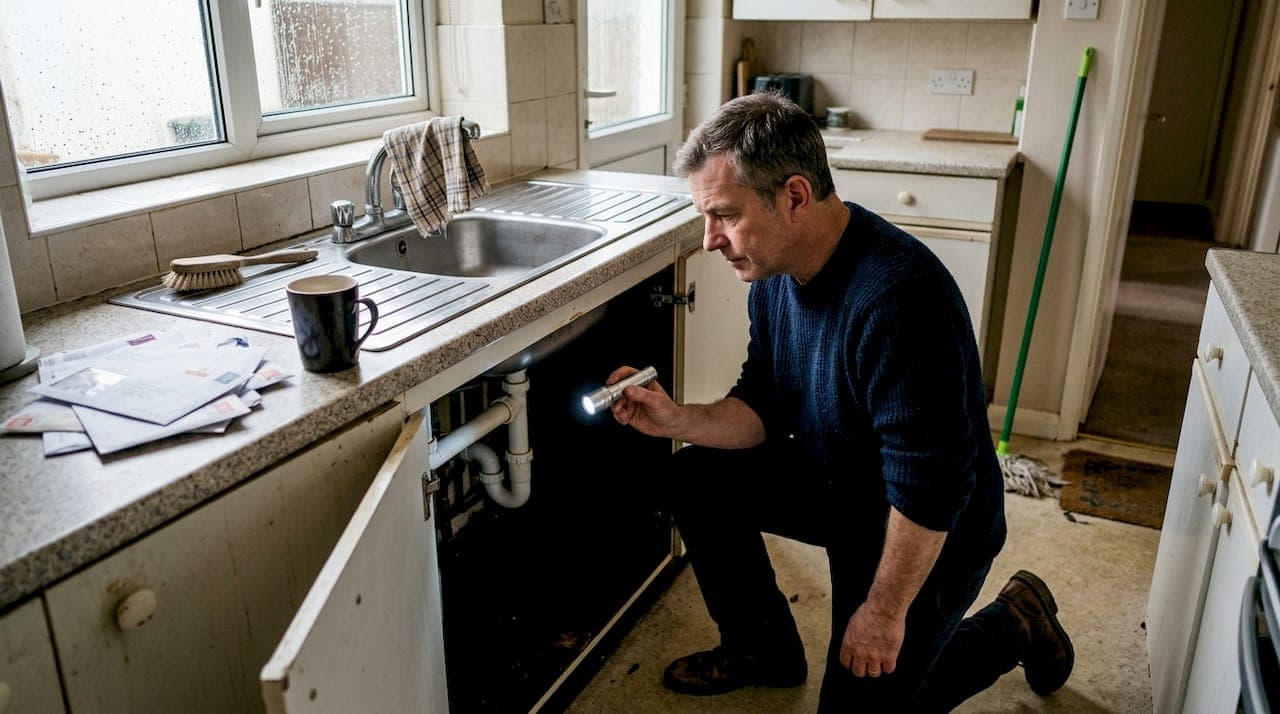
Hidden water leaks affect one in three UK homes, yet most homeowners only discover them after thousands of pounds in damage has occurred. Unlike the obvious dripping tap or burst pipe, these silent culprits lurk behind walls, beneath floors, and underground, quietly inflating bills and breeding mould. Leak detection is the process of identifying and locating water leaks in residential plumbing systems, often hidden behind walls, under floors, or underground, to prevent water damage, mould growth, and increased bills. This guide explains what leak detection actually involves, the professional methods that pinpoint leaks with precision, and how you can protect your home from costly water damage.
Table of Contents
- Key Takeaways
- Understanding what leak detection means for your home
- Methods professional leak detectors use to find hidden leaks
- Challenges and nuances in leak detection for UK homeowners
- DIY leak detection versus professional services: what UK homeowners should know
- Get reliable leak detection services with 777 Plumber
- What is leak detection?
Key Takeaways
| Point | Details |
|---|---|
| Hidden leaks burden homes | Hidden water leaks affect one in three UK homes and can drive up bills while causing mould and hidden structural damage. |
| Professional detection methods | Acoustic detection, thermal imaging and tracer gas are used to locate hidden leaks without invasive disturbance to living spaces. |
| DIY limits explained | Do it yourself approaches struggle to reliably detect hidden leaks whereas professional detection provides precise non invasive results. |
| Early action saves costs | Prompt use of accredited leak detectors can reduce repair bills and lessen insurance claims by stopping damage early. |
Understanding what leak detection means for your home
Leak detection goes far beyond spotting a puddle under your sink. It's a systematic approach to finding water escaping from your plumbing systems UK homeowners rely on daily, particularly when those leaks hide in inaccessible locations. These hidden failures occur in pipes running through cavity walls, beneath concrete floors, under garden paths, and within underground mains supplies.
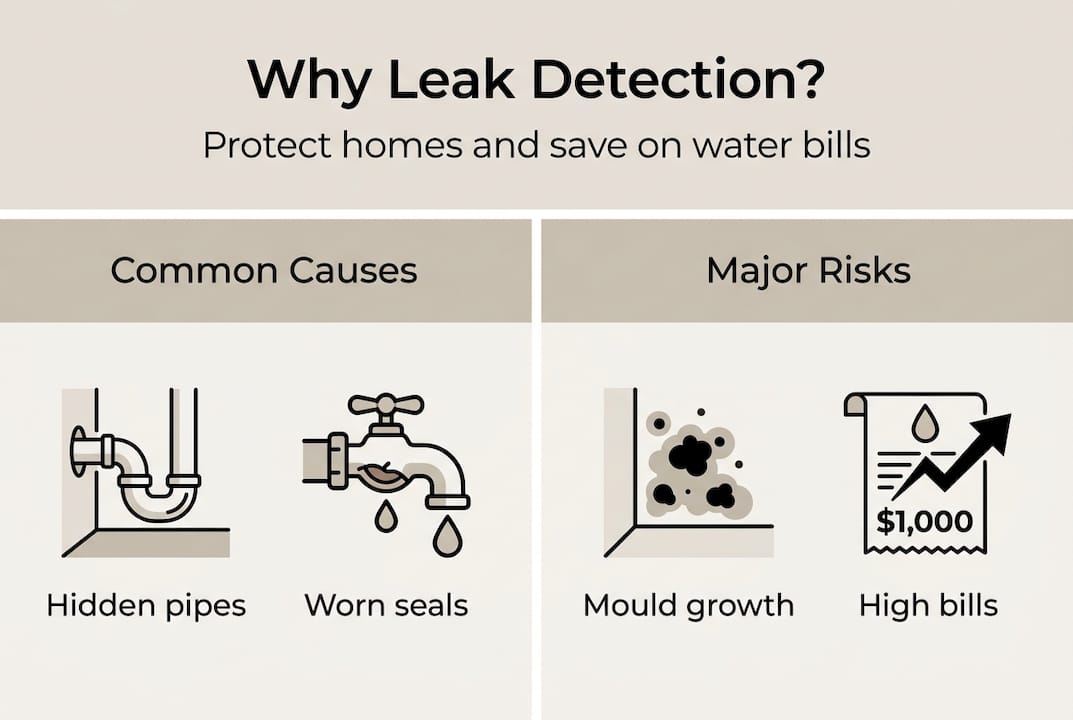
The consequences of ignoring these invisible problems extend well beyond a slightly higher water bill. Water seeping into structural elements creates the perfect environment for mould colonies that compromise air quality and trigger respiratory issues. Timber joists and floorboards rot when exposed to constant moisture, weakening your home's structural integrity. Insurance claims related to water damage have increased dramatically, with many policies now requiring evidence of regular maintenance and prompt leak investigation.
Many homeowners operate under dangerous misconceptions about water leaks:
- Leaks always produce visible water stains or puddles
- Small increases in water bills indicate metre errors rather than leaks
- Underground leaks will eventually surface and become obvious
- Older homes naturally use more water than modern properties
- Damp patches always indicate roof problems rather than pipe failures
These false assumptions delay detection and allow minor issues to escalate into major disasters. A dripping tap wastes over 5,000 litres annually, whilst a hidden pipe leak can lose tens of thousands of litres before anyone notices. The water you're paying for literally disappears into your foundations, creating subsidence risks and attracting pests to damp areas.
Pro tip: Run a simple overnight test by reading your water metre before bed, ensuring no taps or appliances will run, then checking again in the morning. Any movement indicates a leak somewhere in your system.
The financial impact hits homeowners in multiple ways. Your water company charges for every litre that passes through the metre, regardless of whether it reaches a tap or soaks into your walls. Structural repairs to remedy water damage often cost ten times more than fixing the original leak. Property valuations drop when surveyors identify historical water damage or active leaks. Early detection through professional services typically costs a fraction of the repair bills that follow months of undetected leakage.
Methods professional leak detectors use to find hidden leaks
Professional leak detection has evolved into a sophisticated discipline combining multiple technologies to locate leaks without tearing apart your home. Each method targets specific leak types and locations, with experienced technicians often deploying several approaches to confirm their findings before recommending any invasive work.
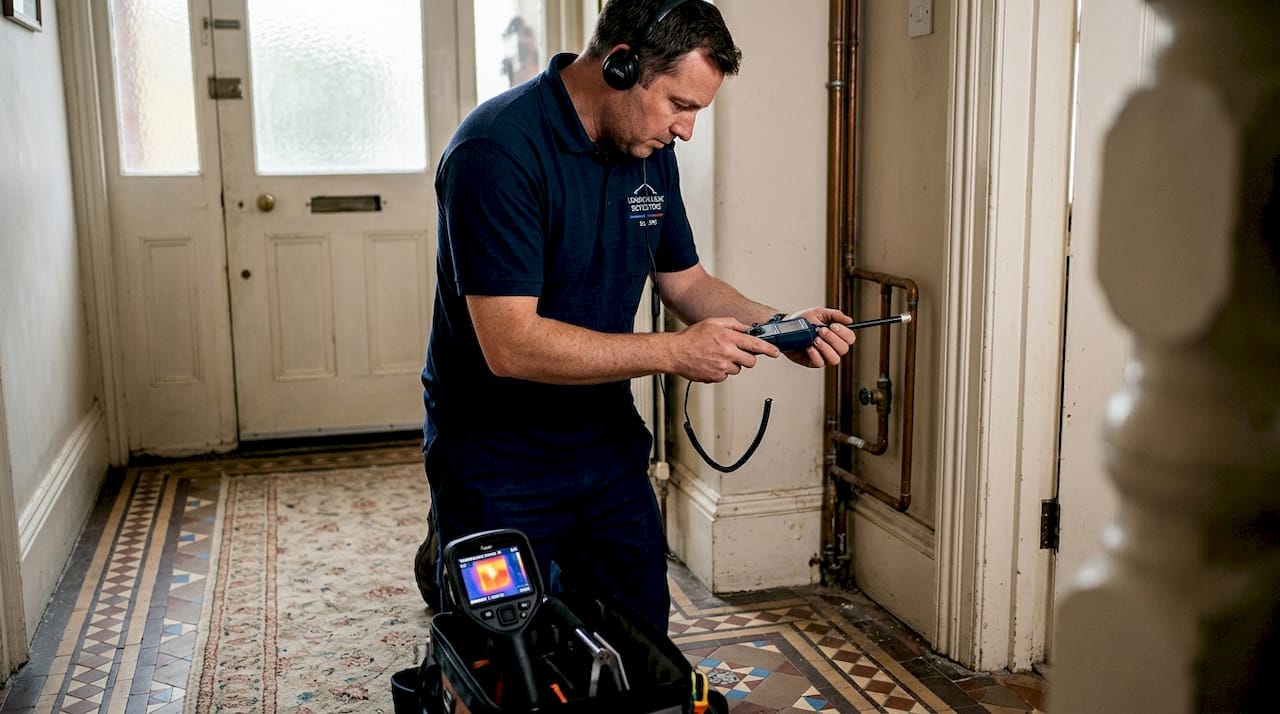
Acoustic detection forms the foundation of most professional investigations. Specialist equipment listens for the distinctive sound of water escaping under pressure, with ground microphones and hydrophones detecting frequencies between 500 and 1500Hz for metal pipes. The technique requires skill and experience because different pipe materials produce varying acoustic signatures. Copper pipes generate higher frequency sounds than plastic, whilst the surrounding soil type affects how sound travels to the surface.
Thermal imaging cameras reveal temperature variations invisible to the naked eye. Water leaking from hot pipes creates warm spots on walls and floors, whilst cold water leaks show as cooler areas compared to surrounding dry materials. This non-invasive approach works particularly well for underfloor heating leaks and hot water cylinder problems. The technology has limitations in extremely cold weather or when leaks occur deep within thick walls, but it provides valuable initial evidence about leak locations.
Tracer gas detection offers pinpoint accuracy for underground leaks and those beneath solid floors. Technicians introduce a safe mixture of hydrogen and nitrogen into the isolated pipe section, then use sensitive detectors to identify where gas escapes at ground level. The method works brilliantly for mains water leaks detection beneath driveways and garden paths, avoiding the need for exploratory excavation across your entire property.
| Detection method | Best applications | Accuracy level | Invasiveness |
|---|---|---|---|
| Acoustic listening | Metal pipes, pressurised systems | Within 30cm | None |
| Thermal imaging | Hot water leaks, underfloor heating | General area | None |
| Tracer gas | Underground pipes, concrete slabs | Within 10cm | Minimal |
| Moisture metres | Wall cavities, timber floors | Confirms presence | Low |
| Pressure testing | System integrity checks | Detects existence | None |
| Endoscopic cameras | Accessible pipe interiors | Visual confirmation | Minimal |
Moisture metres provide supporting evidence by measuring water content in building materials. Readings above normal levels indicate where water has penetrated walls, floors, or ceilings, helping narrow the search area. These devices work alongside other methods rather than as standalone detection tools, because damp can result from condensation, rising damp, or roof leaks rather than pipe failures.
Pressure testing isolates problems to specific pipe sections. Technicians pressurise the system and monitor whether pressure drops over time, indicating a leak somewhere in that section. This approach identifies whether a leak exists and its approximate severity, guiding further investigation with more precise tools.
Endoscopic cameras inspect pipe interiors where access points exist, revealing corrosion, cracks, and blockages that might cause future leaks. The flexible cables navigate bends and junctions, transmitting live video to technicians who can assess pipe condition without excavation.
Pro tip: Professional leak detectors often combine three or more methods to triangulate leak positions accurately, reducing the risk of unnecessary excavation and ensuring repairs target the actual problem.
The sophistication of modern equipment means most leaks can be located without any destructive investigation. Technicians mark the precise spot for targeted repairs, minimising disruption to your home and keeping costs down. This precision proves invaluable when leaks hide beneath expensive flooring or within newly decorated rooms.
Challenges and nuances in leak detection for UK homeowners
Despite advanced technology, leak detection faces unique challenges in British homes that can complicate investigations and occasionally produce misleading results. Understanding these limitations helps you set realistic expectations and choose appropriately qualified professionals for your situation.
Limescale accumulation affects acoustic detection accuracy in hard water areas. Calcium deposits reduce internal pipe diameter, altering how sound travels through the system and sometimes masking leak noises beneath the general flow turbulence. Older properties in regions with particularly hard water may require additional investigation methods to compensate for these acoustic complications.
Pipe material variations create detection complexity because plastic and metal pipes emit different sound frequencies. Plastic pipes typically generate sounds between 70 and 850Hz, considerably lower than metal alternatives. When your home contains mixed pipe materials, as many renovated properties do, technicians must adjust their equipment settings multiple times during a single investigation. This extends survey time and requires greater expertise to interpret results correctly.
Sewer leaks present distinct challenges beyond standard water supply problems:
- Health risks from bacterial contamination require immediate professional attention
- Environmental regulations govern how sewer leaks must be reported and remedied
- Damage often affects neighbouring properties through shared drainage systems
- Odours may be the only early warning sign before structural damage becomes apparent
- Tree root intrusion commonly causes sewer leaks in older clay pipe systems
Slab leaks beneath concrete floors rank among the most problematic scenarios for homeowners. These leaks develop in pipes cast within or beneath solid concrete slabs, making them completely inaccessible without breaking up flooring. The water often travels along the underside of the slab before surfacing, meaning visible damp appears metres away from the actual leak location. Repairing slab leaks frequently requires either breaking through the concrete or installing new pipe routes entirely, both expensive propositions.
False positives occur when background noise mimics leak sounds or when moisture readings indicate problems that don't actually involve pipe failures. Traffic vibrations, underground streams, and even neighbouring properties' plumbing can generate acoustic signals that inexperienced technicians might misinterpret. Similarly, condensation, rising damp, and historical water damage can produce moisture metre readings suggesting active leaks where none currently exist.
Pro tip: Always verify leak detection findings with plumbing accreditation UK homeowners can trust, choosing WaterSafe registered or CIPHE certified professionals who carry appropriate insurance and follow industry standards.
Weather conditions influence detection accuracy, particularly for thermal imaging surveys. Heavy rain saturates ground surfaces and building materials, making it difficult to distinguish leak-related temperature variations from general environmental moisture. Extremely cold weather affects how quickly leaked water cools, potentially masking thermal signatures. Experienced professionals schedule surveys strategically, avoiding conditions that compromise results.
Property age and construction methods introduce additional variables. Victorian homes often feature lead pipes that behave differently from modern copper or plastic systems. Post-war properties may contain asbestos pipe lagging that restricts where technicians can safely investigate. New builds with complex underfloor heating systems require specialists familiar with those specific installations. Each era and construction type demands tailored approaches rather than one-size-fits-all detection methods.
DIY leak detection versus professional services: what UK homeowners should know
Homeowners face an important decision when suspecting leaks: attempt DIY detection or immediately engage professional services. Each approach suits different scenarios, and understanding the trade-offs helps you make cost-effective choices that protect your property.
DIY methods offer low cost advantages, with basic detection tools available for under £50 from hardware retailers. Moisture metres, listening devices, and leak detection dye tablets help identify obvious problems like toilet cistern leaks or visible pipe drips. For straightforward issues where you can see or hear the problem, DIY investigation makes perfect sense and saves money.
However, DIY approaches miss hidden leaks entirely. Without professional-grade acoustic equipment, you cannot detect leaks within walls or underground. Misdiagnosis risks increase dramatically because homeowners lack the experience to interpret ambiguous readings correctly. Attempting repairs based on incorrect DIY findings often causes additional damage, particularly when you excavate or break through walls in the wrong locations. Insurance companies may refuse claims if DIY attempts worsen the original problem.
Professional services deliver non-invasive precision, typically locating leaks within 30cm accuracy without any destructive investigation. Accredited technicians provide detailed reports that satisfy insurance requirements and building control regulations. Their specialist equipment accesses leak locations impossible for DIY methods to reach. The comprehensive approach identifies not just the immediate leak but also assesses overall system condition, potentially preventing future failures.
| Comparison factor | DIY detection | Professional services |
|---|---|---|
| Typical cost | Under £50 for tools | £425 to £1,250 per survey |
| Leak location accuracy | General area only | Within 30cm typically |
| Hidden leak capability | Very limited | Comprehensive |
| Insurance acceptance | Often insufficient | Full reports provided |
| Risk of additional damage | Moderate to high | Minimal |
| Time to complete | Variable, often extended | Usually same day |
The cost differential seems significant initially, but professional detection often proves cheaper overall. A £600 survey that precisely locates a hidden leak saves thousands in unnecessary excavation, exploratory work, and repairs to the wrong areas. Insurance policies increasingly cover trace and access costs, meaning your insurer may reimburse professional detection fees even if you're responsible for the actual repair costs.
Practical steps for UK homeowners create a sensible middle ground:
- Conduct a free water metre check overnight to confirm whether leaks exist in your system
- Inspect visible pipes, taps, and appliances for obvious problems you can remedy yourself
- Document any damp patches, unusual water bills, or pressure changes with photographs and dates
- Contact WaterSafe accredited professionals if metre tests indicate hidden leaks or problems persist
- Request detailed written quotes explaining the detection methods proposed for your specific situation
- Check your home insurance policy for trace and access coverage before booking surveys
The DIY versus professional decision often depends on leak severity and location. Visible tap leaks and toilet cistern problems suit DIY investigation and repair. Hidden leaks affecting structural elements, underground supply pipes, or inaccessible locations demand professional expertise from the outset. When in doubt, the emergency plumbing repair guide provides additional context about when to call for immediate professional help.
Timing matters significantly. Small leaks detected early through professional surveys typically cost £200 to £500 to repair. The same leaks left undetected for months often require £5,000 to £15,000 in combined leak repair and consequential damage remediation. Professional detection becomes an investment in preventing catastrophic failures rather than an unnecessary expense.
Get reliable leak detection services with 777 Plumber
When hidden leaks threaten your home, you need experienced professionals who combine advanced technology with local expertise. 777 Plumber provides WaterSafe accredited leak detection services across Bristol and surrounding areas, using the full range of acoustic, thermal, and tracer gas methods to pinpoint problems without unnecessary disruption.

Our in-house team of fully employed technicians brings consistent quality to every investigation, eliminating the variability that comes with subcontractor networks. We offer transparent pricing with no call-out charges and provide detailed reports suitable for insurance claims. Whether you're dealing with suspected local plumber in Hotwells area issues or need emergency detection services, our 24/7 availability ensures prompt response when water damage risks escalate.
Book a 777 plumber online through our convenient scheduling system, with flexible cancellation policies that accommodate changing circumstances. Our comprehensive approach identifies current leaks whilst assessing overall system condition, helping you prevent future problems before they develop.
Pro tip: Before booking any leak detection service, confirm your home insurance policy includes trace and access cover, which often reimburses detection costs even when you're responsible for repairs.
What is leak detection?
What does leak detection involve?
Leak detection involves using specialist equipment to locate water escaping from pipes, fixtures, or appliances, particularly when leaks hide within walls, floors, or underground. Professionals employ acoustic listening, thermal imaging, tracer gas technology, and pressure testing to pinpoint leak positions without destructive investigation. The process typically takes two to four hours depending on property size and leak complexity.
How much does professional leak detection cost in the UK?
Professional leak detection services typically range from £425 to £1,250 depending on property size, leak location, and methods required. Simple acoustic surveys for accessible pipes cost less than complex underground investigations requiring tracer gas technology. Many home insurance policies cover these costs under trace and access provisions, making professional detection more affordable than DIY attempts that risk additional damage.
Can I do leak detection myself effectively?
DIY leak detection works for visible problems like dripping taps or toilet cistern leaks using basic tools under £50. However, hidden leaks within walls, beneath floors, or underground require professional-grade equipment and expertise that DIY methods cannot match. Attempting DIY detection for hidden leaks often leads to misdiagnosis, unnecessary excavation, and insurance claim complications.
When should I call a professional leak detector?
Call professional leak detectors immediately if your water metre shows overnight movement with no appliances running, unexplained damp patches appear on walls or ceilings, water bills increase significantly without usage changes, or you hear running water when taps are closed. Early professional intervention prevents minor leaks escalating into structural damage, mould growth, and expensive emergency repairs.
Does home insurance cover leak detection and repairs?
Most home insurance policies cover trace and access costs for leak detection, even when you're responsible for the actual repair expenses. Coverage typically includes professional detection fees and making good any access holes required to reach leaks. Check your specific policy wording for trace and access provisions, excess amounts, and whether gradual damage or sudden events are covered differently.