
TL;DR:
- Eco-friendly plumbing includes water-saving fittings and systems that reduce water and energy use.
- Simple upgrades like low-flow taps and dual-flush toilets offer quick, cost-effective water savings.
- Advanced systems such as rainwater harvesting are better suited to new homes due to higher costs and complexity.
Water bills are rising, reservoirs are under pressure, and the average UK household still wastes thousands of litres every year through outdated plumbing. If you've been thinking about making your home greener but aren't sure where to start, the good news is that eco-friendly plumbing upgrades range from a simple tap fitting to a full rainwater harvesting system. Some changes take an afternoon and cost very little. Others require professional installation but pay for themselves over time. This guide walks you through the most practical options available to UK homeowners right now, with honest comparisons, real savings figures, and advice on what actually works in British homes.
Table of Contents
- Understanding eco-friendly plumbing: what makes a system green?
- Quick-win upgrades: low-flow fixtures and dual-flush toilets
- Advanced eco options: tankless water heaters and rainwater harvesting
- Putting eco-friendly plumbing to work: what to expect and how to avoid pitfalls
- Comparing eco-friendly plumbing examples: which solution suits your home?
- Our take: why the best eco-friendly upgrade is often the simplest
- Ready to make your plumbing greener?
- Frequently asked questions
Key Takeaways
| Point | Details |
|---|---|
| Low-flow fixtures first | Start with easy upgrades like low-flow taps and dual-flush toilets for quick savings. |
| High-tech suits new homes | Tankless heaters and rainwater systems work best in new or large houses ready for complex installs. |
| Check legal requirements | Always follow UK plumbing regulations and notify water providers for reuse systems. |
| Maintenance matters | Annual professional checks ensure your eco-friendly upgrades deliver consistent savings. |
Understanding eco-friendly plumbing: what makes a system green?
Eco-friendly plumbing isn't just about fitting a water butt in the garden. It covers any system or fitting that reduces water consumption, lowers energy use, or cuts the volume of waste water entering the drainage network. For UK homeowners, the most relevant criteria are water efficiency, energy performance, regulatory compliance, and how easily a system can be retrofitted into an existing property.
The government's target under Part G building regulations is clear: 110 litres per person per day for new homes. That's a meaningful benchmark, and it tells you something important: the standard plumbing in older UK homes almost certainly uses far more. Knowing where your home sits against that figure is a useful starting point.
When assessing whether a plumbing system qualifies as genuinely green, look at these factors:
- Water efficiency rating: Does the product carry a Water Label or WRAS approval?
- Energy demand: Does heating the water require more energy than a standard system?
- Maintenance burden: Will it need specialist servicing that adds cost and carbon?
- Retrofit suitability: Can it be installed without major structural work?
- Regulatory compliance: Does it meet current UK building and water regulations?
For a broader understanding of how different setups compare, it helps to read about UK plumbing system types before committing to any upgrade.
Worth knowing: Not every 'eco' product delivers real-world savings. Guidance on grey water systems from the Centre for Alternative Technology notes that some complex recycling setups can underperform when energy and maintenance costs are factored in.
Signs your home could benefit from an upgrade include consistently high water bills, taps or toilets installed before 2010, a single-flush toilet cistern, or an old storage tank boiler that runs constantly.
Quick-win upgrades: low-flow fixtures and dual-flush toilets
Once you know what 'eco-friendly' plumbing means, let's start with the easiest upgrades available to most UK households.
Low-flow taps and showerheads work by restricting the volume of water that passes through without noticeably reducing pressure. They do this using aerators, which mix air into the water stream. The result feels similar to a standard fitting but uses significantly less water. Dual-flush toilets give you a half-flush option for liquid waste, cutting the volume used per flush from around nine litres down to four or six litres depending on the cistern.
Simple low-flow fixtures offer the quickest return on investment for UK homeowners, and it's easy to see why. Most aerators cost under £10 and fit onto existing taps in minutes. A dual-flush conversion kit for an older toilet cistern typically costs between £20 and £50.
Here's how to identify and upgrade your fittings:
- Check each tap for a Water Label rating. If there isn't one, it's likely an older, inefficient fitting.
- Time how long it takes to fill a one-litre jug from your kitchen tap. More than six seconds suggests low flow is already present; less than four seconds means it's worth fitting an aerator.
- Inspect your toilet cistern. A single large button or handle indicates a single-flush system that could be upgraded.
- Replace showerheads with models rated 'A' or above on the Water Label scheme.
- Fit aerators to bathroom basin taps, which are used frequently but rarely need high flow.
Done properly, upgrading these fittings can help a household meet the 110L/person/day target and save up to £111 per year on combined water and energy bills. That's not a small amount when the changes themselves cost so little.
Pro Tip: Always look for the Water Label or WRAS approval mark when buying new fittings. These certifications confirm the product has been independently tested and meets UK efficiency standards. For guidance on choosing accredited products and installers, see our article on UK plumbing accreditation.
If you're planning several changes at once, it's worth planning a plumbing refurbishment properly from the outset to avoid unnecessary disruption.
Advanced eco options: tankless water heaters and rainwater harvesting
Beyond simple upgrades, some systems offer even greater savings and sustainability for those ready to invest more.
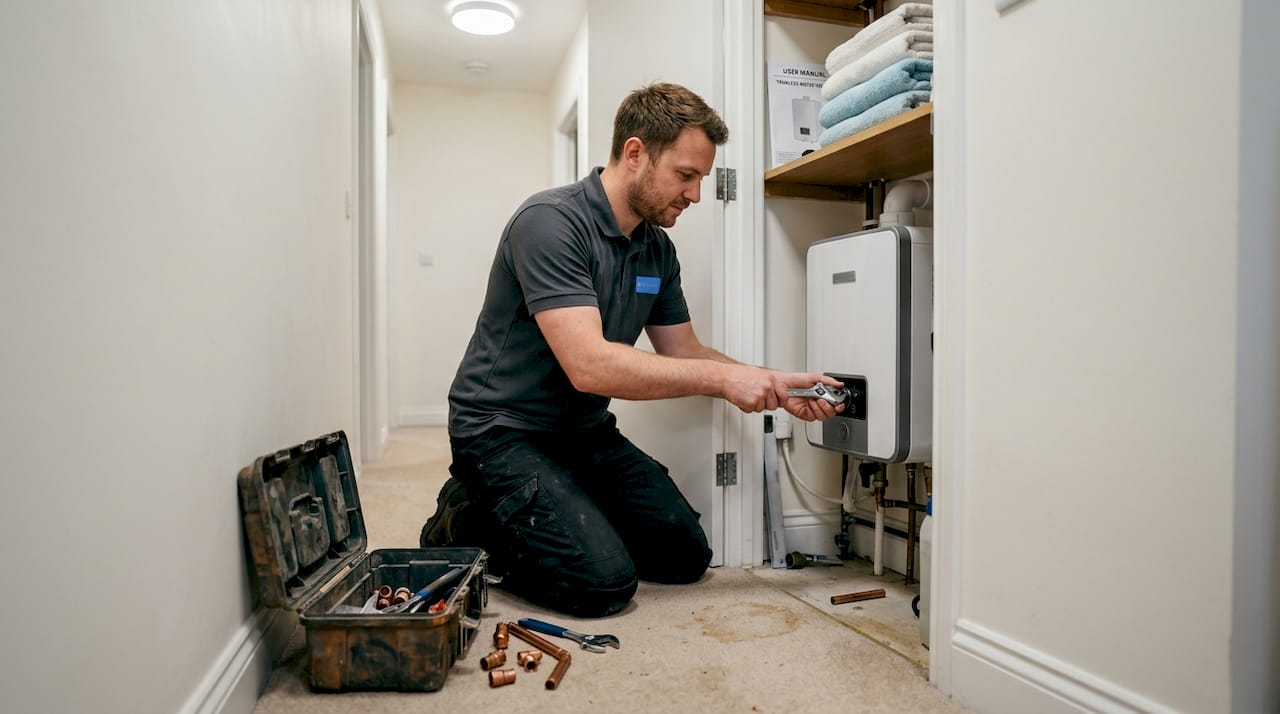
Tankless water heaters, sometimes called combi boilers or on-demand heaters, heat water only when you need it rather than storing a full tank at temperature around the clock. This eliminates standby heat loss, which is the energy wasted keeping stored water hot. Tankless heaters save 24 to 34% on water heating energy compared to conventional storage systems, and UK grey and reuse systems must meet notification and compliance requirements before installation.
Rainwater harvesting collects roof runoff, filters it, and stores it for non-potable uses such as toilet flushing, garden irrigation, and laundry. Greywater recycling takes used water from baths, showers, and basins and treats it for reuse in toilets. Both systems can significantly reduce mains water demand in larger homes.
However, complex reuse systems may not always deliver overall environmental gains once energy consumption and ongoing maintenance are taken into account. This is an important caveat that many product brochures quietly omit.
| System | Typical cost | Annual saving | Installation complexity | Best suited to |
|---|---|---|---|---|
| Tankless water heater | £800 to £2,000 | £150 to £300 | Moderate | Most homes |
| Rainwater harvesting | £2,500 to £5,000 | £100 to £200 | High | New builds, large gardens |
| Greywater recycling | £1,500 to £4,000 | £50 to £150 | High | New builds or major refurbs |
For compliance details on any of these systems, reviewing the UK plumbing regulations that apply to water reuse is essential before you proceed.
These advanced options work best in new builds, large detached homes, or properties undergoing major renovation where pipework can be planned from scratch rather than retrofitted around existing layouts.
Putting eco-friendly plumbing to work: what to expect and how to avoid pitfalls
After choosing your eco-friendly solution, careful planning and correct installation are key.
The most common mistake homeowners make is treating eco-friendly plumbing as a one-time purchase rather than a system that needs ongoing attention. A rainwater harvesting tank that isn't cleaned regularly can harbour bacteria. A greywater system with a blocked filter will either fail or push untreated water where it shouldn't go.
Here's a checklist for a smooth installation:
- Confirm regulatory requirements before any work begins. For water reuse systems, notify your water company in advance. Separate pipework, clear labelling, and air gaps between potable and non-potable supplies are mandatory, not optional.
- Use a qualified installer for anything beyond simple tap fittings. Incorrect connections between potable and recycled water supplies are a serious health risk.
- Get written confirmation of compliance from your installer, particularly for greywater and rainwater systems.
- Set a maintenance schedule from day one. Most systems need at least an annual check.
- Don't assume bigger means better. A large rainwater tank that your household can't fill regularly may sit stagnant and become a liability.
Pro Tip: Book an annual inspection for any advanced water system. A professional plumber can spot early signs of filter failure, pipe degradation, or pressure issues before they become expensive problems.
The 'set and forget' mentality is where most eco-plumbing investments go wrong. Budget for maintenance from the start and you'll protect both your investment and your household's water safety.
Comparing eco-friendly plumbing examples: which solution suits your home?
With all examples examined, here's how they stack up for different homes.
New builds benefit most from integrated recycling systems, while retrofits in older properties tend to favour low-flow upgrades for the best balance of cost and return.
| Solution | Upfront cost | Annual saving | ROI timeline | Retrofit suitability |
|---|---|---|---|---|
| Tap aerators | Under £50 | £30 to £60 | Under 1 year | Excellent |
| Dual-flush toilet | £20 to £200 | £40 to £80 | 1 to 3 years | Good |
| Low-flow showerhead | £20 to £100 | £50 to £100 | Under 2 years | Excellent |
| Tankless water heater | £800 to £2,000 | £150 to £300 | 5 to 10 years | Moderate |
| Rainwater harvesting | £2,500 to £5,000 | £100 to £200 | 15 to 25 years | Poor in older homes |
| Greywater recycling | £1,500 to £4,000 | £50 to £150 | 15 to 30 years | Poor in older homes |
Which upgrade suits your situation?
- Small flat or terraced house: Start with aerators, a dual-flush toilet, and a water-efficient showerhead. These deliver strong savings with minimal disruption.
- Large detached or semi-detached home: A tankless water heater is a worthwhile investment, and a rainwater harvesting system becomes viable if you have garden space.
- Older property (pre-1990): Prioritise low-flow upgrades first. The pipework in older homes often isn't compatible with advanced reuse systems without significant additional work.
- New build or major renovation: Integrate greywater recycling and rainwater harvesting from the design stage for the best long-term return.
Combining options always delivers better results than any single upgrade. Start with the quick wins, then layer in more advanced systems as your budget allows. Our plumbing refurbishment guide covers how to sequence these changes effectively.
Our take: why the best eco-friendly upgrade is often the simplest
After years of installing and advising on plumbing systems across UK homes, we've noticed something that surprises a lot of homeowners: the fanciest system isn't always the greenest one in practice.
Rainwater harvesting and greywater recycling get a lot of attention, and rightly so in the right circumstances. But in a typical British semi-detached house with ageing pipework and a modest roof area, these systems frequently underdeliver. The energy needed to pump and treat recycled water, combined with maintenance costs and the complexity of retrofitting separate pipe runs, can erode the environmental benefit considerably.
Simple upgrades, by contrast, work reliably from day one with almost no ongoing cost. A £10 aerator fitted to a bathroom tap will still be saving water in fifteen years. A dual-flush toilet conversion will quietly reduce your household's consumption every single day without needing a service visit.
We're not saying advanced systems aren't worth it. They absolutely are in the right home. But we'd encourage you to solve the basics first before committing to a high-cost installation. Fix dripping taps, replace inefficient fittings, and check your boiler's efficiency. You may find that the simple changes get you most of the way to your water-saving goals at a fraction of the cost.
Ready to make your plumbing greener?
If you're ready to make your home greener, professional help makes all the difference. Choosing the right eco-friendly upgrades for your specific property takes more than a quick online search. It takes someone who knows UK regulations, understands how older homes behave, and can install everything correctly the first time.

At 777 Plumber, our fully employed, in-house team handles everything from a simple aerator swap to a full tankless boiler installation. We serve homeowners across Bristol and surrounding areas, including those looking for a trusted Hotwells plumber or a reliable Eastfield plumber. Book online today and take the first step towards a more efficient, eco-friendly home with our eco-friendly plumbing services.
Frequently asked questions
How much money can I save with eco-friendly plumbing?
Eco-friendly plumbing can save the typical UK household up to £111 per year by reducing water and energy consumption through upgraded fittings and more efficient systems.
Do I need permission to install a rainwater or greywater system?
Yes. You must inform your water company before installation, and separate pipes and air gaps between potable and recycled water supplies are legally required.
Which eco-friendly plumbing upgrade offers the quickest return on investment?
Low-flow taps and dual-flush toilets consistently deliver the fastest, most cost-effective savings for the majority of UK households, often paying back within one to two years.
Are advanced systems like greywater recycling worth it in older UK homes?
Advanced systems offer the greatest benefit in new builds where pipework can be planned from scratch. In older homes, retrofitting recycling systems often costs more than the savings justify, making low-flow upgrades the smarter starting point.