TL;DR:
- UK homeowners are legally responsible for ensuring plumbing complies with regulations and uses approved fittings.
- Notifiable plumbing work requires advance notification to water suppliers and must be carried out by qualified professionals.
- Gas work must be done by Gas Safe registered engineers, and non-compliance can lead to insurance issues and legal penalties.
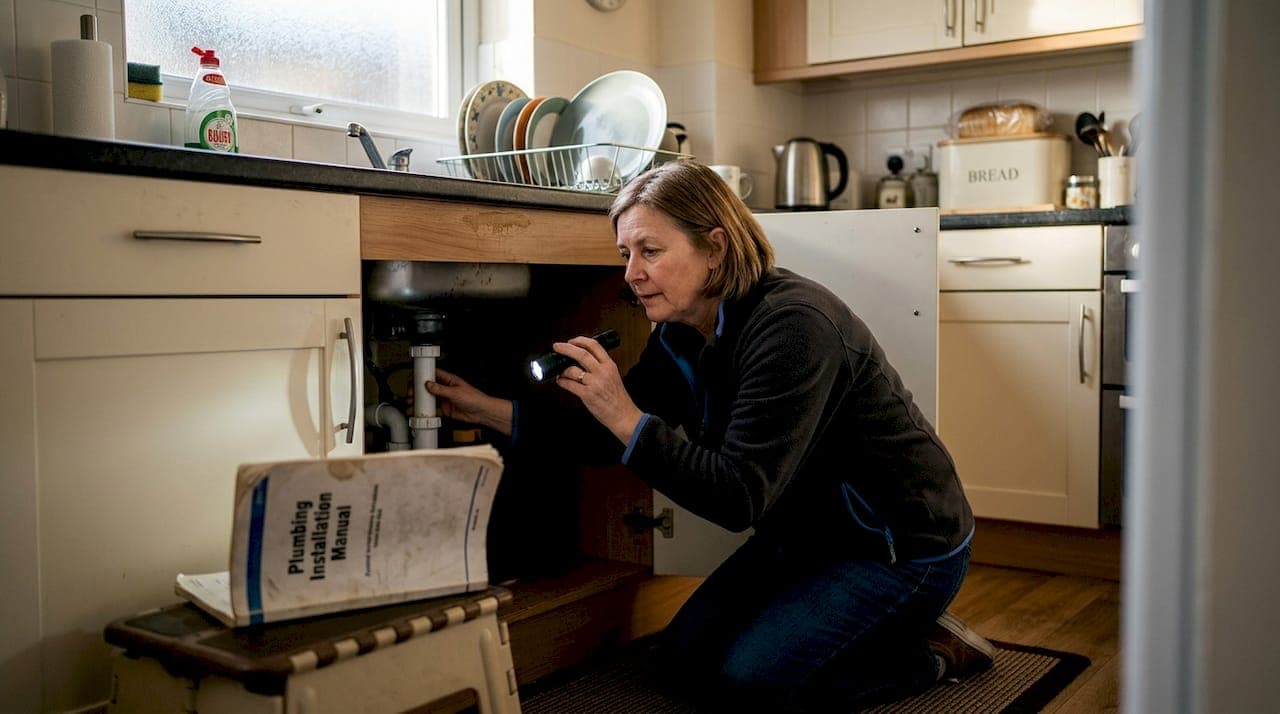
Most UK homeowners assume that swapping a tap or fitting a new shower is purely a matter of skill, not law. That assumption is wrong, and it can be expensive. Plumbing in the UK is governed by a set of regulations that determine which jobs require official notification, which fittings are legally acceptable, and who is qualified to carry out certain work. Get it wrong and you risk voiding your home insurance, failing a property sale, or worse, creating a genuine safety hazard. This guide cuts through the confusion and gives you a clear, practical framework for staying on the right side of UK plumbing law.
Table of Contents
- Understanding your legal responsibilities as a homeowner
- The essential UK plumbing regulations explained
- Gas and heating plumbing: staying safe and legal
- Notifiable works and self-certification: when and how to report
- Our take: why small shortcuts can be costly for homeowners
- Need help with compliant plumbing in your area?
- Frequently asked questions
Key Takeaways
| Point | Details |
|---|---|
| Know notification triggers | Certain plumbing jobs require notifying authorities or water suppliers before starting. |
| Always use certified professionals | Employing WRAS and Gas Safe engineers guarantees both safety and legal compliance. |
| Keep your records | Maintain certificates and paperwork for future property sales, insurance, or legal purposes. |
| Landlords’ extra responsibilities | Rental properties need annual gas checks, documented through official Gas Safety Certificates. |
| Shortcuts cost more | Ignoring or skirting regulations often leads to bigger problems, fines, or invalidated insurance. |
Understanding your legal responsibilities as a homeowner
Owning a home means accepting legal responsibility for the plumbing within it. Many people think compliance is the plumber's problem, but that is not how the law works. If non-compliant work is found in your property, you as the owner bear the consequences.
The cornerstone of residential plumbing law in the UK is the Water Supply (Water Fittings) Regulations 1999, which require the prevention of water contamination, the correct use of WRAS-approved fittings, and advance notification for certain types of work. These regulations apply to every property connected to the public water supply, which means virtually every home in the country.
Here is what the regulations require of you as a homeowner:
- Use only WRAS-approved fittings. WRAS stands for Water Regulations Advisory Scheme. Fittings carrying this approval have been independently tested to confirm they will not contaminate the water supply.
- Ensure backflow protection is in place. Backflow occurs when water flows in the wrong direction through your pipes, potentially pulling contaminants into the drinking water supply. Your plumbing must include devices that prevent this.
- Notify your water supplier before starting certain works. Not all plumbing jobs require notification, but many significant ones do. Failing to notify when required is a breach of the regulations.
- Use qualified tradespeople for complex or notifiable work. Understanding plumbing accreditation helps you choose the right person for the job and confirms their work meets legal standards.
"The Water Supply (Water Fittings) Regulations 1999 exist to protect public health. Non-compliance is not a technicality — it is a risk to your household and your neighbours."
The consequences of ignoring these rules are real. Your home insurer may refuse a claim if damage results from non-compliant plumbing. A surveyor will flag unnotified work during a property sale, which can delay or collapse a transaction. In serious cases, your water supplier can require you to remove or replace non-compliant installations at your own cost. Understanding the different UK plumbing systems in your home is a good first step towards knowing which rules apply to you.
The essential UK plumbing regulations explained
Not every plumbing job triggers the same legal obligations. The regulations draw a clear line between minor works and notifiable works, and knowing where that line sits will save you time, money, and stress.
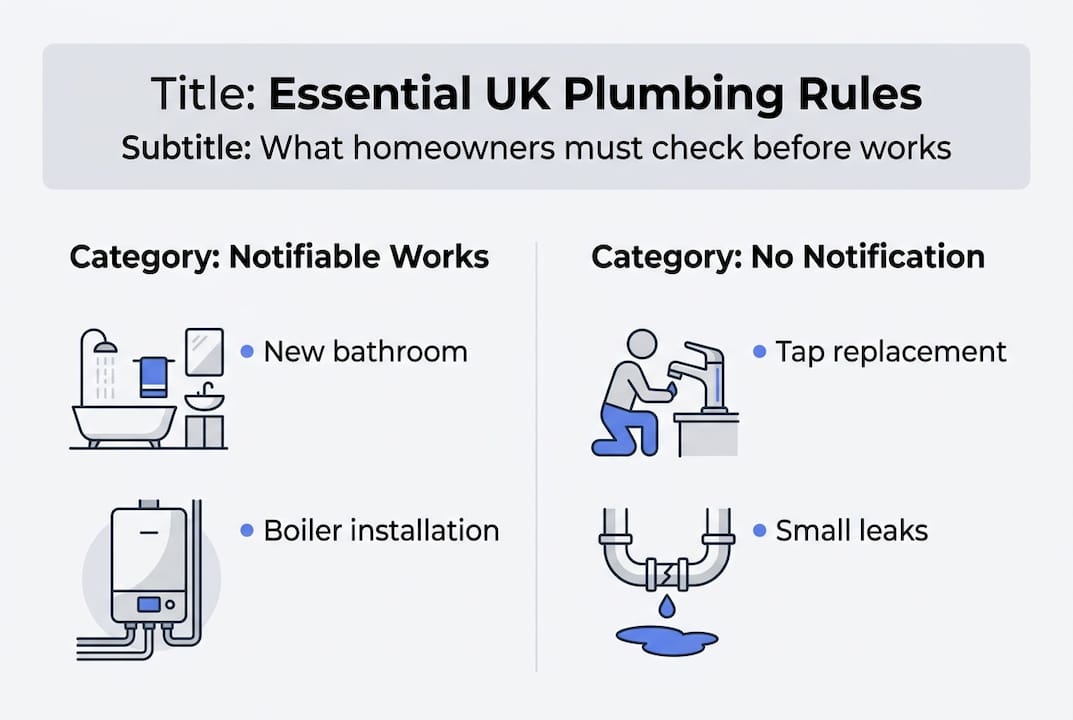
Notifiable versus non-notifiable works is the most important distinction to understand. Replacing a tap washer, fixing a leaking joint, or swapping a like-for-like tap are all considered minor works. They do not require notification. However, installing a new bathroom, fitting an unvented hot water cylinder, or adding a bidet with a spray attachment all cross into notifiable territory.
Under the Water Supply (Water Fittings) Regulations 1999, certain plumbing work requires advance notification to your water supplier, including installing unvented cylinders, bidets with sprays, or baths over 230 litres. The notification must be submitted before work begins, not after.
| Work type | Notification required? | Who to notify |
|---|---|---|
| Replacing a tap or washer | No | N/A |
| Installing a new bathroom suite | Yes | Water supplier |
| Fitting an unvented hot water cylinder | Yes | Water supplier |
| Adding a bidet with spray | Yes | Water supplier |
| Installing a bath over 230 litres | Yes | Water supplier |
| Repairing a burst pipe | No | N/A |
| New drainage connection | Yes | Building control |
WRAS approval matters throughout all of this. Any fitting that comes into contact with drinking water should carry WRAS approval. This is not optional for notifiable works and is strongly recommended for all others. When you hire professional plumbers, they should automatically source compliant fittings, but it is worth asking.
Here is a simple process to follow before any significant plumbing project:
- Identify whether the work is notifiable by checking the Water Fittings Regulations schedule.
- If notifiable, contact your water supplier in writing before work starts.
- Confirm your plumber is using WRAS-approved fittings.
- Keep all paperwork once the job is complete.
- Request a completion certificate or self-certification document from your plumber.
Resolving common plumbing issues quickly is important, but rushing a notifiable job without proper notification is a false economy.
Pro Tip: If you are ever unsure whether a job requires notification, call your local water supplier directly. Enforcement is regional, and some suppliers are stricter than others. A two-minute phone call can save months of headaches later.
Gas and heating plumbing: staying safe and legal
Water regulations are just the start. Gas and heating systems come with an extra layer of legal protection and oversight, and the consequences of getting this wrong are far more serious than a delayed property sale.
The law is unambiguous: all gas work must be carried out by a Gas Safe registered engineer. This covers boiler installations, gas pipe alterations, fitting gas fires, and connecting any gas appliance. It is illegal for an unregistered person to carry out this work, full stop.
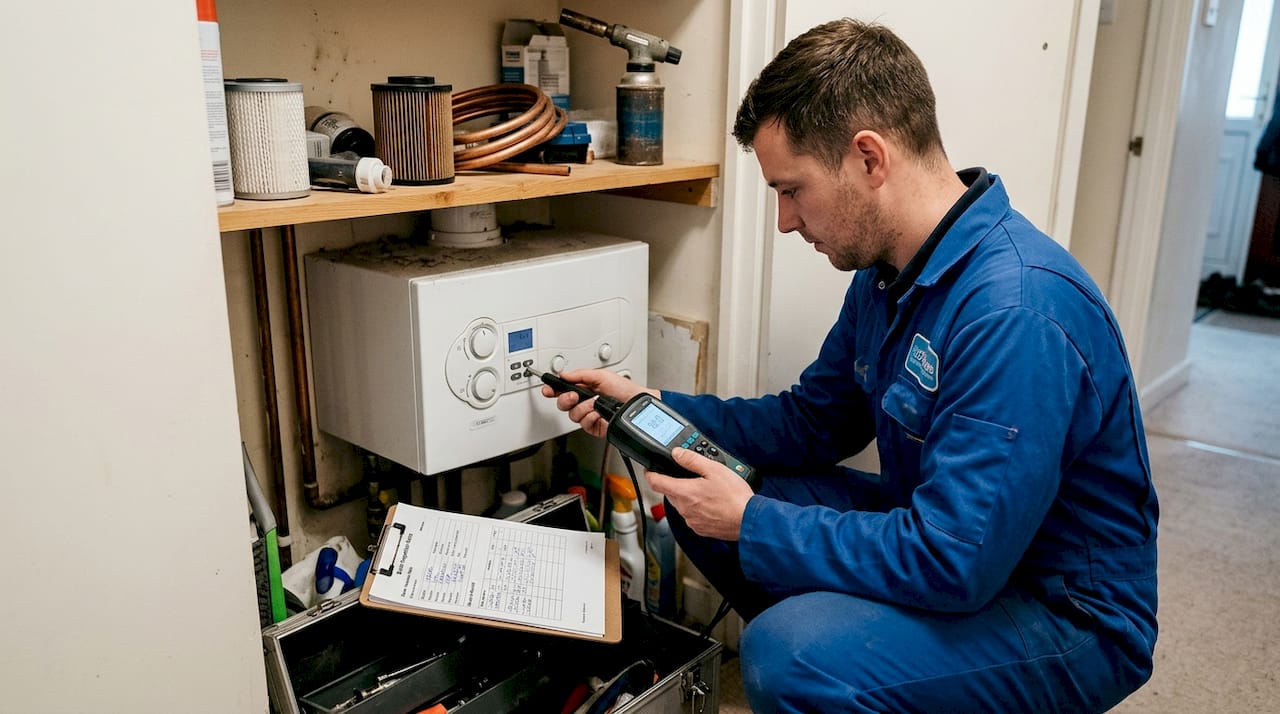
Gas-related incidents linked to unregistered work remain a serious concern across the UK. The Gas Safe Register reports that unsafe gas appliances and fittings are found in a significant proportion of homes inspected following incidents, with unregistered work frequently identified as a contributing factor. This is not a scare statistic. It reflects real outcomes in real homes.
Key obligations to be aware of:
- Homeowners must use a Gas Safe registered engineer for any gas work, no exceptions.
- Landlords have a legal duty to arrange an annual Gas Safety Certificate (known as a CP12) for every rental property. This must be carried out by a Gas Safe engineer and provided to tenants within 28 days of the check.
- Checking registration is straightforward. You can verify any engineer's Gas Safe status on the official register website before they start work. Always do this.
| Requirement | Homeowners | Landlords |
|---|---|---|
| Gas Safe engineer for all gas work | Yes | Yes |
| Annual Gas Safety Certificate (CP12) | Recommended | Legally required |
| Provide certificate to tenants | N/A | Yes, within 28 days |
| Keep records of gas work | Recommended | Yes, minimum 2 years |
| Non-gas plumbing notification | Depends on work type | Depends on work type |
Understanding the heating engineer roles in your home helps clarify who does what and why their qualifications matter. A plumber and a Gas Safe engineer are not the same thing, even if one person holds both qualifications.
Notifiable works and self-certification: when and how to report
Finally, let us zoom in on when you must notify the authorities and how to make the process as straightforward as possible.
Notifiable work under UK plumbing law refers to any installation or alteration that could affect the safety or quality of the public water supply, or that involves significant structural or drainage changes. Under building regulations approval, notifiable plumbing work includes new bathrooms, unvented cylinders, and drainage alterations, with registered plumbers able to self-certify via Competent Person Schemes.
Here is how to handle the notification process step by step:
- Identify the work type. Use the Water Fittings Regulations schedule or speak to your water supplier.
- Submit notification before work begins. This is a firm requirement, not a suggestion.
- Choose an accredited plumber. Plumbers registered under a Competent Person Scheme such as WaterSafe can self-certify their work, removing the need for you to separately notify building control.
- Receive your certificate. Once work is complete, your plumber should issue a self-certification notice. Store this safely.
- Register the work. Your plumber's scheme will notify the relevant authorities on your behalf if they are self-certifying.
The benefits of using an accredited plumber are significant:
- They handle the paperwork, saving you time.
- Their self-certification is legally recognised.
- Their work carries a degree of warranty and accountability.
- It protects you during property sales and insurance claims.
Pro Tip: Keep every piece of plumbing documentation in a dedicated folder, physical or digital. When you sell your home, a solicitor will ask for evidence of notified and certified work. Missing paperwork can delay a sale by weeks or even cause a buyer to pull out.
If you are planning a plumbing refurbishment, building compliance into your plans from the start is far easier than retrofitting it later. Regular annual plumbing checks also help you catch any legacy non-compliance before it becomes a problem.
Our take: why small shortcuts can be costly for homeowners
In practice, the difference between compliant and non-compliant work is rarely obvious until something goes wrong. We have seen this pattern repeatedly. A homeowner saves a few hundred pounds by using an unregistered tradesperson or skipping a notification. Everything looks fine. Then, three years later, they try to sell the house.
The surveyor flags the unnotified bathroom installation. The buyer's solicitor requests certificates that do not exist. The sale stalls. The homeowner now faces the cost of having the work inspected, potentially redone, and certified retrospectively. That saving of a few hundred pounds has turned into a bill of several thousand, plus weeks of delay and stress.
We have also seen insurance claims refused because non-compliant pipework was identified as the cause of a leak. The insurer's position is legally sound: if the installation did not meet regulations, they are not obliged to cover the damage.
The uncomfortable truth is that shortcuts in plumbing rarely stay hidden forever. Knowing the different plumbing repair types and their compliance requirements is not bureaucracy for its own sake. It is protection for your home, your finances, and your peace of mind. Invest in legal, qualified work from the start. It is always cheaper in the long run.
Need help with compliant plumbing in your area?
If you want to guarantee your plumbing meets every legal standard, professional help is just a call away. At 777 Plumber, our fully employed, in-house team carries the qualifications and accreditations needed to handle notifiable works, self-certify installations, and keep your home fully compliant.

We serve homeowners across Bristol and surrounding areas, including a plumber in Fishponds, Golden Hill plumbing help, and a plumber in Hicks Gate. Whether you need a compliance check, a new installation, or advice on a planned renovation, we offer transparent pricing with no call-out fees. Book online today and get the peace of mind that comes with genuinely qualified, accountable plumbing.
Frequently asked questions
What plumbing work must I notify my water supplier about?
Work including unvented hot water systems, bidets with sprays, and baths over 230 litres all require notification to your local water supplier before work begins.
Do I need a Gas Safe engineer for all gas appliances?
Yes, only Gas Safe registered engineers are legally permitted to work on any gas appliances in UK homes, and using an unregistered person is a criminal offence.
What is the benefit of using a Competent Person Scheme plumber?
Plumbers registered under a Competent Person Scheme like WaterSafe can self-certify their work, handling the regulatory paperwork on your behalf and saving you the step of notifying building control separately.
What happens if I do not comply with plumbing regulations?
Non-compliance can invalidate your home insurance, lead to enforcement action or fines, and seriously affect the resale value or saleability of your property.
Are there different rules for homeowners and landlords?
Landlords carry additional legal duties, such as annual gas safety checks via a CP12 certificate, while homeowners primarily focus on notification requirements and ensuring installations meet the Water Fittings Regulations.