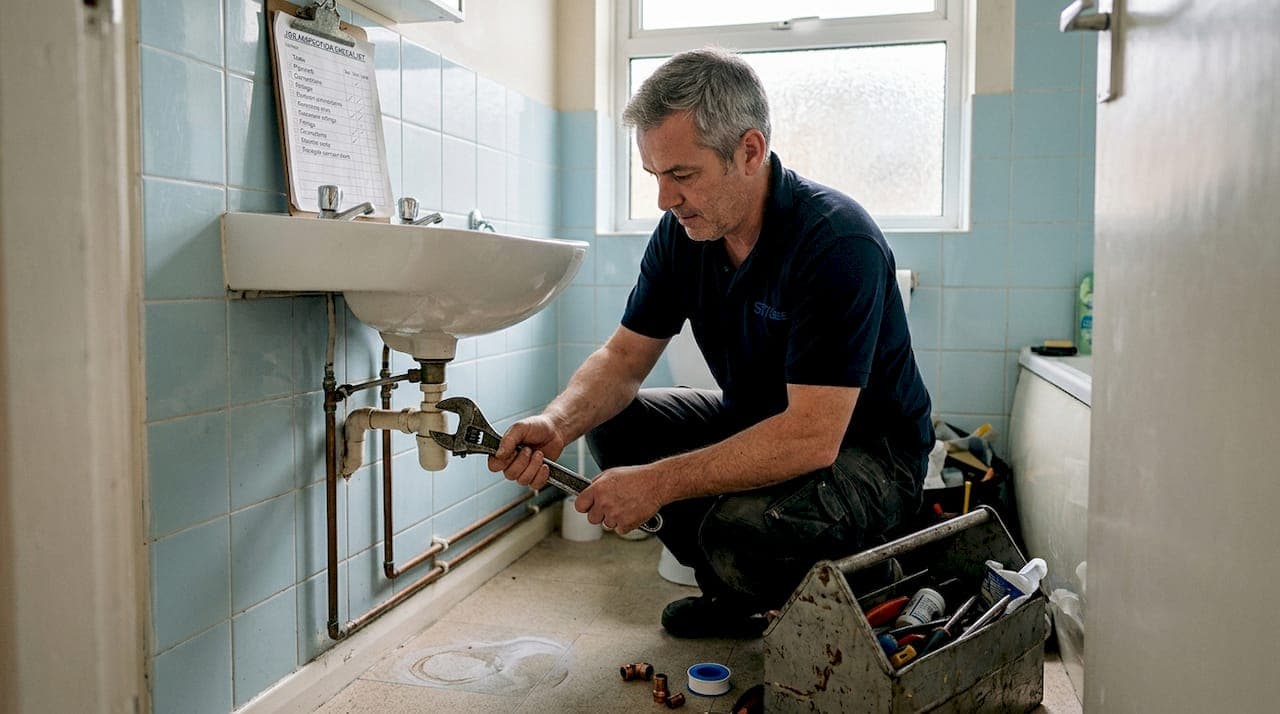
Skipping proper planning is the single biggest reason UK homeowners end up with burst budgets and weeks of disruption during plumbing refurbishments. A poorly scoped project can uncover hidden pipework, trigger unexpected building regulations requirements, and leave you without a working bathroom for far longer than anticipated. Good project management, on the other hand, keeps costs predictable, tradespeople coordinated, and the finished result exactly what you envisioned. This guide walks you through every stage, from initial survey and budgeting right through to final certification and ongoing maintenance, so you can approach your refurbishment with genuine confidence.
Table of Contents
- What is plumbing refurbishment?
- How to prepare for a plumbing refurbishment
- Key regulations and building control for UK plumbing projects
- Tools, materials, and fixture choices: what you'll need
- Step-by-step: the plumbing refurbishment process
- Cost-saving strategies and common pitfalls
- Final checks, certification, and ongoing maintenance
- Get expert help for your plumbing refurbishment
- Frequently asked questions
Key Takeaways
| Point | Details |
|---|---|
| Plan each stage | Careful step-by-step planning prevents delays and costly mistakes in plumbing refurbishments. |
| Follow regulations | Comply with building regulations and secure approval when required to protect your property value. |
| Budget with a safety net | Allow at least a 20% contingency fund and consider reusing fixtures to keep the project affordable. |
| Hire certified professionals | Using accredited tradespeople ensures high standards and valid certification for insurance or resale. |
| Document and maintain | Keep all certificates and perform regular checks to maintain new plumbing and uphold warranties. |
What is plumbing refurbishment?
Plumbing refurbishment covers a wide spectrum of work. At one end, it might mean swapping out a tired tap or replacing a leaking radiator valve. At the other, it could involve a full replumb of every pipe in the house, new soil stacks, and a brand-new boiler. Understanding where your project sits on that spectrum shapes every decision that follows.
Most UK homeowners consider refurbishment when one or more of these situations arise:
- Persistent leaks or low water pressure that repairs alone cannot fix
- An ageing system (typically over 25 years old) that is inefficient or unreliable
- A bathroom or kitchen remodel requiring new fixture positions
- A property purchase where the existing pipework is unknown or substandard
- Energy efficiency upgrades, such as moving to a combi boiler or underfloor heating
It is worth noting that building regulations treat bathroom-only and whole-house projects differently in terms of notification requirements, though cost and timeline benchmarks remain broadly consistent across both. Understanding the types of plumbing systems in UK homes, from gravity-fed to unvented, also helps you set realistic expectations before work begins.
The benefits of a well-executed refurbishment are tangible: lower water and energy bills, fewer emergency call-outs, and a measurable boost to your property's value and appeal.
How to prepare for a plumbing refurbishment
Preparation is where most projects are won or lost. Before a single pipe is touched, you need a clear picture of what you have, what you want, and what it will realistically cost.
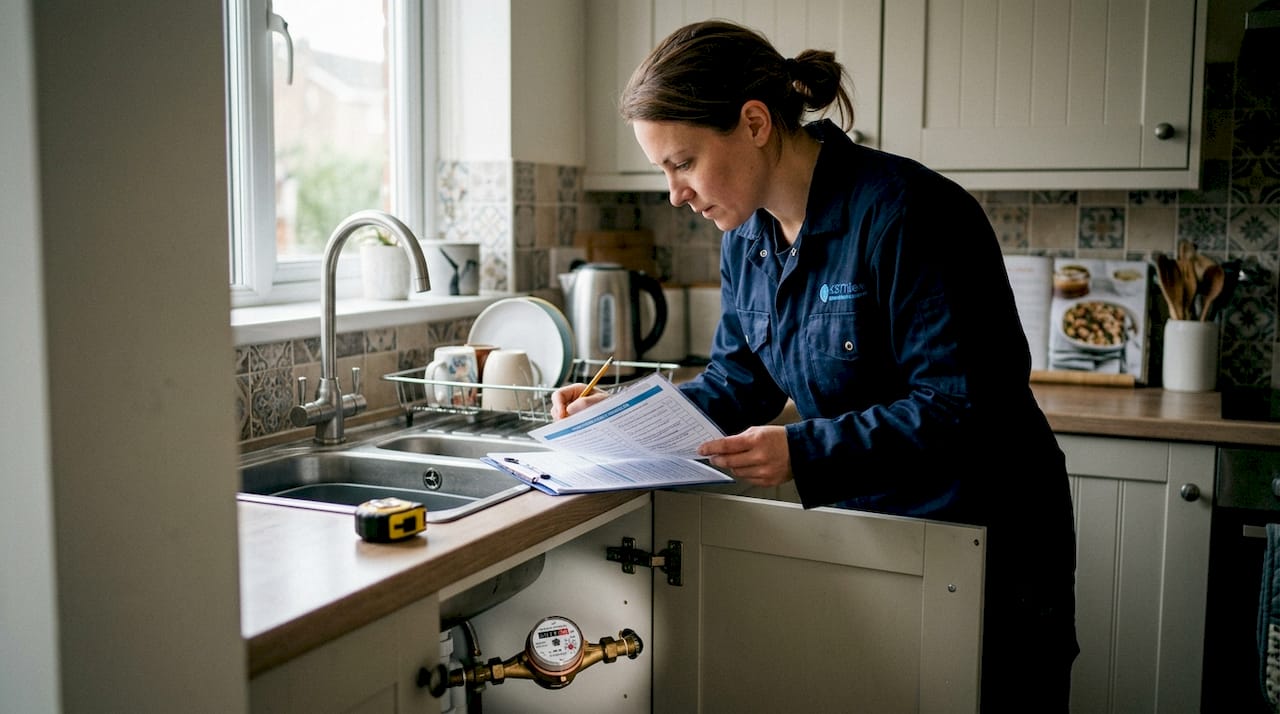
Start with a thorough home survey. In older properties especially, survey first to uncover hidden issues such as lead pipework, corroded joints, or inadequate drainage falls that could dramatically change your scope and budget. A professional survey costs a fraction of what surprise discoveries mid-project will set you back.
Once you know your scope, build your budget using the 80/20 rule: allocate 80% to planned works and keep 20% in reserve as a contingency. This is not pessimism; it is simply how experienced project managers protect themselves.
When it comes to finding tradespeople, look for:
- Gas Safe registration for any gas or boiler work
- CIPHE or APHC membership for plumbers
- NICEIC or NAPIT registration for electricians
- Public liability insurance and references from recent local jobs
- A clear written quote, not just a verbal estimate
The value of using a professional plumber goes beyond skill. A qualified tradesperson carries the right certifications to sign off work legally, which matters enormously when you come to sell your home. If you are still comparing options, our guide on choosing a plumber covers exactly what to look for.
Pro Tip: Keeping fixtures in their existing positions and opting for half-height tiling rather than full-wall tiling are two of the most effective ways to reduce both labour costs and project duration without compromising the finished look.
Key regulations and building control for UK plumbing projects
Ignoring building regulations is a costly mistake that can invalidate your home insurance and complicate any future sale. Knowing when approval is required protects you legally and financially.
"Notify building control for inspections and certificates. These are essential for insurance purposes and when selling your home." — Planning Portal
Here is a quick reference for when building regulations apply:
| Type of work | Regulation | Approval needed? |
|---|---|---|
| New or altered drainage | Part H | Yes |
| Electrical work in bathrooms | Part P | Yes |
| Ventilation changes | Part F | Yes |
| Hot and cold water systems | Part G | Yes |
| Like-for-like fixture swap | N/A | Usually no |
| New boiler installation | Part J/L | Yes |
Most qualified plumbers and electricians operate under a competent person scheme, which means they can self-certify their work and notify building control on your behalf. This removes the burden from you, but you must still receive the completion certificate. Understanding plumbing accreditation schemes helps you verify that your chosen tradesperson has this authority. Proper certification also underpins home plumbing safety for your family long after the project ends.
Tools, materials, and fixture choices: what you'll need
Choosing materials and fixtures early is critical. Delays in ordering are one of the most common reasons refurbishments overrun, and lead times of 2 to 8 weeks are entirely normal for bespoke or imported items.
Decide on the following fixtures as early as possible:
- Bath or shower enclosure (bespoke sizes can take 6 to 8 weeks)
- WC suite and cistern
- Basin and pedestal or vanity unit
- Taps and mixer valves
- Radiators or towel rails
- Thermostatic radiator valves and isolation valves
Here is a comparison of common material choices to help you decide:
| Material | Best for | Cost level | Lead time |
|---|---|---|---|
| Copper pipe | Reliable, long-lasting pipework | Medium | 1 to 3 days |
| PEX/plastic pipe | Flexible runs, DIY-friendly | Low | 1 to 3 days |
| Chrome fittings | Visible fixtures, modern look | Medium to high | 1 to 4 weeks |
| Bespoke sanitaryware | Unique layouts, premium finish | High | 4 to 8 weeks |
| Standard sanitaryware | Budget-conscious refurbs | Low to medium | 1 to 2 weeks |
Understanding the UK plumbing system types in your home will also influence which pipe materials and fittings are compatible with your existing setup.
Pro Tip: Keeping fixtures in their current positions is not just a cost-saving tip; it also avoids the need to move soil pipes or waste runs, which can trigger building regulations notifications and add weeks to your programme.
Step-by-step: the plumbing refurbishment process
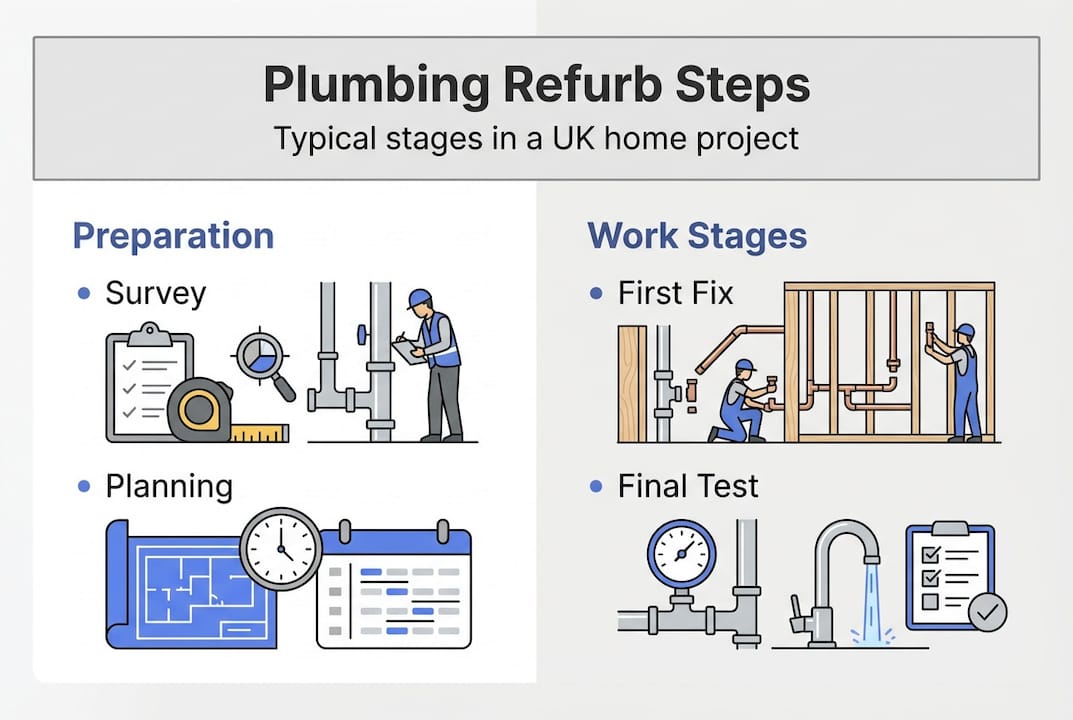
Knowing the order of works prevents costly mistakes and keeps every trade on schedule. Here is the typical sequence for a bathroom or whole-house plumbing refurbishment:
- Design and layout — Measure existing pipe and waste positions; finalise fixture locations
- Building regulations check — Confirm which parts apply and notify building control or appoint a competent person
- Material and fixture ordering — Place all orders with lead times in mind
- Trade coordination — Schedule plumber, electrician, and plasterer in the correct sequence
- Demolition and strip-out — Remove old fixtures, tiles, and redundant pipework
- First fix plumbing and electrics — Run new pipes, waste runs, and cable routes before walls are closed
- Second fix installation — Fit sanitaryware, taps, radiators, and electrical accessories
- Testing and commissioning — Pressure test pipework, check for leaks, and commission the boiler or heating system
Here is a realistic timeline for each stage:
| Stage | Typical duration |
|---|---|
| Design and ordering | 1 to 4 weeks |
| Demolition | 1 to 2 days |
| First fix | 2 to 5 days |
| Plastering and drying | 5 to 10 days |
| Second fix | 2 to 4 days |
| Testing and sign-off | 1 to 2 days |
If anything unexpected surfaces during demolition, such as a hidden leak or corroded pipework, having a trusted team on hand for emergency plumbing repairs means you will not lose days waiting for someone to attend. You can also browse our project gallery to see how finished refurbishments look in practice.
Cost-saving strategies and common pitfalls
Every pound saved on a refurbishment is a pound that stays in your pocket. The good news is that the most effective savings come from smart planning, not from cutting corners on quality.
Proven ways to reduce costs:
- Keep the layout — Moving a toilet or bath to a new wall can add £500 to £2,000 to your bill
- Batch jobs — Combining bathroom and kitchen plumbing work in one visit reduces call-out and labour costs significantly
- Order materials yourself — Tradespeople mark up materials; buying direct from a merchant saves 10 to 20%
- Avoid peak season — January to March is typically quieter for trades, meaning better availability and sometimes lower rates
- Half-height tiling — Tiling only to dado height rather than full wall height cuts both material and labour costs
The 80/20 contingency rule is non-negotiable. Homeowners who skip it almost always regret it when a hidden issue surfaces.
Common pitfalls to avoid:
- Skipping a pre-survey in older properties and discovering lead pipes mid-project
- Attempting complex pipework as DIY without the right certifications
- Failing to obtain completion certificates, which can block a future property sale
- Choosing the cheapest quote without checking qualifications or insurance
The benefits of a professional plumber extend well beyond the work itself. A qualified tradesperson protects you from liability, ensures compliance, and gives you recourse if something goes wrong.
Final checks, certification, and ongoing maintenance
The project is not finished when the last tile goes up. Commissioning, documentation, and maintenance are what protect your investment for years to come.
Once work is complete, your tradesperson should carry out a full pressure test on all new pipework and check every joint for leaks before closing up any walls. The heating system should be balanced and the boiler commissioned according to the manufacturer's instructions.
"Certificates from building control are essential for insurance purposes and when selling your home." — Planning Portal
Your post-completion checklist should include:
- Building control completion certificate (for notifiable works)
- Gas Safe certificate (for any gas work or boiler installation)
- Electrical installation certificate (Part P, for bathroom electrics)
- Boiler manufacturer's warranty registration
- Photographs of pipe and cable routes before walls were closed
- Written record of all isolation valve and stopcock locations
For ongoing protection, schedule annual plumbing checks to catch minor issues before they become expensive ones. Understanding your plumbing accreditation documents also helps you verify that all work meets current standards if you ever need to make an insurance claim.
Get expert help for your plumbing refurbishment
Planning a plumbing refurbishment is genuinely manageable when you have the right team behind you. From initial survey through to final sign-off, working with fully employed, accredited professionals means every stage is handled correctly, documented properly, and backed by real accountability.

At 777 Plumber, we carry out plumbing, heating, and electrical work with no subcontractors, no call-out fees, and transparent pricing from the start. Whether you need a local expert, such as our plumbers in Hotwells, or want to see the quality of our finished work in our project gallery, we make it straightforward to get started. Ready to move forward? You can book a heating engineer online in minutes and get your refurbishment on the calendar today.
Frequently asked questions
Do I need building regulations approval for all plumbing refurbishments?
You only need building regulations approval for works affecting drainage, electrics, ventilation, or sanitation. Like-for-like fixture swaps generally do not require notification.
How can I reduce plumbing refurbishment costs?
Keep your layout and main fixtures in their existing positions where possible, batch multiple jobs into one visit, and always reserve 20% contingency on top of your planned budget.
What certificates should I receive after a plumbing refurbishment?
Depending on the work carried out, you should receive a building control completion certificate, a Gas Safe certificate for gas work, and an electrical installation certificate for any notifiable bathroom electrics.
How long does a typical plumbing refurbishment take?
A straightforward bathroom refurbishment typically takes one to two weeks. Whole-house replumbing, including material lead times of 2 to 8 weeks, can extend the overall programme to four weeks or more.