TL;DR:
- Hidden water leaks in Bristol homes can cause significant structural and financial damage if not promptly addressed.
- Professional leak detection uses non-invasive technologies like thermal imaging, tracer gas, and acoustics for accurate pinpointing.
- DIY checks involve water meter monitoring and visual inspections, but complex leaks require expert intervention for effective resolution.
A water leak can silently drain hundreds of pounds from your wallet long before you spot a single damp patch. Leaky toilets alone waste up to 400 litres per day, and many Bristol homeowners have no idea until the bill arrives. Whether your home is a Victorian terrace in Clifton, a modern flat in Redcliffe, or a semi-detached in Horfield, hidden plumbing issues are far more common than most people realise. This guide walks you through how to spot, confirm, and resolve even the most stubborn leaks, covering everything from DIY checks to professional detection technology.
Table of Contents
- Why water leaks in Bristol can't be ignored
- How professional leak detection works in Bristol
- DIY leak checks and when to call an expert
- Complex and hidden leaks: What Bristol homeowners need to know
- Choosing the right leak detection company in Bristol
- Experience teaches: What most Bristol plumbers won't tell you about leaks
- Secure your Bristol home with fast, trusted leak repair
- Frequently asked questions
Key Takeaways
| Point | Details |
|---|---|
| Early detection prevents damage | Spotting leaks early keeps Bristol homes safe and bills down. |
| Professional methods are non-invasive | Modern leak detection finds the source without property disruption. |
| Check the basics yourself | A simple meter or toilet test can reveal hidden issues before bigger action is needed. |
| Choose trusted local plumbers | Local, well-reviewed experts provide faster, more reliable repairs than national chains. |
| Insurance often helps | Your home insurance will typically cover leak search and access costs with the right documentation. |
Why water leaks in Bristol can't be ignored
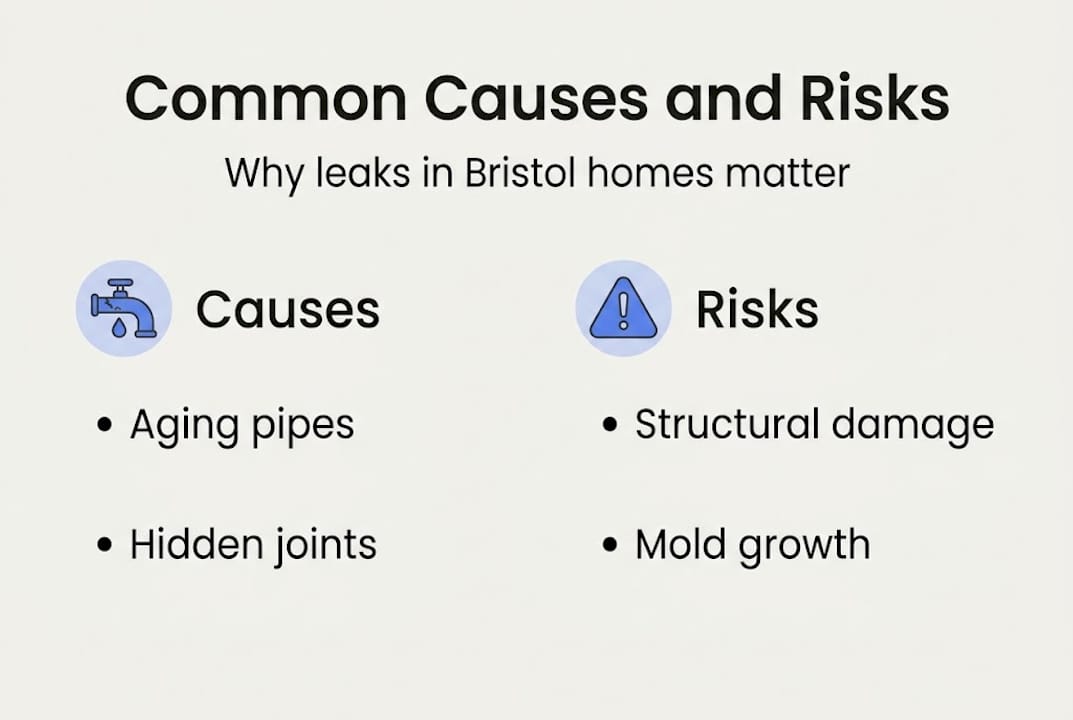
A slow drip behind a wall or beneath a floor might seem trivial. It is not. Left unchecked, even a small leak can warp floorboards, promote black mould, weaken structural timbers, and send your water bills soaring. Bristol homeowners face a particular combination of risks that makes this problem more pressing than in newer housing stock elsewhere.
Many Bristol homes were built during the Victorian and Edwardian eras, meaning original lead or cast-iron pipework is still lurking beneath floorboards or inside walls. Bristol also sits on clay-rich soil, which swells and contracts with the seasons. That ground movement gradually stresses buried supply pipes, creating fractures that grow slowly but steadily. Underfloor heating systems, increasingly popular in renovated Bristol properties, add another layer of complexity: pressurised water circuits run invisibly beneath concrete, and any failure there is impossible to see without specialist equipment.
It is also worth knowing exactly where your legal responsibility begins. Bristol Water's leak advice confirms that the utility company handles leaks in the public main under the street, but everything from your boundary inwards is your problem to fix and fund. That includes the supply pipe running from the pavement to your stopcock.
The most common household culprits are:
- Toilet cisterns leaking silently into the pan (400 litres wasted daily in a single faulty toilet)
- Supply line joints under kitchen sinks and behind washing machines
- Underfloor heating pipes in extended or renovated rooms
- Mains supply pipes running through the garden or under the driveway
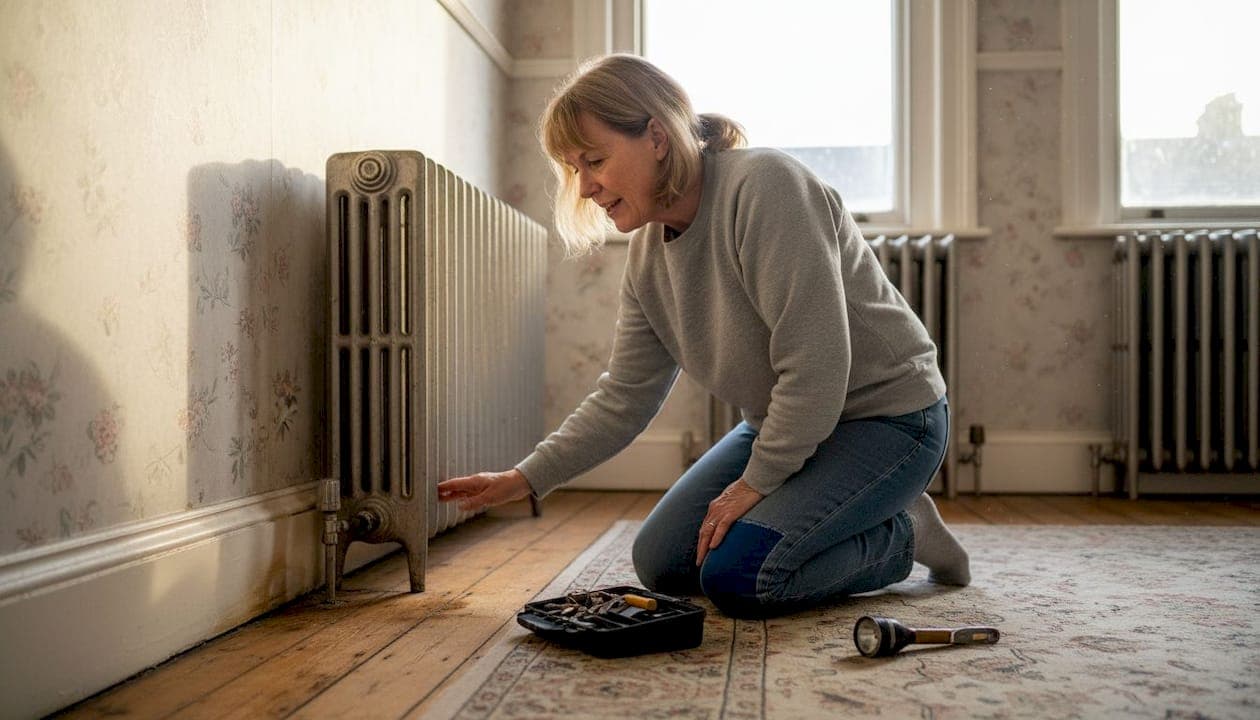
- Radiator valves and overflow pipes that drip unnoticed for months
Ignoring a confirmed leak can also invalidate your home insurance if the insurer decides the damage resulted from a known but unaddressed fault. Documenting and acting quickly is therefore both financially and legally sensible. Pay attention to the signs of hidden leaks before a minor issue becomes a major one.
Key fact: A single leaking toilet in your Bristol home can add hundreds of pounds to your annual water bill without a single visible drip on the floor.
Now that you know just how costly and problematic hidden leaks can be, let us look at how professionals actually find them in Bristol homes.
How professional leak detection works in Bristol
Modern leak detection has very little in common with the old approach of lifting floorboards and hoping for the best. Today's specialist engineers carry a toolkit of non-invasive technologies that can locate a pinhole leak under a concrete slab without moving a single tile. The primary methods include thermal imaging, tracer gas, and acoustic listening devices, often used in combination for the most accurate result.
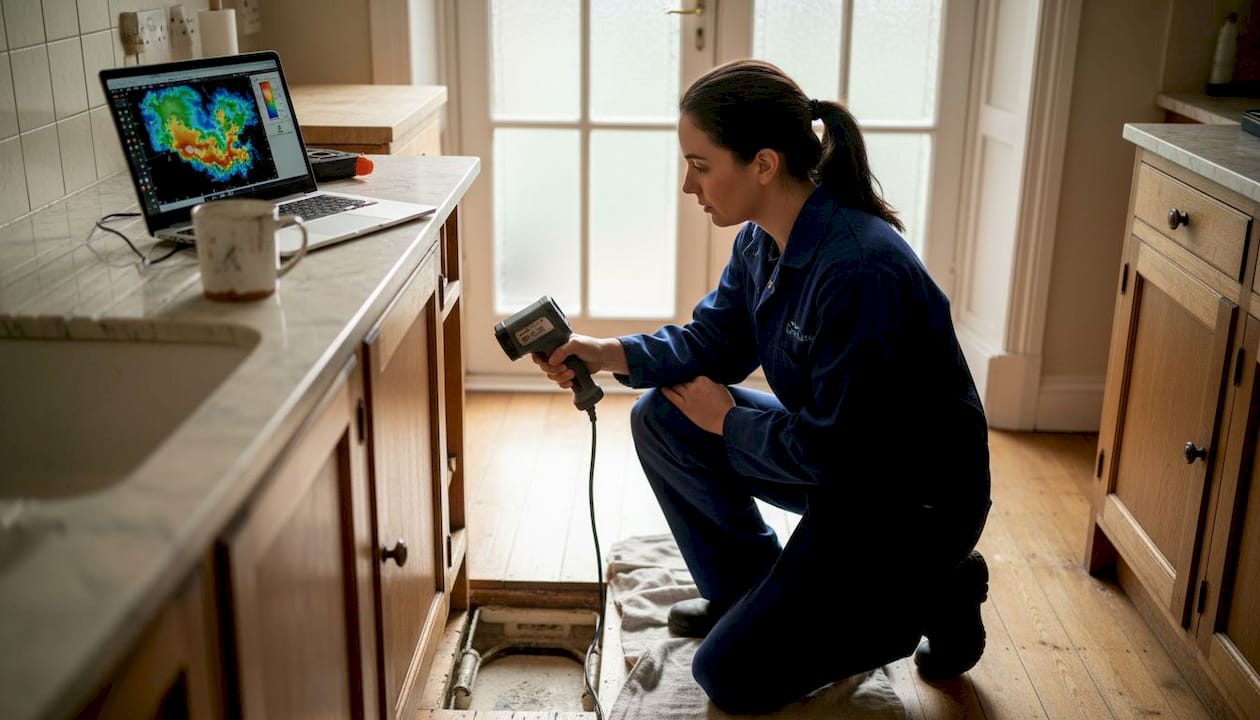
Thermal imaging uses an infrared camera to read temperature differences on surfaces. A leaking underfloor pipe carries water at a different temperature from the surrounding screed, so it shows up clearly on screen. This method is particularly effective for wet underfloor heating systems and is one of the reasons thermal imaging in plumbing has become standard practice among quality Bristol engineers.
Tracer gas involves pumping a safe hydrogen-nitrogen mixture into the suspect pipe. The gas escapes at the leak point and rises to the surface, where a handheld detector picks it up. This is the gold standard for leaks buried under driveways, patios, or deep concrete floors, and specialist Bristol firms use tracer gas alongside thermal imaging and ground microphones to achieve precise results with minimal disruption.
Acoustic devices amplify the sound of water escaping under pressure. Trained engineers press listening rods against floors or walls and follow the noise to its source. It sounds straightforward, but interpreting the signals accurately takes real experience.
| Method | Best used for | Disruption level |
|---|---|---|
| Thermal imaging | Underfloor heating, hidden pipes | None |
| Tracer gas | Underground mains, driveways, concrete | Minimal |
| Acoustic listening | Supply pipes, walls, floors | None |
| Endoscopic camera | Inside pipe cavities, wall voids | Minimal |
| Damp meter | Confirming moisture in walls | None |
Pro Tip: Ask your engineer to combine at least two methods when dealing with older Bristol properties. Victorian pipework layouts rarely match modern drawings, and a single technique can miss a secondary leak.
Understanding the benefits of professional leak detection goes well beyond the repair itself. A written engineer's report documents the source, method used, and extent of damage, which is exactly what your insurer will ask for. Understanding the technology is one thing, but how do you know when it is time to call in the pros or what you can check yourself?
DIY leak checks and when to call an expert
Before picking up the phone, there are a few reliable checks you can run yourself. They take minutes, cost nothing, and can confirm whether you genuinely have a problem.
- Check your water meter. Turn off every tap and appliance in the house, then watch the meter dial or digital display for two minutes. Any movement means water is flowing somewhere it should not be.
- Test your toilet cistern. Place a strip of dry toilet paper against the back of the pan below the waterline. If it gets wet without flushing, the flap valve is leaking. Bristol Water offers free leaky loo strips for exactly this purpose.
- Check under sinks. Pull everything out from under your kitchen and bathroom cabinets and feel the base of the cupboard for dampness or staining.
- Listen at night. When the house is quiet, a persistent dripping or hissing sound with all taps off is a strong indicator of a hidden leak.
- Inspect your water bill. A sudden spike with no change in habits is one of the most reliable warning signs that something is wrong internally.
Pro Tip: Take a photo of your meter reading before you go to bed and another first thing in the morning before anyone uses water. If the numbers have changed, you have a leak worth investigating further.
The DIY approach works well for simple, accessible leaks, but it has firm limits. If your meter confirms a leak but you cannot locate the source, or if you suspect the problem is in an underfloor pipe, a buried supply line, or inside a wall cavity, you need a professional. The same applies if the leak is near electrical wiring, gas pipework, or structural elements. Prompt reporting also strengthens any insurance claim, so do not delay once you suspect a hidden fault.
DIY methods are helpful for simple leaks, but what if yours is in an awkward, hard-to-reach, or high-stakes location?
Complex and hidden leaks: What Bristol homeowners need to know
Some leaks simply cannot be solved with a torch and a bit of toilet paper. Underground supply pipe failures, fractures beneath concrete extensions, and pressurised underfloor heating leaks all fall into a category that requires professional-grade equipment and genuine local experience.
For these situations, tracer gas and acoustic tools are most effective, particularly for leaks under concrete, underfloor heating systems, and driveways. Engineers will often combine both methods alongside thermal imaging to triangulate the exact location before any surface is broken. This matters enormously in a Bristol home where you might have original Victorian tiles or an expensive resin floor.
Environmental noise is a real complication. Traffic, nearby construction, and even rain can interfere with acoustic sensors. Modern equipment analyses dynamic sound patterns over time to filter out background interference, but this is only reliable in the hands of an engineer who knows how to interpret the data.
| Leak type | Recommended method | Insurance claim likely? |
|---|---|---|
| Underfloor heating pipe | Thermal imaging + tracer gas | Yes, with report |
| Buried supply line | Tracer gas + acoustic | Yes, with report |
| Wall-concealed pipe | Acoustic + damp meter | Sometimes |
| Cistern or visible joint | DIY or basic plumber | Rarely needed |
On the question of responsibility, it is worth restating clearly: Bristol Water handles street leaks, but supply pipe leaks within your boundary are your responsibility. Bristol Water does offer limited financial assistance of up to £100 for certain repairs, so it is worth a call to them if you discover a supply pipe issue. For anything on your side of the boundary, professional mains leak guidance can help you understand the options before committing to excavation.
"Smarter leak detection technology is becoming essential for managing water risk in both residential and commercial properties."
With even the most hidden leaks now locatable, what should you consider when hiring a leak detection firm in Bristol?
Choosing the right leak detection company in Bristol
Not every plumber in Bristol carries the specialist equipment or experience needed for complex leak detection. Choosing the wrong firm can mean unnecessary disruption, missed leaks, and a wasted call-out fee. Here is what to look for.
- Same-day or emergency availability. A hidden leak does not wait for a convenient slot. Prioritise local firms with same-day service, strong reviews, and the right credentials.
- Gas Safe and DBS-checked engineers. These certifications are non-negotiable for any professional working inside your home.
- No-find-no-fee or trace and access support. Reputable firms either do not charge if they find nothing, or they provide the documentation needed to claim trace and access costs through your insurer.
- Independent reviews. Check verified customer reviews on independent platforms rather than relying solely on a company's own website testimonials.
- Combined detection and repair. Firms that can both locate and fix a leak in one visit save you time, reduce property disruption, and simplify the paper trail for insurance purposes.
For local Bristol homeowners, using a firm with genuine roots in the area pays dividends. They know the housing stock, the soil conditions, and the typical plumbing configurations. Local Bristol plumbers who specialise in leak work will always outperform a national call centre dispatching an unfamiliar engineer.
Pro Tip: Before booking, ask specifically whether the engineer will produce a written report on completion. Without one, making a successful insurance claim becomes significantly harder.
Now you know what to look for and what to expect. It is worth considering a perspective that most articles on this subject overlook entirely.
Experience teaches: What most Bristol plumbers won't tell you about leaks
After years of working in Bristol homes, we have noticed a pattern that most firms are reluctant to discuss openly. National chains often treat Bristol as just another postcode on a spreadsheet. They dispatch engineers who have never worked in a Victorian terrace, never encountered clay soil pipe movement, and are not familiar with the particular heating configurations common in BS postcode properties. Response times suffer, and so does accuracy.
The honest truth is that combining detection methods is not optional in older Bristol stock, it is essential. A single thermal image will miss a tracer gas hit every time in a deep concrete pour. We have seen clients spend money on a first opinion that found nothing, then a second engineer using two complementary methods found the leak in under an hour.
Smaller leaks are almost always cheaper to fix than homeowners expect, but only when caught early. Waiting until water staining appears on ceilings or floors means the remedial work has already multiplied. Always request a written report from your engineer. It is the single most valuable document you will have if you need to involve your insurer, and a trustworthy firm will produce one without being asked twice.
Secure your Bristol home with fast, trusted leak repair
When a leak appears in your Bristol home, speed genuinely matters. Every hour of delay risks further water damage, rising repair costs, and unnecessary stress.

At 777 Plumber, our fully employed, DBS-checked engineers are available for same-day callouts across Bristol, including emergency cover in Hotwells and leak repair in Eastfield. We use no subcontractors, offer transparent pricing with no hidden call-out charges, and provide a written report on every job. Browse our plumbing gallery to see the standard of workmanship you can expect. Book online today or call us directly for an immediate response. Your home deserves fast, reliable protection.
Frequently asked questions
What is the fastest way to tell if I have a hidden water leak at home?
Check your water meter when no water is being used. If it keeps moving, water meter monitoring confirms you have a concealed leak that needs investigating.
Do I need to dig up my floors to find an underfloor pipe leak?
No. Professionals use thermal imaging and tracer gas to pinpoint underfloor leaks cleanly and accurately without major disruption to your home.
Is leak detection covered by home insurance in Bristol?
Most policies cover trace and access costs when you provide an engineer's report. Detection costs are often recoverable through your insurer with the right documentation from a qualified specialist.
Which leaks are Bristol Water responsible for?
Bristol Water covers street leaks only. Any pipe within your property boundary, including your supply pipe from the pavement, is your legal and financial responsibility to repair.
How soon can a plumber fix a water leak in Bristol?
Same-day detection and repair is available from several local specialists, particularly for home emergencies where damage is ongoing.