TL;DR:
- Thermal imaging accurately locates hidden leaks without property damage.
- It offers faster, non-invasive, and cost-effective leak detection compared to traditional methods.
- Choosing experienced, qualified plumbers with thermal imaging expertise ensures reliable, early problem detection.
Hidden plumbing leaks are one of the most frustrating problems a homeowner can face. Water silently seeps behind walls, under floors, and through ceilings long before you spot a damp patch or notice a rising water bill. Many people still assume finding a leak means ripping up tiles or drilling through plasterboard. That assumption is outdated. Thermal imaging technology has changed the game entirely, giving skilled plumbers the ability to pinpoint leaks quickly, cleanly, and accurately. This guide explains how thermal imaging works, why it outperforms older methods, and how to choose a plumber who uses it properly.
Table of Contents
- What is thermal imaging in plumbing?
- Conventional versus thermal leak detection
- Key benefits for homeowners using thermal imaging
- Real-world applications: How plumbers use thermal imaging
- Choosing a plumber with thermal imaging expertise
- Why thermal imaging is the future of plumbing detection
- Get expert plumbing help with thermal leak detection
- Frequently asked questions
Key Takeaways
| Point | Details |
|---|---|
| Non-invasive detection | Thermal imaging uncovers leaks without damaging ceilings, floors, or walls. |
| Saves time and money | Pinpointing issues quickly means less costly repairs and less disruption to your home. |
| Future-ready plumbing | Choosing a plumber with thermal expertise ensures modern, effective solutions. |
What is thermal imaging in plumbing?
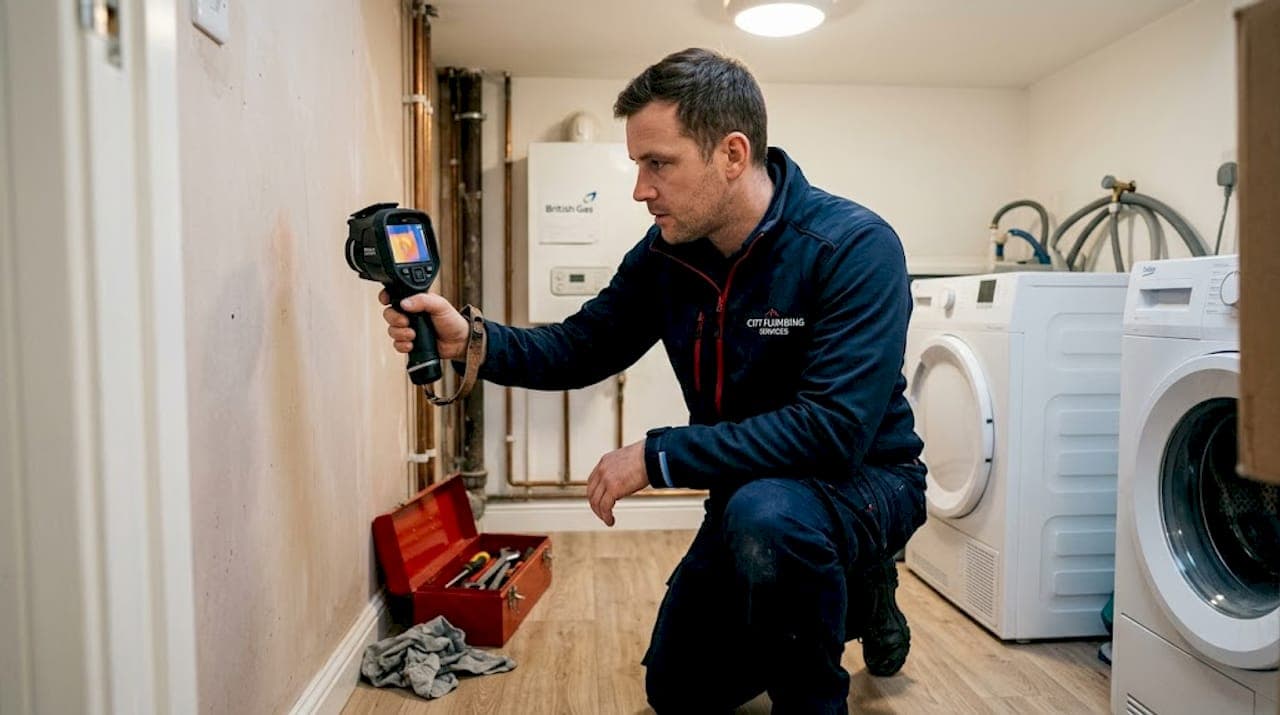
Thermal imaging uses infrared cameras to map temperature differences across surfaces. Every material radiates heat, and when water escapes from a pipe, it changes the temperature of whatever surrounds it. An infrared camera captures those differences as a colour-coded image, making the invisible visible. Warm patches, cool streaks, and unusual gradients all tell a story that a trained plumber can read at a glance.
In plumbing, this matters enormously. Pipes run behind walls, beneath concrete screed, and under timber floors. When one of them leaks, the moisture spreads outward and alters the thermal signature of the surrounding area. Thermal imaging cameras detect heat differences in pipes, making leaks visible without excavation. That single capability removes the need for much of the destructive investigation that used to be standard practice.
Here are the most common situations where thermal imaging proves its worth in a home:
- Underfloor heating systems where a pipe has cracked beneath the screed
- Cold spots on radiators or walls suggesting poor circulation or hidden moisture
- Damp patches on ceilings with no obvious source above
- Concealed pipework behind kitchen or bathroom tiles
- Suspected leaks near the mains supply entering the property
If you have already noticed signs of pipe leaks such as unexplained damp, peeling paint, or a water meter that keeps ticking when nothing is running, thermal imaging is likely the fastest route to an answer.
"Thermal imaging cameras can reveal leaks more precisely, avoiding unnecessary disruption to your home and your daily routine."
The technology is not new, but its adoption in residential plumbing has accelerated significantly. What was once reserved for large commercial buildings or industrial sites is now a practical tool for everyday domestic work. The cameras themselves have become more affordable, more accurate, and easier to operate, which means more plumbers can offer this service without passing excessive costs on to you.
Conventional versus thermal leak detection
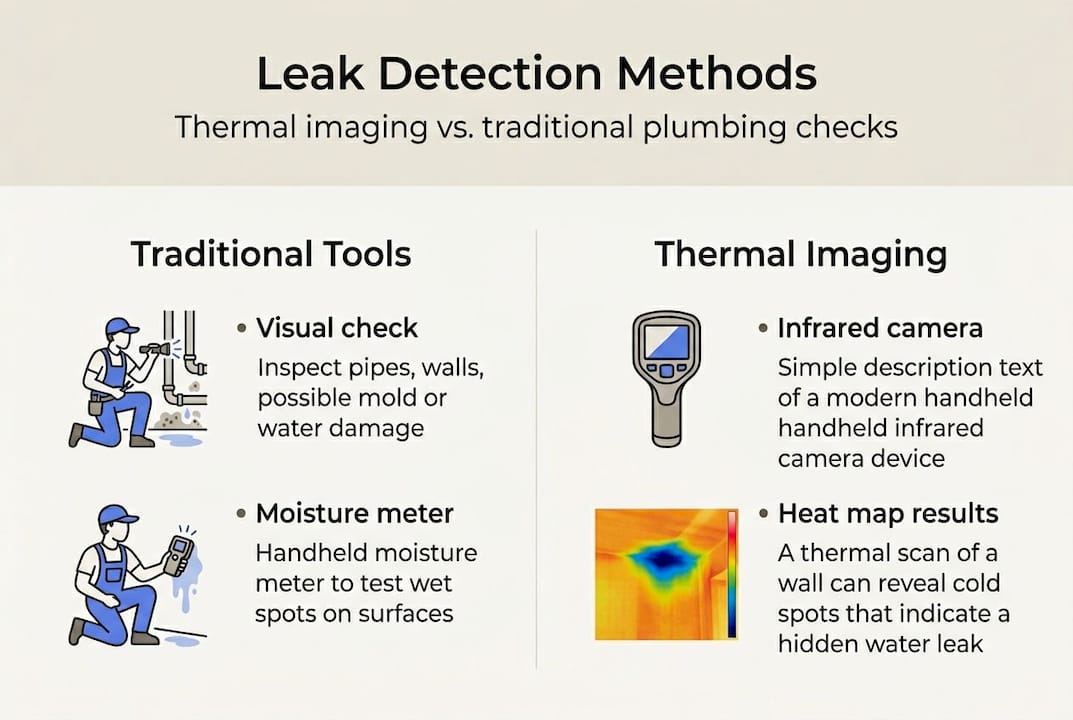
Traditional leak detection relies on a combination of visual inspection, moisture meters, listening devices, and educated guesswork. A plumber might tap walls, check for damp with a handheld meter, or trace pipe routes on a plan and work backwards from the symptom. In many cases, this process leads to opening up floors or walls before the exact leak location is confirmed.
Thermal imaging often locates hidden leaks much faster and more accurately than manual inspections. That speed translates directly into less disruption and lower overall costs for you.
| Feature | Traditional methods | Thermal imaging |
|---|---|---|
| Accuracy | Moderate | High |
| Speed | Slow | Fast |
| Property damage | Often significant | Minimal |
| Cost of investigation | Variable | Predictable |
| Suitable for hidden leaks | Limited | Excellent |
Consider a real scenario: an underfloor heating leak beneath a tiled bathroom floor. Using traditional methods, a plumber might need to lift several tiles, break up the screed, and follow the pipe run until the wet area is found. With thermal imaging, the camera identifies the precise location of the temperature anomaly in minutes. Only that section needs to be opened up.
Here is how a thermal imaging leak detection visit typically unfolds:
- The plumber scans the affected area with an infrared camera
- Thermal images are reviewed to identify temperature anomalies
- The suspected leak location is marked on the surface
- A targeted repair is carried out with minimal disruption
- A follow-up scan confirms the repair has resolved the issue
For a solid grounding in how detection works across different scenarios, the leak detection basics guide covers the fundamentals well. And if you are weighing up whether to call a specialist, the case for professional leak detection is compelling.
Pro Tip: Thermal imaging is a powerful tool, but it works best when paired with an experienced plumber who understands what they are looking at. The camera shows the data; the plumber interprets it correctly.
Key benefits for homeowners using thermal imaging
The practical advantages of thermal imaging go well beyond simply finding a leak faster. For homeowners, the benefits stack up across cost, convenience, and peace of mind.
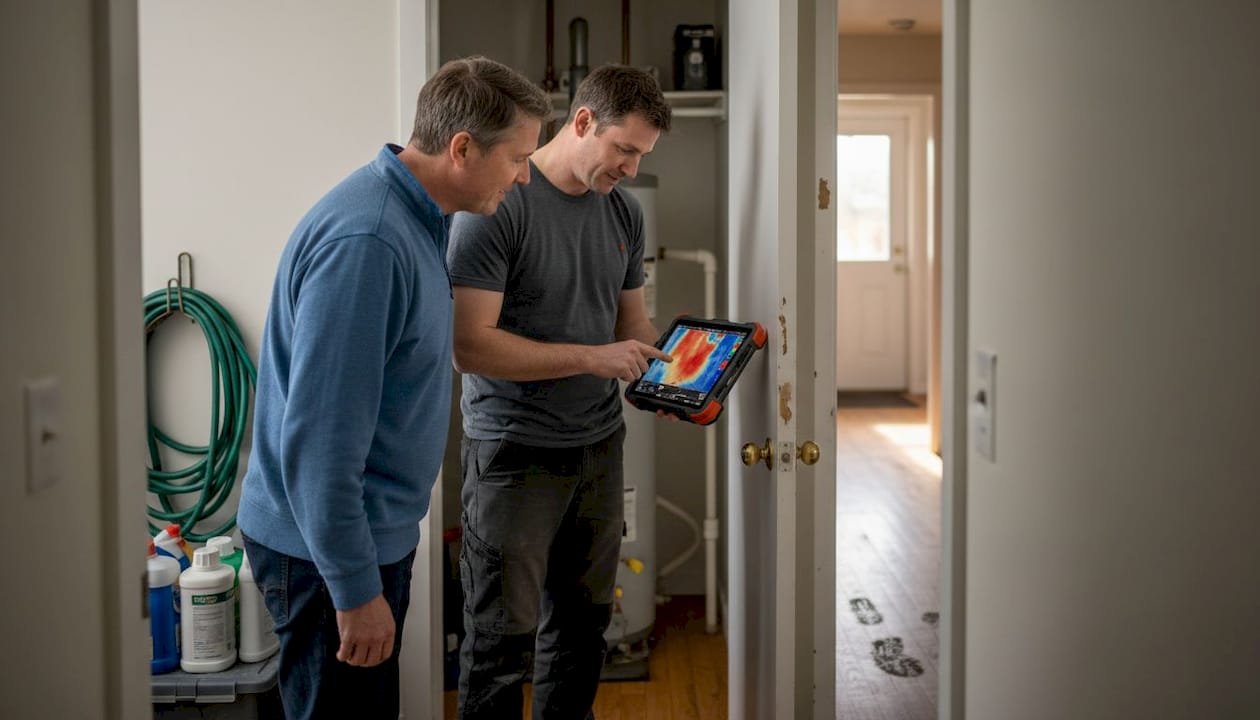
The most immediate gain is reduced property damage. Non-invasive thermal imaging can reduce property damage costs by up to 40%. That figure reflects fewer tiles lifted, less plasterboard removed, and fewer floors opened up unnecessarily.
Here is what that means in practice for you as a homeowner:
- Faster resolution: A leak that might take days to locate traditionally can be found in a single visit
- Lower repair bills: Less investigative damage means less to reinstate after the repair
- Cleaner process: No dust, rubble, or prolonged disruption to your home
- Early detection: Problems caught before they escalate into structural damage or mould growth
- Routine use: Thermal imaging works just as well for planned maintenance as it does for emergencies
- Confidence: You know the problem has been properly located, not approximated
Early detection is where the long-term savings really accumulate. A small leak left undetected for months can saturate floor joists, promote mould, and eventually compromise structural elements. Catching it early with a thermal scan during a routine visit costs a fraction of what remediation would later.
For homeowners who take a proactive approach, annual plumbing checks that include a thermal scan give you a reliable picture of your system's health before anything goes wrong.
Real-world applications: How plumbers use thermal imaging
Understanding the benefits makes it easier to see the value of thermal imaging in everyday plumbing work. The technology applies across a wider range of situations than most homeowners realise.
Thermal cameras can identify leaks, pipe blockages, and even insulation issues quickly, making them versatile beyond straightforward leak detection.
| Scenario | Tool used | Problem found | Action taken |
|---|---|---|---|
| Cold radiator in bedroom | Infrared camera | Sludge blockage in pipe | Power flush and inhibitor added |
| Rising damp near kitchen wall | Thermal scan | Pinhole leak in concealed pipe | Targeted pipe repair |
| Underfloor heating not warming evenly | Infrared survey | Cracked pipe beneath screed | Localised screed removal and repair |
| High water bill, no visible leak | Thermal imaging | Mains pipe seeping under path | Mains water leak repair |
| Bathroom ceiling damp patch | Thermal scan | Overflow pipe dripping slowly | Overflow valve replaced |
Central heating systems are one of the most common applications. Leaks in heating circuits often occur at joints hidden within walls or beneath floors, and they can run for months before pressure loss becomes obvious. A thermal scan during a boiler service or routine plumbing inspection can catch these early.
Insulation failures are another area where thermal imaging earns its place. Poorly insulated pipes lose heat, cost more to run, and are more vulnerable to freezing in winter. A scan reveals exactly where insulation is absent or degraded, allowing targeted improvements rather than blanket replacements.
Pro Tip: If you are booking a plumber for any significant job involving concealed pipework, ask whether they can include a thermal scan as part of the visit. It adds minimal time and can prevent costly surprises later. Understanding the full range of plumbing repair types helps you have an informed conversation with your plumber about what to expect.
Choosing a plumber with thermal imaging expertise
Owning a thermal camera and knowing how to use it are two very different things. Qualified plumbers equipped with thermal imaging tools are best placed to resolve complex leaks and faults. The technology amplifies expertise; it does not replace it.
When you are looking for a plumber who offers thermal imaging, follow these steps:
- Ask directly whether they own and regularly use thermal imaging equipment
- Request examples of previous jobs where thermal imaging was used
- Check that they hold relevant plumbing qualifications and are Gas Safe registered where applicable
- Read recent customer reviews that mention leak detection specifically
- Confirm their pricing structure is transparent before any work begins
There are also pitfalls to avoid when selecting a provider:
- Avoid plumbers who claim to use thermal imaging but cannot explain the process
- Be cautious of very low quotes that may indicate outdated equipment or limited experience
- Do not accept vague assessments without a thermal image or report to back them up
- Avoid providers who rely entirely on subcontractors, as quality control becomes harder to verify
A plumber who understands thermal imaging will also understand how it fits into broader home refurbishment work and complex repair scenarios. That wider knowledge base matters when a leak turns out to be part of a larger problem with your common plumbing repairs picture.
Why thermal imaging is the future of plumbing detection
There is a tendency in the trades to treat advanced technology as a luxury, something you bring in for the tricky jobs and put away again afterwards. We think that view is wrong, and it is holding homeowners back from getting the standard of service they deserve.
Thermal imaging should not be a premium add-on. It should be a baseline diagnostic tool, used on routine visits just as naturally as a pressure gauge or a multimeter. The data it provides is simply too useful to reserve for emergencies. Catching a slow leak during a scheduled routine inspection costs far less than responding to one that has been quietly destroying a floor for six months.
UK homeowners are increasingly aware of this. Expectations are shifting. People want non-destructive, rapid, and accurate solutions, and they are right to expect them. Plumbers who have not invested in thermal imaging capability will find themselves behind the curve as that expectation becomes the norm rather than the exception.
Get expert plumbing help with thermal leak detection
If a hidden leak is causing you concern, or you simply want to know the true condition of your pipework, thermal imaging gives you answers without the mess. At 777 Plumber, our fully employed team uses modern diagnostic tools to locate and resolve leaks quickly, with minimal disruption to your home.

We cover a wide range of local areas, including as a local Hotwells plumber and across Eastfield plumber services, with rapid response times and transparent pricing from the start. No call-out fees. No guesswork. Just skilled plumbers with the right tools for the job. Take a look at our work examples gallery to see the quality and range of work we deliver for homeowners across the region.
Frequently asked questions
How does thermal imaging find leaks not visible to the eye?
Thermal cameras spot temperature changes behind walls or floors to reveal moisture or leaks your eyes simply cannot see. The camera translates heat differences into a colour image that a trained plumber can interpret accurately.
Is thermal imaging suitable for all types of plumbing leaks?
It is most effective for hidden or complex leaks, but thermal imaging identifies hidden leaks rather than very slow drips or leaks in heavily insulated pipes where temperature differences are too small to register clearly.
Does thermal leak detection make home repairs less disruptive?
Yes. Because it locates problems without opening up walls or floors, thermal imaging reduces invasive investigation, meaning repairs are faster, cleaner, and far less stressful for you and your household.
Can thermal imaging be used for routine plumbing maintenance?
Absolutely. Thermal imaging is increasingly adopted for preventative plumbing maintenance, allowing plumbers to catch leaks or inefficiencies during scheduled visits before they develop into costly problems.
How do I find a reliable plumber who uses thermal imaging?
Ask about their training, the equipment they use, and look for customer feedback on leak detection jobs. Expertise and recent project examples are the clearest indicators of a plumber who genuinely knows how to use thermal imaging effectively.