TL;DR:
- Properly planned plumbing is essential for home safety, efficiency, and regulatory compliance.
- Skilled plumbers handle all installation, assessment, and repair tasks during refurbishments.
- Hidden issues like corrosion and leaks are commonly found and addressed through professional work.
Most homeowners picture plumbing as a quick add-on during a refurbishment. Swap the taps, move a radiator, job done. The reality is quite different. Plumbing is often more involved than people expect, and getting it wrong can affect everything from your insurance to your water bills. A poorly planned system creates problems that stay hidden for months before causing real damage. This guide walks you through why professional plumbing matters so much in home upgrades, what qualified plumbers actually do on site, how to choose the right one, and what hidden issues they routinely uncover.
Table of Contents
- Why plumbing is critical in property refurbishments
- Key tasks plumbers perform during home refurbishments
- How to choose a qualified plumber for your refurbishment
- Common plumbing problems uncovered during refurbishments
- Why skilled plumbers are the unsung heroes of UK refurbishments
- Find a trusted plumber for your next refurbishment
- Frequently asked questions
Key Takeaways
| Point | Details |
|---|---|
| Plumbing is central | Professional plumbing underpins the safety, efficiency and longevity of any successful refurbishment. |
| Choose qualified experts | Accredited plumbers reduce risks, prevent future problems, and ensure full compliance with UK rules. |
| Spot hidden issues early | Experienced plumbers uncover and resolve underlying system problems before they escalate during renovations. |
| Avoid costly DIY mistakes | Attempting major plumbing work yourself can lead to expensive repairs and legal complications. |
Why plumbing is critical in property refurbishments
Plumbing is not simply about pipes and taps. In a refurbishment, it underpins the entire performance of your home. Water pressure, drainage flow, heating efficiency, and even the structural integrity of walls and floors all depend on how well the plumbing is planned and installed. Skip corners here and you are not just risking a drip under the sink. You are risking damp, mould, flooding, and a bill that dwarfs what you saved.
There are also legal realities to consider. In the UK, certain plumbing works must comply with Part G of the Building Regulations, which covers sanitation, hot water safety, and water efficiency. Non-compliant work can invalidate your home insurance, cause problems when you sell, and even result in enforcement action. Professional plumbing ensures new water systems meet UK regulations and avoid future costly repairs.
Beyond compliance, there are three core reasons why professional plumbing is essential in any refurbishment:
- Water efficiency: Modern systems are designed to reduce waste, lower bills, and meet current standards. An unqualified installer may use outdated methods that cost you money every month.
- System integration: New bathrooms, kitchens, or extensions must connect seamlessly with existing pipework, boilers, and drainage. Mismatched systems cause pressure problems and premature wear.
- Long-term reliability: A professional job means fewer call-outs, less maintenance, and a system that performs well for years. Keeping up with annual plumbing checks also helps catch small issues before they grow.
Pro Tip: Before your refurbishment begins, ask your plumber to assess your existing system. Older properties often have pipework that cannot handle modern demands without upgrades.
The risks of unqualified plumbing are not theoretical. Burst pipes, scalding water temperatures, and contaminated supplies are all documented consequences of poor installation. Professional plumbers carry insurance, follow regulated processes, and provide documentation that protects you legally and financially.
Key tasks plumbers perform during home refurbishments
With the importance established, let's break down exactly what professional plumbers bring to a refurbishment project. Their involvement typically spans the entire timeline, not just the installation day.
Here is the typical sequence of a plumber's involvement:
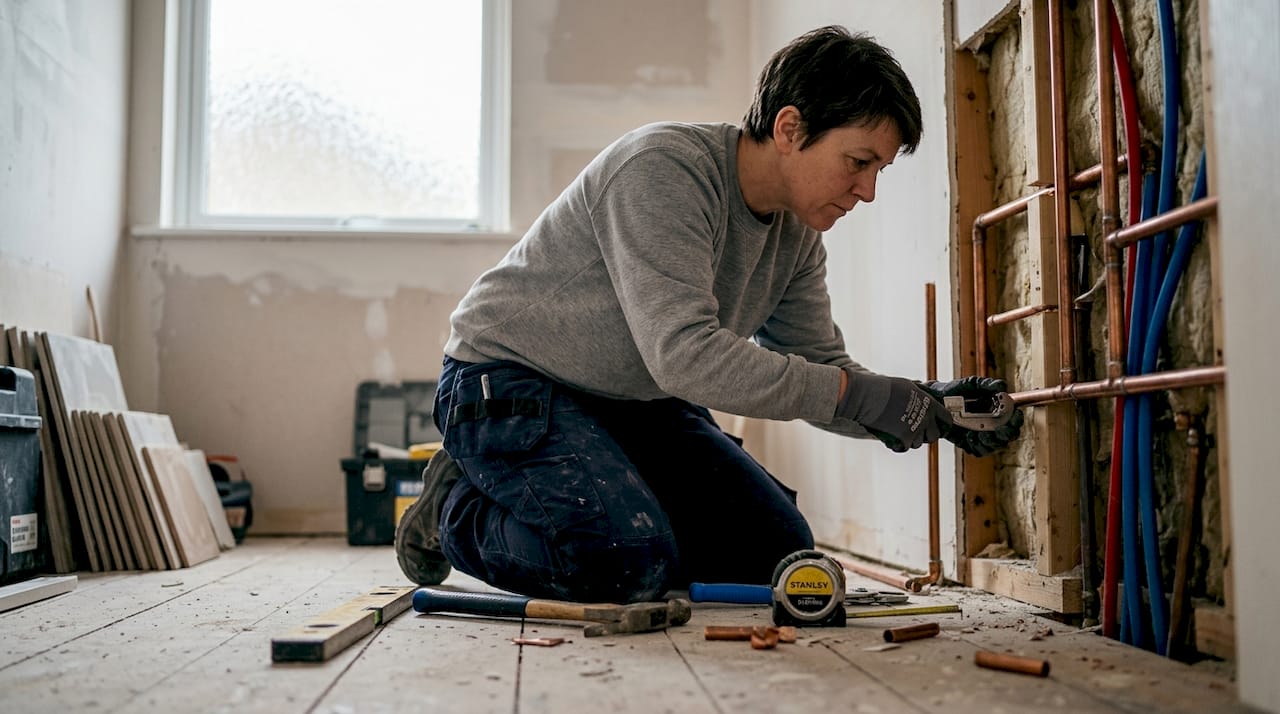
- Initial survey and system assessment: The plumber reviews existing pipework, identifies any incompatibilities, and designs the new layout.
- First fix: This happens before walls are closed up. Pipes are routed, waste runs are set, and rough connections are made.
- Heating and hot water integration: Boilers, cylinders, and radiators are connected or repositioned to suit the new layout.
- Second fix: Once decorating is done, fixtures such as baths, basins, and taps are fitted and connected.
- Testing and commissioning: The entire system is pressure-tested, flow rates are checked, and everything is signed off.
- Compliance documentation: Certificates are issued where required, particularly for gas and hot water works.
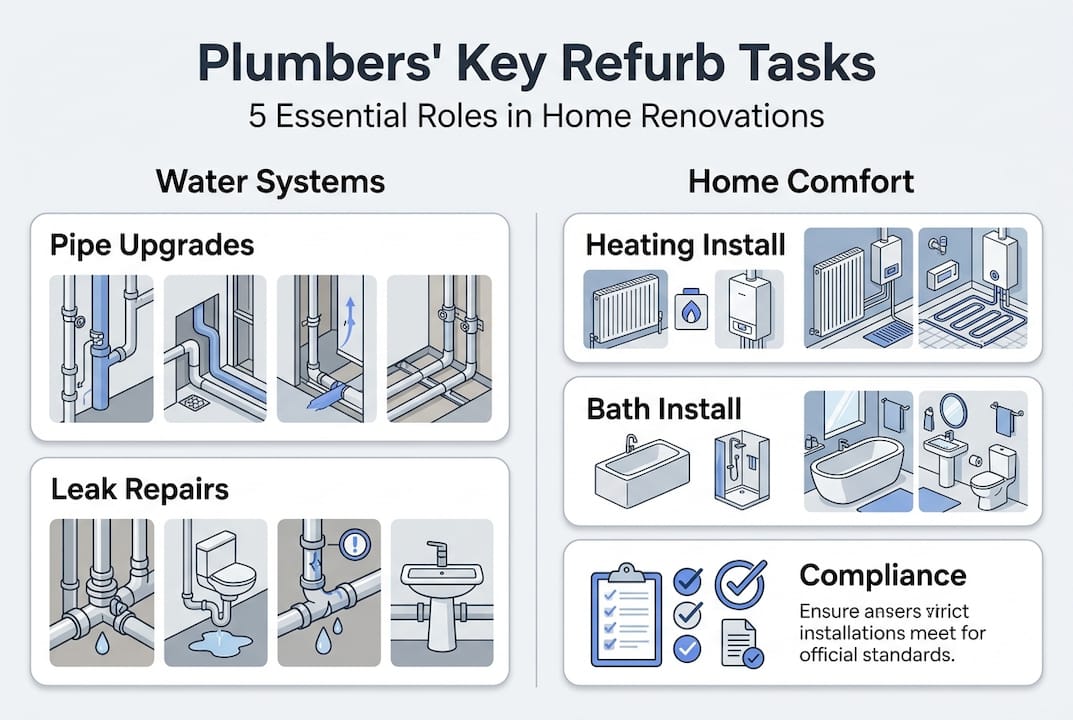
Plumbers manage everything from pipework repositioning to advanced heating system upgrades. Understanding the full range of plumbing system types helps you have more informed conversations with your installer from the start.
One area homeowners often misjudge is what they can handle themselves versus what requires a professional. Here is a clear comparison:
| Task | DIY appropriate? | Professional required? |
|---|---|---|
| Replacing a tap washer | Yes | No |
| Rerouting supply pipes | No | Yes |
| Fitting a new radiator | Partial | Recommended |
| Installing a new boiler | No | Yes (Gas Safe) |
| Moving a soil stack | No | Yes |
| Replacing a showerhead | Yes | No |
Final compliance checks are not optional. For notifiable works, your plumber must submit documentation to your local authority or use a competent person scheme. Verifying plumbing accreditation before hiring ensures the person you choose can legally sign off their own work.
How to choose a qualified plumber for your refurbishment
Now that you know what plumbers do in a refurbishment, how do you ensure you choose the right one for your project? The answer starts with accreditation and goes well beyond it.
In the UK, the key accreditations to look for include:
- WaterSafe approval: Confirms the plumber meets drinking water standards and can self-certify compliance.
- Gas Safe registration: Mandatory for any work involving gas appliances or pipework.
- CIPHE or APHC membership: These professional bodies hold members to codes of conduct and ongoing training.
- Public liability insurance: Protects you if something goes wrong during the works.
Selecting the right professional is vital to project success and long-term plumbing reliability. Do not treat this step as a formality.
When interviewing potential plumbers, ask these questions directly:
- Can you show me your current accreditation certificates?
- Have you completed similar refurbishment projects recently?
- Who will actually carry out the work, and are they directly employed?
- What does your quote include, and what might cause the price to change?
- Do you provide a written guarantee on labour and materials?
Pro Tip: A plumber who cannot answer these questions confidently, or who pressures you to decide quickly, is a red flag. Reputable professionals welcome scrutiny.
There are also pitfalls to avoid. Cash-only arrangements with no paper trail, vague quotes without itemised breakdowns, and tradespeople who discourage you from getting other estimates are all warning signs. Understanding the professional plumber advantages makes it far easier to spot someone who does not meet that standard.
Common plumbing problems uncovered during refurbishments
Even with careful planning, refurbishments routinely reveal hidden issues. Here is what professionals are trained to address.
Walls come down and floors come up, and what is behind them is often a surprise. Pipe corrosion, leaks, and system incompatibilities are often discovered during extensive works. In older UK properties, this is almost a certainty rather than a possibility.
Here are the most common problems found during refurbishments:
| Problem | Typical cause | Risk if ignored |
|---|---|---|
| Corroded pipework | Age, water chemistry | Burst pipes, contamination |
| Hidden leaks | Poor prior workmanship | Damp, mould, structural damage |
| Undersized pipes | Original budget installs | Low pressure, poor flow |
| Outdated systems | Pre-1990s installations | Inefficiency, non-compliance |
| Incorrect fall on waste pipes | DIY or poor installation | Blockages, odours |
These problems matter for several reasons:
- Safety: Corroded pipes carrying hot water or gas are a direct hazard.
- Efficiency: Undersized or degraded pipework forces your boiler to work harder, raising energy costs.
- Compliance: Outdated systems may not meet current regulations, creating issues when you sell or remortgage.
A good plumber does not just fix what is obviously broken. They assess the whole system during the works and flag anything that looks likely to cause trouble. Proper planning of your plumbing refurbishment from the start reduces the chance of nasty surprises, but it cannot eliminate them entirely. That is why having a professional on site matters. If something serious surfaces, they can arrange emergency plumbing repairs without derailing your whole project timeline.
Why skilled plumbers are the unsung heroes of UK refurbishments
Here is an honest perspective that rarely gets said plainly: most homeowners judge a refurbishment by what they can see. The new tiles, the fresh paintwork, the sleek kitchen units. But home upgrades' success often hinges on quality plumbing work that goes unnoticed until there is a problem.
The pipes behind your walls, the joints under your floor, the pressure balance across your system. None of it is visible. All of it matters enormously. A plumber who does their job brilliantly leaves no trace you can admire. That invisibility is actually the mark of excellent work.
DIY efforts rarely achieve the reliability and efficiency that modern UK homes demand. It is not about skill or effort. It is about experience, tools, and the kind of pattern recognition that only comes from seeing hundreds of systems. A professional plumber notices the slightly unusual pipe run that suggests a previous botched repair. They catch it before it becomes your problem. Understanding the full range of common plumbing repairs gives you a better sense of just how much expertise sits behind what looks like a straightforward installation.
Find a trusted plumber for your next refurbishment
If you want peace of mind for your own upgrade, here is how you can work with vetted local experts.
At 777 Plumber, we handle refurbishment plumbing from first fix through to final sign-off, with no subcontractors and no hidden charges. Every job is carried out by our fully employed, accredited team.

Whether you are planning a bathroom overhaul, a kitchen extension, or a full property renovation, our plumbers in Hotwells and across Bristol are ready to help. We offer transparent quotes, round-the-clock availability for urgent issues, and a straightforward booking process. You can also browse our recent refurbishment work to see the standard we deliver. Get in touch today and let us take the complexity out of your next project.
Frequently asked questions
What services do plumbers provide during a home refurbishment?
Plumbers manage everything from pipework repositioning to advanced heating system upgrades. They design, install, and test water systems, heating, and drainage, and ensure all works comply with building regulations.
How do I know if a plumber is qualified for refurbishment work?
Selecting the right professional starts with checking valid accreditations such as WaterSafe or Gas Safe registration. Always request references from similar projects and proof of current public liability insurance.
What are the most common plumbing issues found during refurbishments?
Pipe corrosion, leaks, and system incompatibilities are among the most frequent discoveries. Outdated systems and poor prior workmanship also surface regularly once walls and floors are opened up.
Why should I avoid DIY plumbing in major home upgrades?
Professional plumbing ensures new water systems meet UK regulations and avoid future costly repairs. DIY work risks non-compliance with Building Regulations, which can invalidate insurance and create expensive problems when you come to sell your home.
Recommended
- How to plan a plumbing refurbishment: UK step-by-step
- Types of plumbing repairs every UK homeowner should know
- How to choose a plumber UK: a homeowner's guide
- Why use a professional plumber: reliable UK solutions
- Your Local Plumbing Experts | Licensed & Insured - Serving Our Community, One Home at a Time