TL;DR:
- Hiring a certified electrician ensures compliance, safety, and protects your home insurance.
- Electrical work in UK renovations must follow BS 7671 standards and Part P regulations.
- Proper scheduling and early involvement of electricians prevent costly delays and remedial work.
Skipping a certified electrician during your home renovation is not just risky — it could void your home insurance, trigger fines, and make your property unsellable. Many homeowners assume that swapping a socket or adding a light fitting is a minor job anyone can tackle. In reality, most electrical work in UK renovations falls under strict legal frameworks. Electricians handle everything from wiring and consumer units to sockets, switches, and lighting, all of which must comply with BS 7671 and Part P of the Building Regulations. This guide covers what electricians actually do, the rules they follow, the costs involved, and how to hire the right person for your project.
Table of Contents
- What electricians do during home renovations
- Regulations and certifications: Safety, legal requirements, and why they matter
- Special locations and common challenges: Kitchens, bathrooms, and older homes
- Costs, timelines, and practical tips: What to expect from renovation electricians
- The real pitfalls in renovation electrics: What most guides miss
- Get professional help for your renovation
- Frequently asked questions
Key Takeaways
| Point | Details |
|---|---|
| Safety is non-negotiable | Electrical work during renovations must meet strict UK standards for legal and insurance reasons. |
| Certified professionals required | Hiring a NICEIC, NAPIT, or STROMA registered electrician is essential for compliance and peace of mind. |
| Special locations need expertise | Kitchens, bathrooms, and older homes require unique skills and regulatory knowledge from electricians. |
| Budget for rewiring costs | Home rewiring and major installations can cost £3,000–£10,000 depending on property and scope. |
| Early involvement prevents problems | Involving electricians at the design stage helps avoid issues, delays, and expensive mistakes. |
What electricians do during home renovations
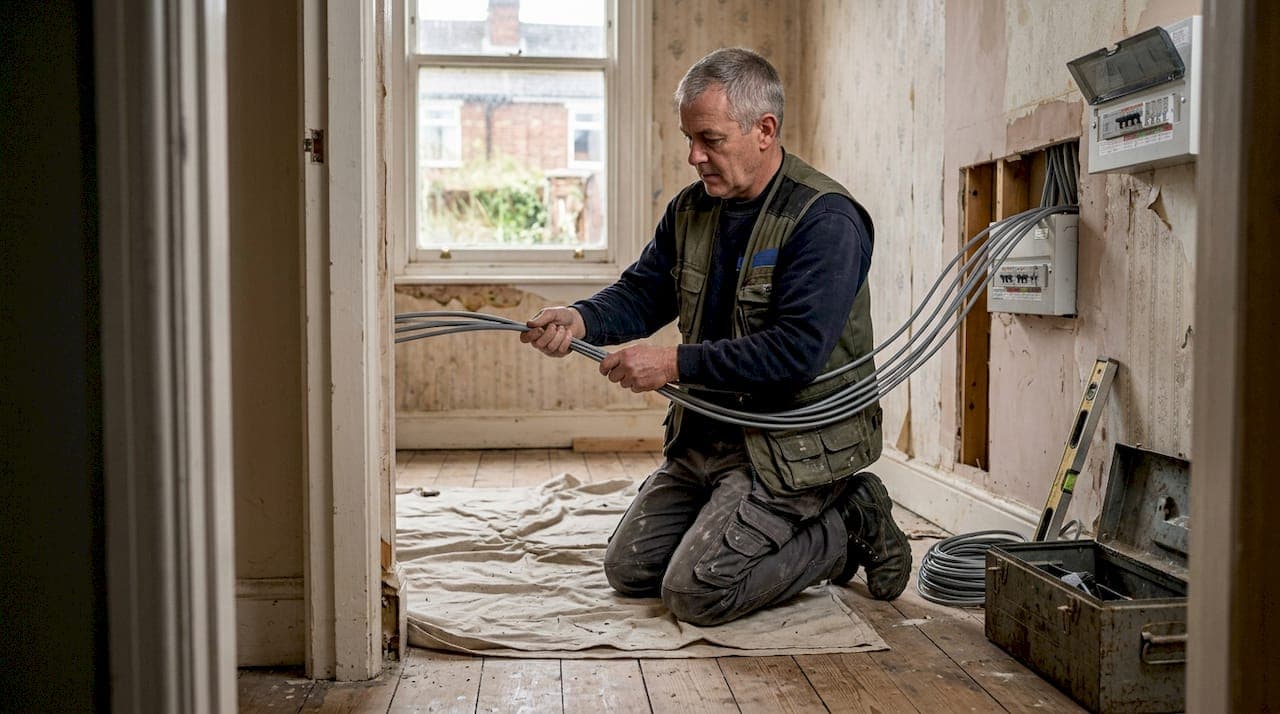
When you picture a renovation, you probably think of builders, decorators, and plumbers. Electricians, though, are often the most critical trade on site. Their work touches almost every room and must be completed in a specific sequence alongside other trades.
A qualified electrician working on a UK renovation will typically carry out the following:
- First-fix wiring: Running cables through walls, floors, and ceilings before plastering begins
- Consumer unit installation or upgrade: Replacing old fuse boxes with modern units that include RCD (residual current device) protection
- Socket and switch installation: Adding or relocating outlets to suit your new layout
- Lighting circuits: Installing downlights, pendants, and external lighting
- Testing and certification: Completing an Electrical Installation Certificate (EIC) once all work is done
- System integration: Connecting new electrical elements to existing circuits safely
As electrician training resources confirm, renovation electricians are responsible for ensuring every element of the installation meets BS 7671 and Part P. This is not optional paperwork. It is the legal baseline.
Coordination matters enormously. Electricians work in two distinct phases. First-fix happens before walls are closed up. Second-fix, fitting sockets, switches, and light fittings, happens once plastering and decorating are done. If your electrician is not on site at the right time, you could face expensive remedial work. This is similar to how heating engineer roles require precise scheduling alongside other trades.
Pro Tip: When planning a plumbing refurbishment, book your electrician at the same time. Both trades need access to walls and floors before plastering, and coordinating them together saves time and money.
For extensions, the electrical scope expands significantly. Kitchen extension electrical tasks include dedicated circuits for appliances, extractor fans, and under-cabinet lighting, all of which require careful load planning from the outset.
Key fact: A full rewire on a three-bedroom house can take up to 14 days. Booking your electrician late in the project is one of the most common and costly mistakes homeowners make.
Regulations and certifications: Safety, legal requirements, and why they matter
Understanding what electricians do is the start. Knowing why the rules exist, and what happens when they are ignored, is what protects your home and your finances.
Two frameworks govern electrical work in UK renovations:
- BS 7671 (IET Wiring Regulations): The technical standard covering how all electrical installations must be designed and built
- Part P of the Building Regulations: The legal requirement covering which electrical work must be notified to, or approved by, your local building control authority
Registered electricians belonging to schemes such as NICEIC, NAPIT, or STROMA can self-certify their work under Part P, meaning they notify building control on your behalf. This removes the need for a separate building control application and inspection, saving you time and money.
Here is a comparison of what you get with registered versus unregistered electricians:
| Feature | Registered electrician | Unregistered electrician |
|---|---|---|
| Self-certification under Part P | Yes | No |
| EIC documentation provided | Yes | Not guaranteed |
| Insurance validity protected | Yes | At risk |
| Property sale complications | Unlikely | Likely |
| Legal liability | Covered | Falls on homeowner |
The consequences of non-compliance are serious. Fines can reach £40,000. Your home insurance may be invalidated. When you come to sell, a solicitor will ask for the EIC, and without it, the sale can fall through. Always demand this certificate before your electrician leaves the job.
This mirrors the importance of accreditation in plumbing, where using unregistered tradespeople creates similar legal and financial exposure. The same principle applies to home safety in plumbing: proper certification is not bureaucracy, it is protection.
"Always demand an Electrical Installation Certificate. Without it, your renovation may be legally non-compliant, uninsured, and unsellable."
Special locations and common challenges: Kitchens, bathrooms, and older homes
Not all rooms are equal when it comes to electrical regulations. Kitchens and bathrooms are classified as special locations under BS 7671, which means they carry additional rules that go beyond standard rooms.
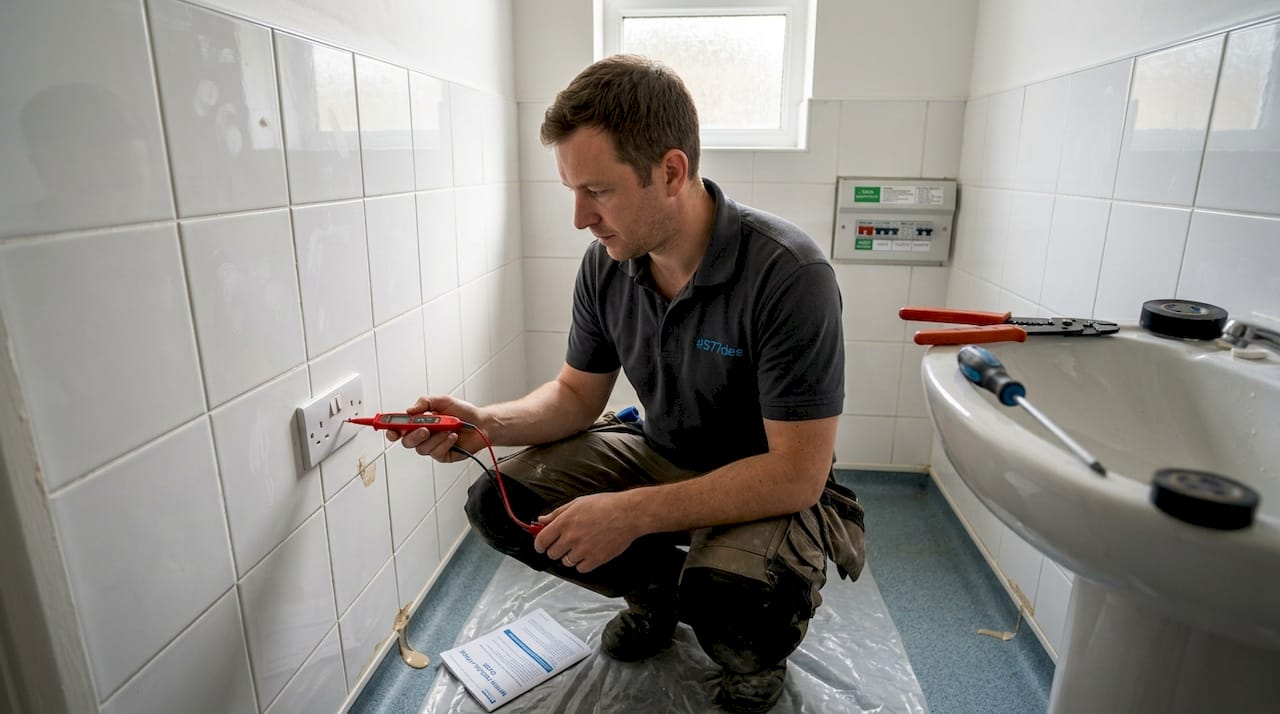
Bathrooms are divided into three zones:
- Zone 0: Inside the bath or shower itself. Only 12V SELV (safety extra-low voltage) equipment is permitted.
- Zone 1: Directly above the bath or shower up to 2.25 metres. Equipment must be rated IP45 minimum.
- Zone 2: The area extending 0.6 metres horizontally from Zone 1. IP44 rated fittings required.
All sockets in bathrooms must be at least three metres from a bath or shower, and RCD protection is mandatory for any socket rated 20A or below. Getting this wrong is not just a regulatory failure. It is a genuine safety risk.
Kitchens present their own challenges. New circuits for appliances such as ovens, hobs, and dishwashers are all notifiable under Part P. Kitchen electrical work in an extension also requires a full load assessment to ensure the existing consumer unit can handle the additional demand.
Pro Tip: If you are adding a kitchen island with sockets, plan the circuit routing before the flooring goes down. Retrofitting cables under a finished floor is expensive and disruptive.
Older homes present a different set of problems. Properties built before the 1970s may still have rubber-insulated or fabric-covered wiring. This type of wiring is brittle, potentially dangerous, and will not meet current standards. A qualified electrician will identify this during an initial survey and recommend a partial or full rewire before any renovation work begins.
Here is a quick reference for common renovation electrical challenges:
| Location | Key challenge | Regulation involved |
|---|---|---|
| Bathroom | Zone compliance, IP ratings | BS 7671 Part 7 |
| Kitchen extension | Load assessment, new circuits | Part P |
| Older property | Obsolete wiring | BS 7671 |
| Loft conversion | New circuit notification | Part P |
For context, common plumbing problems in older homes often go hand in hand with outdated electrical systems. Tackling both together during a renovation is the most efficient approach.
Costs, timelines, and practical tips: What to expect from renovation electricians
Budgeting for electrical work is one area where homeowners consistently underestimate. The figures below are based on current 2026 benchmarks and should give you a realistic starting point.
Typical costs for UK renovation electrical work:
- Two-bedroom flat full rewire: £2,500 to £4,500
- Three-bedroom house full rewire: £3,500 to £6,500
- Kitchen electrical installation: £1,500 to £5,000
- Consumer unit replacement: £500 to £1,200
- Labour rate: £250 to £400 per day
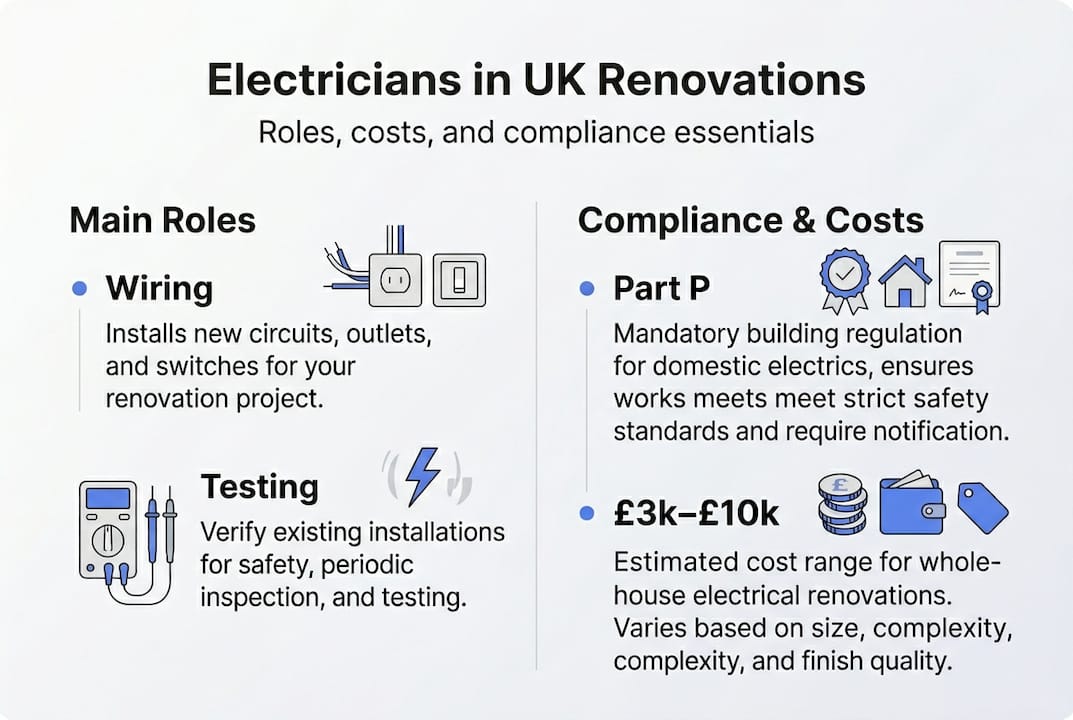
According to 2026 rewiring cost data, a full rewire across all property types ranges from £3,000 to £10,000. The variation depends on property size, the number of circuits, and whether walls need to be chased or if the property is being stripped back during renovation anyway.
Timelines to plan around:
A full rewire on a two-bedroom flat typically takes five to seven days. A three-bedroom house can take ten to fourteen days. Kitchen electrical work in an extension often runs alongside the build and is spread over several visits for first-fix, second-fix, and testing.
Pro Tip: Get at least three quotes and ask each electrician to break down labour and materials separately. This makes it far easier to compare like for like, rather than just comparing a single total figure.
When selecting an electrician, treat it the same way you would choosing a reliable plumber. Check their registration scheme, ask for references from similar renovation projects, and confirm they will provide an EIC on completion. The benefits of using a professional apply just as strongly to electricians: accountability, proper documentation, and work that stands up to scrutiny.
Budget reminder: Always add a 15% contingency to your electrical budget. Older properties in particular have a habit of revealing unexpected wiring issues once walls are opened up.
The real pitfalls in renovation electrics: What most guides miss
Most renovation guides tell you to hire a certified electrician. What they rarely explain is when and why timing is the real issue.
In our experience, the majority of renovation electrical problems do not stem from poor workmanship. They come from electricians being brought in too late. By the time the walls are plastered and the kitchen units are fitted, the opportunity to route cables efficiently has gone. What follows is expensive remedial work, surface-mounted trunking, or compromises on socket positions.
The other overlooked risk is insurance. Homeowners often assume their buildings insurance covers renovation work automatically. It frequently does not, particularly if uncertified electrical work is discovered after a fire or flood. The financial exposure is significant, and it is entirely avoidable.
Registered electricians, those on NICEIC or NAPIT schemes, give you something beyond compliance. They give you a paper trail that protects your investment. If you ever face an electrical or plumbing emergency, having certified work on record makes the process of diagnosis and repair considerably simpler.
Involve your electrician at the design stage, not after the builder has started. That single decision will save you more money than any other choice you make.
Get professional help for your renovation
Electrical and plumbing work in a renovation are not areas to cut corners on. The legal, financial, and safety stakes are simply too high.

At 777 Plumber, we provide fully employed, certified tradespeople with no subcontractors and no hidden fees. Whether you need electrical installations, plumbing upgrades, or both as part of your renovation, our team is ready to help. You can browse our renovation project gallery to see the standard of work we deliver. If you are based in Bristol, our local plumbing team in Hotwells is available for scheduled and urgent jobs. Visit 777plumber.co.uk to book online today with flexible cancellation and transparent pricing from the start.
Frequently asked questions
Do I need a certified electrician for all renovation electrical work?
For most electrical work in UK renovations, especially full rewiring or new circuits, you must hire a certified electrician to comply with Part P requirements and avoid legal and insurance risks.
Can I do electrical work myself in my home renovation?
DIY electrical work is technically allowed in some cases, but most renovation work is notifiable under Part P, requires a legal inspection, and carries significant safety risks if done without proper training.
How much does rewiring a home cost in the UK?
A full rewire typically costs between £3,000 and £10,000, with a two-bedroom flat ranging from £2,500 to £4,500 and a three-bedroom house from £3,500 to £6,500.
What regulations must electricians follow in UK renovations?
Electricians must comply with BS 7671 IET Wiring Regulations and Part P of the Building Regulations, ensuring all work is safe, properly tested, and certificated before completion.