TL;DR:
- Waking up to a cold radiator can be stressful, but knowing how to identify your system type and troubleshoot safely is essential.
- Regular maintenance and timely professional help can prevent most heating failures and ensure system safety and efficiency.
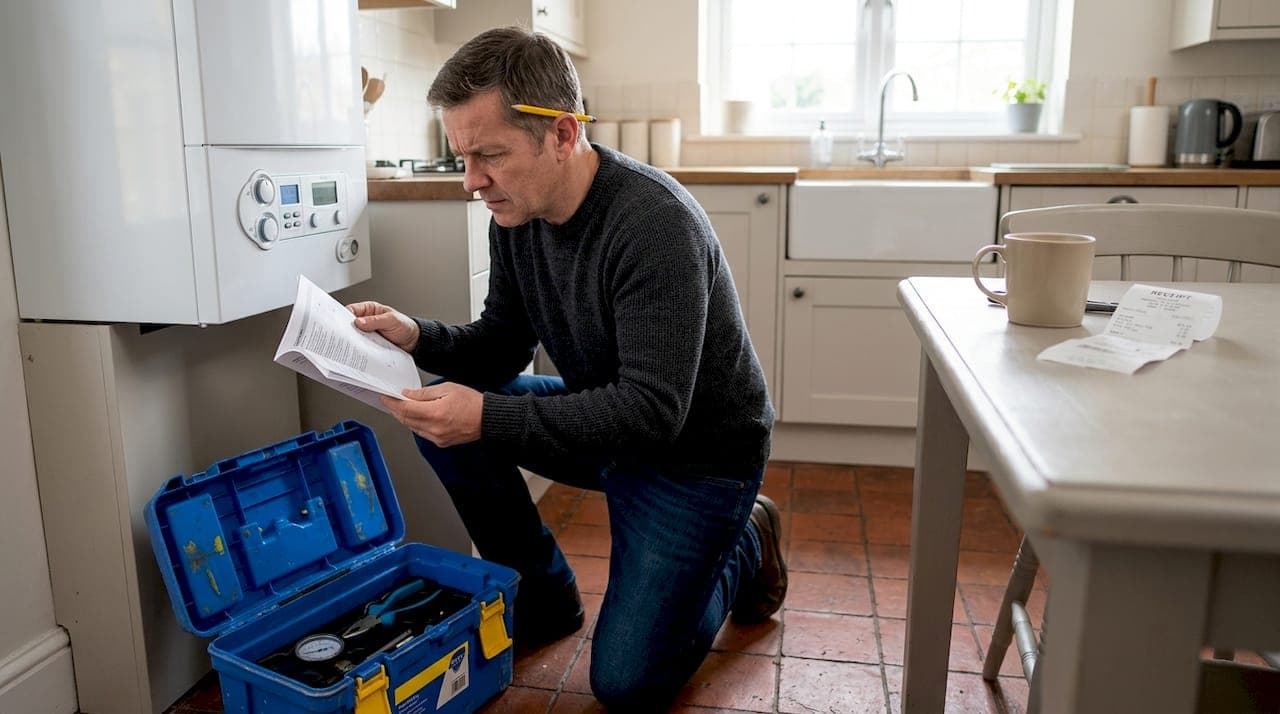
Waking up on a freezing January morning to a cold radiator and a boiler that refuses to respond is one of those sinking moments that can throw your entire day off course. Whether you live in a Victorian terrace with an ageing combi boiler or a modern flat connected to a communal heat network, heating failures rarely announce themselves at a convenient time. This guide walks you through exactly what to do: how to identify your system, prepare safely, work through logical diagnostic steps, and know when to hand things over to a qualified professional. By the end, you will feel far more confident tackling the issue head-on.
Table of Contents
- Understanding your home heating system
- Preparing to troubleshoot: What you'll need
- Step-by-step troubleshooting guide
- When to call a professional
- Preventing future heating problems
- Why most DIY troubleshooting misses the underlying cause
- Professional help when you need it most
- Frequently asked questions
Key Takeaways
| Point | Details |
|---|---|
| Know your system type | Identifying whether you have a private boiler or a communal heat network is key to effective troubleshooting. |
| Follow safety first | Always prioritise safety and never perform repairs involving gas or electricity unless qualified. |
| Use stepwise checks | Methodical, step-by-step troubleshooting increases your chances of resolving common heating issues. |
| Call professionals when needed | If unsure, or if issues persist after basic checks, promptly contact a qualified engineer. |
| Regular maintenance prevents issues | Routine yearly servicing and ongoing attention help keep your heating system reliable and efficient. |
Understanding your home heating system
Before you touch a single valve or press a single button, you need to know what type of heating system you actually have. This sounds obvious, but plenty of homeowners discover mid-troubleshoot that the problem is not theirs to fix at all.
The two main categories in UK homes are individual boiler systems and heat networks (also called communal or district heating). An individual system typically means you have your own gas or oil boiler, your own controls, and you are entirely responsible for its upkeep. A heat network, by contrast, feeds hot water from a shared energy centre into multiple flats or homes via insulated pipes.
How to tell which one you have:
- If you have a boiler unit visible in a cupboard, kitchen, or airing space, you almost certainly have an individual system.
- If you have a heat interface unit (a metal box with pipes but no visible flame or burner), you are likely on a heat network.
- If your flat has no boiler at all and your heating bills come from a managing agent rather than a gas supplier, it is almost certainly a heat network.
This distinction matters enormously for troubleshooting. If your neighbours are also without heat, it is very likely a heat network outage rather than a fault in your own home. In that case, heat network outages are the supplier's responsibility to resolve, and they must contact you within 24 hours of the problem being reported.
| Feature | Individual boiler | Heat network |
|---|---|---|
| Own boiler unit | Yes | No |
| Visible flame/burner | Yes | No |
| Controls your own thermostat | Yes | Usually yes |
| Bill comes from gas supplier | Yes | Usually managing agent |
| Outage affects whole building | Unlikely | Often |
| Who to contact when it fails | Engineer or yourself | Landlord or heat supplier |
Key reminder: If your entire building loses heating at once, do not spend an hour trying to reset your own controls. Check with a neighbour first. A communal outage needs to go through your landlord or heat network provider, not a plumber.
Once you have confirmed your system type, you are ready to troubleshoot effectively rather than chasing the wrong solution.
Preparing to troubleshoot: What you'll need
Good troubleshooting is methodical, not rushed. Jumping straight into pressing buttons on a boiler without the right information to hand is how small problems become expensive ones.
Gather these items before you start:
- A torch (for checking pilot lights and reading labels in dark cupboards)
- A flat-head and cross-head screwdriver
- Your boiler manual (download a PDF version from the manufacturer's website if you have lost it)
- Pen and paper to note down any error codes or observations
- Your boiler's make and model number (usually on a sticker on the front)
- The date of your last annual service
- Your heating engineer's contact number
Safety checks before touching anything:
- If you smell gas, do not attempt any troubleshooting. Leave the property, do not use switches or appliances, and call the National Gas Emergency Service on 0800 111 999 immediately.
- If there is visible water leaking from your boiler or pipes, turn off your water supply at the stopcock and do not attempt repairs yourself.
- Never tamper with gas components unless you hold a Gas Safe registration. This is a legal requirement in the UK, not just a recommendation.
As Citizens Advice explains, homeowners on heat networks should first identify whether others on the same network have also lost heating, as this signals an outage managed by the supplier rather than an individual boiler fault. Knowing this distinction before you pick up a screwdriver can save you considerable time and stress.
| Item | Why you need it |
|---|---|
| Boiler manual | Decoding error codes accurately |
| Torch | Reading pilot light and labels |
| Pen and paper | Recording fault codes and steps taken |
| Engineer's number | Quick escalation if needed |
| Last service date | Helps engineer assess system history |
Pro Tip: Take a photo of your boiler's display and any error codes before attempting any resets. If the display clears after a reset, you will still have a record to show your engineer.
Safety note: No heating fault is worth a gas incident. When in doubt, step away and call a professional. There are no DIY shortcuts for gas work in the UK.
Step-by-step troubleshooting guide
With tools ready and safety confirmed, work through these steps in order. Do not skip ahead. Each check rules out one possible cause, which is the only reliable way to isolate a heating fault.
-
Check your heating controls and programmer. Make sure the programmer or timer is set to "on" for heating and that the schedule has not been accidentally changed. This is the most common cause of no heat and the easiest to fix.
-
Check the thermostat. Is the room thermostat set above the current room temperature? If it is set to 18°C and the room is already 19°C, the boiler will not fire. Replace the thermostat batteries while you are at it.
-
Check the boiler pressure gauge. Most combi boilers operate between 1 and 1.5 bar. If the needle is below 1 bar, the system needs repressurising. Your boiler manual will show you exactly how to use the filling loop to bring pressure back up to the correct level. This is one fix most homeowners can safely do themselves.
-
Check for a pilot light or error code. Modern boilers display fault codes rather than showing a visible pilot light. Look for a flashing light or a code on the display panel (such as E1, F22, or similar). Write it down and look it up in your manual or the manufacturer's website.
-
Reset the boiler. Many boilers have a reset button (often marked with a flame symbol). Hold it for three to five seconds. Allow the boiler a full two minutes to restart before assuming the reset has failed. Do not press reset repeatedly in quick succession.
-
Check radiator valves and bleed radiators. If the boiler fires but some radiators are cold at the top and warm at the bottom, trapped air is the likely cause. Use a radiator bleed key to release the air from the valve at the top of the affected radiator until water appears, then retighten. Check your boiler pressure again afterwards, as bleeding can lower it slightly.
-
Check for frozen condensate pipe. In cold weather, the plastic condensate pipe that runs outside can freeze, causing the boiler to lock out. It is usually a white or grey plastic pipe running from the boiler to an outside drain. Pouring warm (not boiling) water over the frozen section can thaw it safely.
Following heating maintenance tips such as these routinely can prevent many of these faults from developing in the first place.
If after working through these steps you still have no heating, and the problem is not a communal outage requiring your landlord's involvement per Citizens Advice guidance, it is time to call a professional. Understanding central heating servicing and why it matters can also help you make the right call quickly.
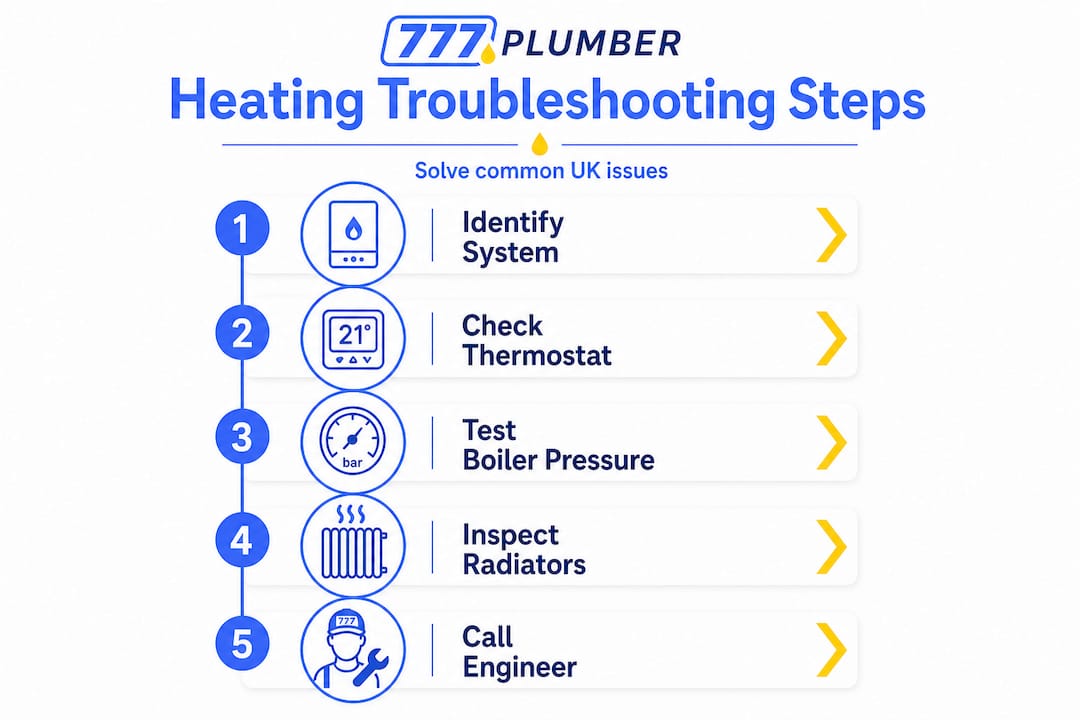
Pro Tip: Test your heating after each individual step rather than performing several fixes at once. This way, you will know exactly which step resolved the problem, which is useful information for future reference and for any engineer you might call later.
When to call a professional
Some heating issues are simply beyond the scope of safe DIY action. Knowing when to stop and pick up the phone is just as important as knowing how to troubleshoot.
Call a professional immediately if:
- You can smell gas anywhere in your home.
- Water is actively leaking from the boiler or surrounding pipes.
- The boiler is making loud banging, gurgling, or clanking noises that are new or unusual.
- The boiler displays a persistent error code that does not clear after a reset.
- Your system has had no response to any of the troubleshooting steps above.
- The pilot light will not stay lit.
- You have a carbon monoxide alarm activating.
Understanding the role of heating engineers helps set expectations. A Gas Safe registered engineer can carry out diagnostics with specialist equipment, identify faults inside sealed components, and carry out repairs legally and safely. No online guide can substitute for that.
For communal systems, if the outage persists beyond 24 hours without contact from your supplier, Citizens Advice advises escalating formally in writing. Homeowners on heat networks and individual systems have different responsibilities, and knowing which applies to you protects your rights.
For urgent situations, an emergency plumbing guide covers the immediate steps to take while waiting for help to arrive. And if you are unsure where to find reliable local support, advice on how to find a reliable plumber is a practical starting point.
Pro Tip: Before the engineer arrives, write down every step you took, every error code you saw, and roughly when the problem started. A clear history helps a professional diagnose the fault faster, which often means lower labour costs for you.
Preventing future heating problems
Fixing the immediate fault is only half the job. The other half is making sure it happens less often.
Routine maintenance actions to take now:
- Check your boiler pressure monthly and repressurise when needed.
- Test your thermostat seasonally to make sure it responds accurately to temperature changes.
- Bleed your radiators at least once a year, ideally before winter.
- Keep the area around your boiler clear of clutter to allow adequate ventilation.
- Check that your timer and programmer settings are correct after any power cut.
- Inspect the condensate pipe before winter to make sure it has frost protection lagging in exposed sections.
Regular boiler servicing is the single most effective step you can take. As the team at 777 Plumber has noted across their central heating service benefits guidance, professionally serviced systems are significantly less likely to break down and tend to run more efficiently, reducing your energy bills in the process.
Annual servicing also keeps your boiler warranty valid in many cases. Manufacturers often require proof of annual service to honour a warranty claim, so skipping a year can cost far more than the service itself.
Pro Tip: Keep a small notebook near your boiler and jot down the date of every service, any strange noises you notice, and any pressure readings that seem off. Patterns emerge over time and give your engineer invaluable information during the next service visit.
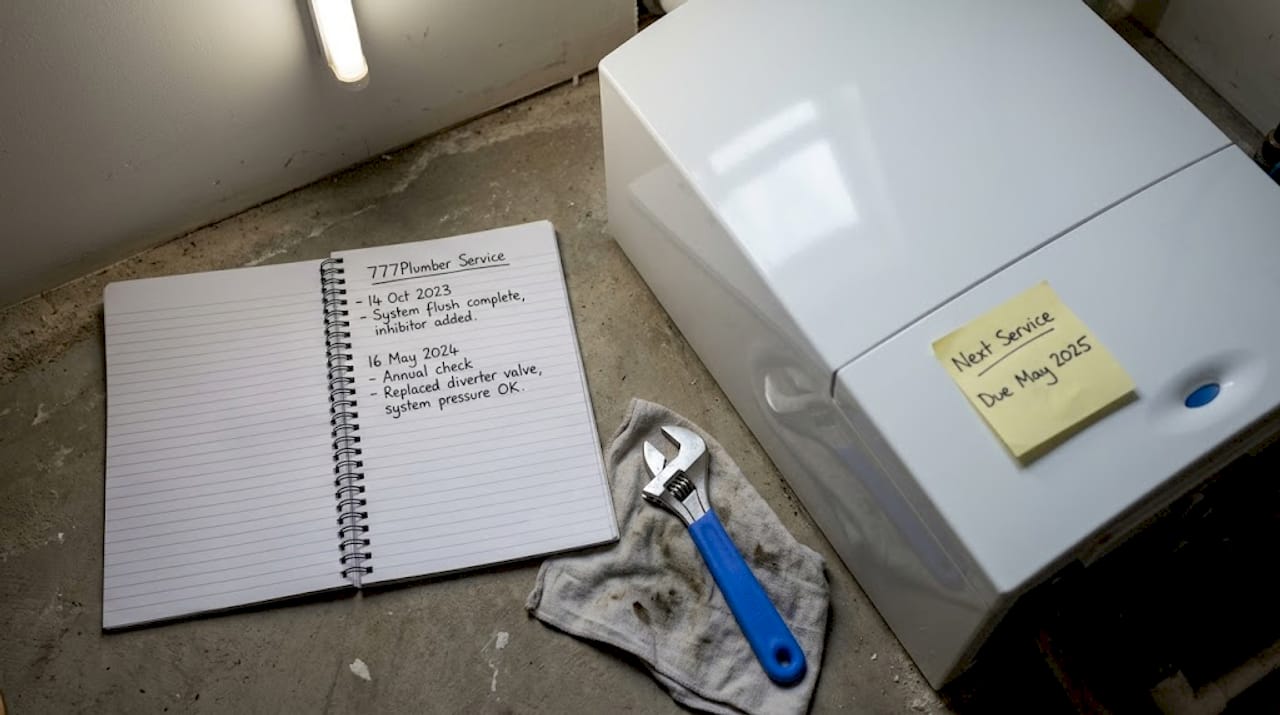
Following vital heating maintenance practices year-round means fewer cold mornings and fewer emergency call-outs.
Why most DIY troubleshooting misses the underlying cause
Here is something worth saying plainly: most homeowners only think about their heating when it has already failed. By that point, the real problem has often been developing for weeks or months, and the reset button just bought a little more time before the next breakdown.
We see this constantly. A boiler keeps losing pressure, so the homeowner tops it up and moves on. What they miss is that the pressure drop itself is a symptom, not the fault. There could be a small leak in the system, a failing expansion vessel, or a pin-hole in a radiator. Each top-up delays the diagnosis while the underlying damage quietly continues.
Quick fixes and repeated resets can also mask fault codes that an engineer would use to identify the real problem. If you clear an error before noting it down, you may inadvertently make the engineer's job harder and your bill larger.
The homeowners who have the fewest heating emergencies are not the ones who are best at troubleshooting. They are the ones who pay attention to regular heating maintenance throughout the year. They notice when a radiator takes slightly longer to warm up. They hear a faint new noise from the boiler. They call for a service before winter rather than waiting until Christmas Eve.
Professional servicing uncovers issues that simply cannot be caught by visual checks alone: heat exchanger corrosion, gas valve wear, flue integrity, and combustion efficiency all require instruments and expertise. A well-maintained boiler is not just more reliable. It is safer, cheaper to run, and likely to last several years longer.
Professional help when you need it most
When you have worked through every check and the heat still is not coming on, the smartest move is to get qualified help quickly rather than continuing to experiment.

At 777 Plumber, we provide fast, reliable heating and plumbing support to homeowners across Bristol and the wider UK. Our in-house engineers are fully employed (no subcontractors), Gas Safe registered, and available for both emergency call-outs and planned annual servicing. We charge no call-out fees and no fix-no-fee charges, so you always know exactly where you stand financially before work begins. Whether you need a boiler diagnosed, a heat interface unit inspected, or a full central heating service booked in before winter, we make it simple. You can book online in minutes, and our team will take it from there.
Frequently asked questions
What do I do if my whole building loses heating?
If the heating outage affects multiple homes in your building, it is almost certainly a heat network problem. Contact your landlord or heat network supplier straight away, as they are legally required to respond within 24 hours of the outage being reported.
How often should I service my boiler or heating system?
You should have your boiler or heating system professionally serviced at least once a year. Annual servicing reduces the risk of breakdowns, maintains efficiency, and in many cases keeps your manufacturer warranty valid.
Can I fix a boiler myself if it stops working?
You can safely check basic things such as thermostat settings, battery levels, and boiler pressure. However, any work involving gas components, sealed electrical parts, or internal boiler repairs must be carried out by a Gas Safe registered engineer. Attempting gas repairs yourself is both dangerous and illegal.
Who should I call for a persistent heating problem?
Contact a Gas Safe registered heating engineer as soon as possible, particularly if the fault involves gas, persistent error codes, or unexplained pressure loss. Do not continue resetting the boiler repeatedly, as this can mask the underlying fault.
What should I do before calling a professional?
Write down all error codes displayed, note when the problem started, and list every step you have already tried. This information helps the engineer diagnose the issue faster, which often reduces both the time on site and the cost of the repair.