TL;DR:
- Regular boiler servicing by a qualified engineer helps prevent costly repairs and ensures safety.
- Annual checks improve efficiency, save money, and comply with legal and insurance requirements.
- Neglecting maintenance increases risks of carbon monoxide leaks and boiler breakdowns.
Most homeowners assume that if the heating is working, nothing needs fixing. That assumption is precisely what leads to the most expensive boiler repairs. Neglect, not age, is the leading cause of breakdowns across UK homes, and most boiler breakdowns are caused by preventable faults that a qualified engineer would catch during a routine service. Waiting for something to go wrong means paying far more to fix it. This article lays out exactly what boiler servicing involves, why it matters for your safety and your wallet, and what the law actually requires of you as a homeowner.
Table of Contents
- Understanding regular boiler servicing
- The safety case: Reducing risks for your household
- Efficiency and cost savings: How servicing benefits your wallet
- Legal and insurance requirements every homeowner should know
- Why 'if it's not broken, don't fix it' is risky thinking
- Keep your home safe with expert servicing
- Frequently asked questions
Key Takeaways
| Point | Details |
|---|---|
| Annual checks avoid trouble | Regular servicing prevents dangerous faults and expensive repairs. |
| Save money with efficiency | A well-maintained boiler uses less energy, lowering your bills. |
| Stay covered legally | Proper servicing keeps warranties, insurance, and legal compliance intact. |
| Trusted engineers matter | Always hire a qualified professional for safety and peace of mind. |
Understanding regular boiler servicing
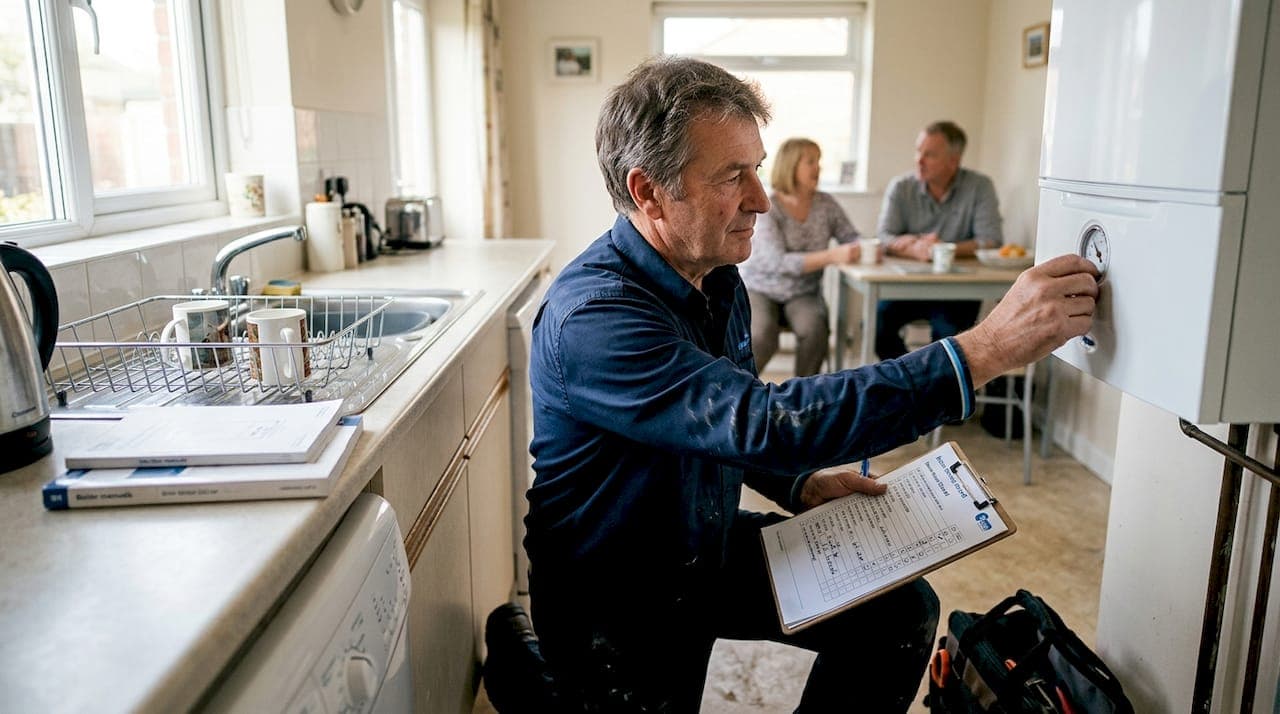
Boiler servicing is not just a box-ticking exercise. It is a structured inspection carried out by a qualified professional who checks your boiler's components, tests its output, cleans internal parts, and identifies any early signs of wear or fault. The goal is to keep your system running safely and at its best before problems develop.
A certified heating engineer checks and cleans critical components for safety and efficiency, covering everything from the heat exchanger and burner to the flue and pressure levels. Understanding what actually happens during a visit helps you appreciate why it cannot be skipped.
Here is what a standard boiler service process typically involves:
- Visual inspection of the boiler casing, pipework, and flue for signs of corrosion or damage.
- Checking gas pressure and flow to confirm the boiler is operating within safe parameters.
- Cleaning the burner and heat exchanger to remove soot and debris that reduces efficiency.
- Testing the controls and thermostat to ensure they respond correctly.
- Inspecting the flue and ventilation to confirm there are no blockages that could cause carbon monoxide build-up.
- Checking seals and joints for leaks that could become dangerous over time.
- Testing safety devices such as the pressure relief valve and overheat thermostat.
In certain types of property, particularly rented homes, UK law requires annual gas safety checks. For homeowners, it is not a strict legal mandate in the same way, but skipping it carries serious consequences, which we will cover shortly.
Pro Tip: Book your boiler service in late summer, around August or September. Engineers are far less busy then, you will have an easier time getting a convenient appointment, and your system will be ready well before the cold sets in.
Consistency is what makes servicing valuable. A one-off check is useful, but an annual pattern of care is what keeps faults from accumulating silently.
The safety case: Reducing risks for your household
A boiler that seems to be working perfectly can still be slowly releasing carbon monoxide into your home. That is the most unsettling fact about gas appliance risks: they are often invisible. Carbon monoxide has no colour, no smell, and no taste. By the time symptoms appear, including headaches, dizziness, and confusion, the situation is already dangerous.
Servicing helps spot issues early before they become life-threatening, especially with older systems. A blocked flue, a cracked heat exchanger, or a faulty seal can all cause carbon monoxide to leak into living spaces without any obvious sign of a problem.
"One annual check can save lives by catching invisible threats before they become emergencies inside your home."
A trained engineer will look for the following warning signs that most homeowners would never notice:
- Yellow or orange flames instead of a crisp blue burn
- Soot or dark marks around the boiler casing
- Excessive condensation on windows near the appliance
- A pilot light that keeps going out
- Unusual smells or sounds during operation
- Fluctuating pressure readings
Beyond carbon monoxide, gas leaks and fire hazards are real risks when a boiler is left unchecked. A loose connection or a corroded component may not cause immediate drama, but it creates conditions for failure under pressure, which is exactly when you need your heating most. Thinking about plumbing and home safety more broadly, a well-maintained system protects not just your boiler but the whole property.
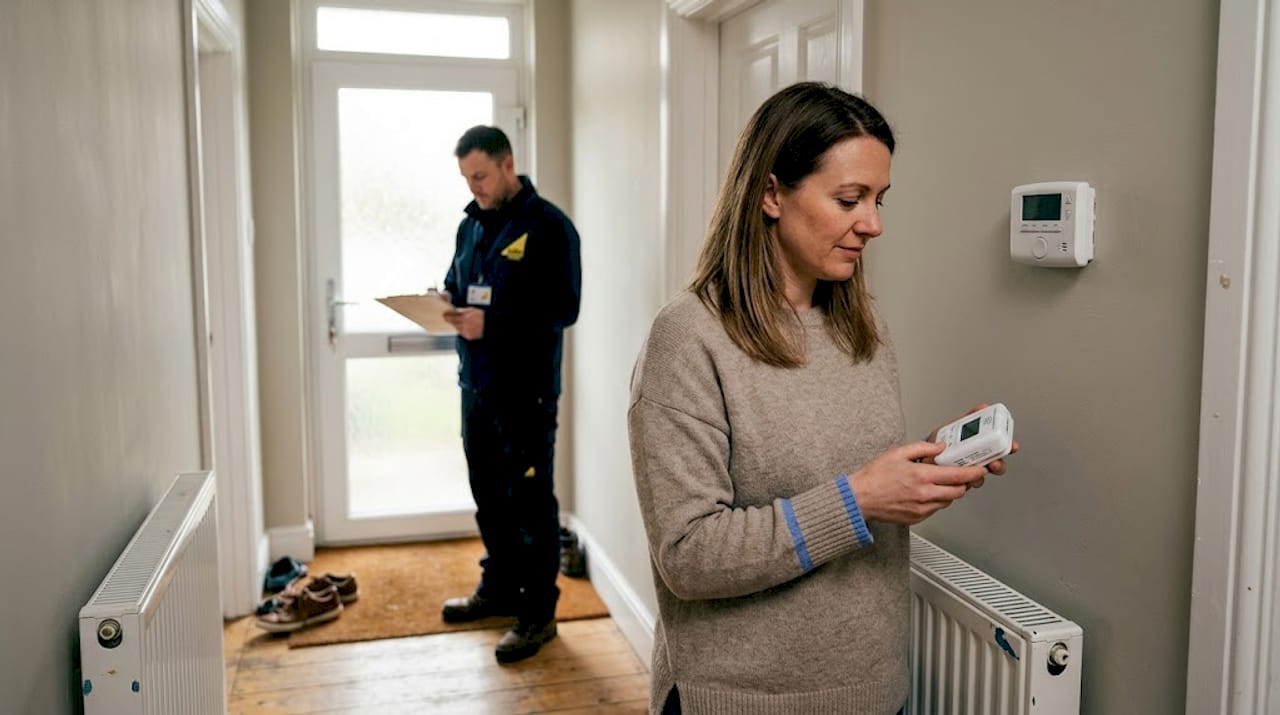
For landlords, the HSE gas safety regulations are clear: an annual gas safety check by a Gas Safe registered engineer is a legal obligation, not a suggestion. Failure to comply can result in fines or prosecution.
Efficiency and cost savings: How servicing benefits your wallet
Safety is only one half of the story. Let's look at how servicing delivers real financial benefits you will notice on your energy bills and in your emergency repair costs.
Well-serviced boilers run more efficiently and use less energy, because a clean burner and clear heat exchanger transfer heat more effectively. When components are dirty or worn, the boiler works harder and burns more gas to produce the same warmth.
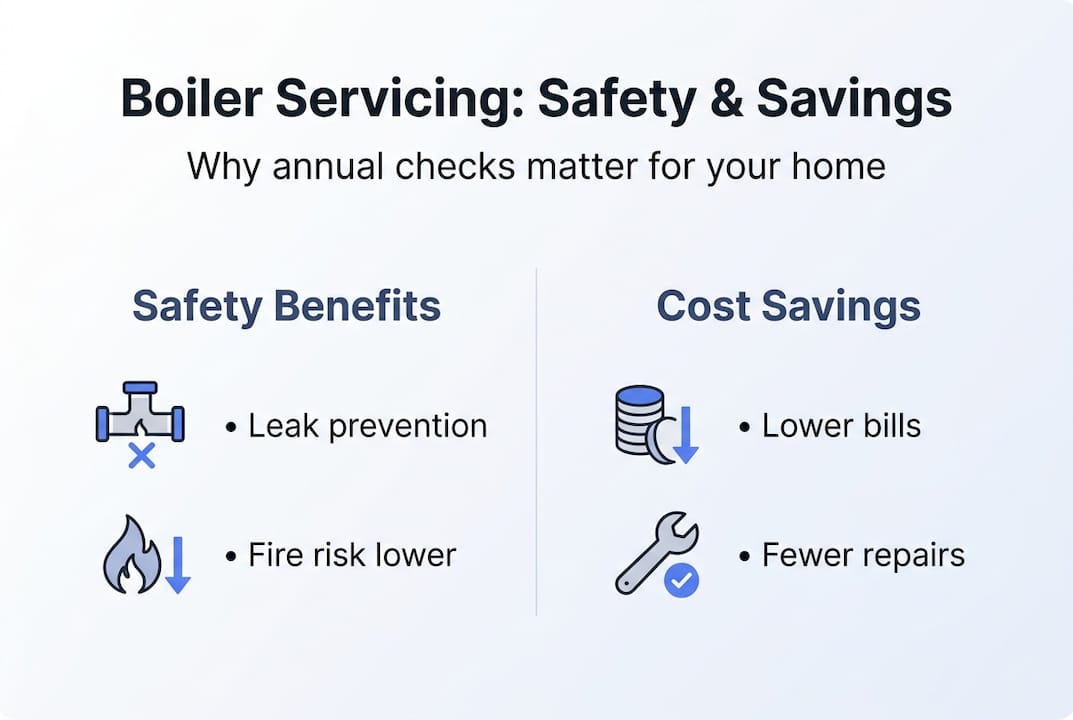
A well-maintained boiler can save up to £200 per year in energy and avoided repairs, making the cost of an annual service a straightforward investment rather than an expense.
Here is a comparison of typical annual costs for homeowners:
| Cost category | Serviced boiler | Unserviced boiler |
|---|---|---|
| Annual service fee | £80 to £120 | £0 |
| Average energy cost | Lower by up to £150 | Higher |
| Breakdown repair (average) | Rare, under £100 | £200 to £500+ |
| Emergency call-out | Unlikely | Common |
| Estimated total annual cost | £180 to £220 | £350 to £600+ |
The numbers speak clearly. Skipping the service often costs more in the long run, especially when emergency call-outs and part replacements are factored in.
Another financial risk worth knowing: many boiler manufacturers void the warranty if you cannot show a record of annual servicing. That means a £3,000 boiler could be unprotected if a major fault develops and you have no service history to show.
Pro Tip: Combine your boiler service with annual plumbing checks across your home. Catching minor pipe issues, dripping taps, or pressure problems in the same visit saves you time and maximises the value of the engineer's time on site.
For further guidance on reducing energy bills, the Energy Saving Trust provides practical advice tailored to UK households.
Legal and insurance requirements every homeowner should know
Beyond cost savings, regular servicing helps you stay on the right side of the law and your insurance policy. Many homeowners are surprised to discover that their home insurance policy includes conditions about boiler maintenance, and that failing to service regularly could result in a denied claim.
Landlords must arrange an annual gas safety check by law, and many insurers expect professional servicing for claims to remain valid. For private homeowners, the legal duties are less prescriptive but the insurance exposure is real.
Here is a clear breakdown of what applies to whom:
| Requirement | Landlords | Homeowners |
|---|---|---|
| Annual gas safety check | Legally required | Strongly recommended |
| Gas Safe registered engineer | Mandatory | Mandatory for gas work |
| Insurance servicing condition | Often required | Common in home cover policies |
| Manufacturer warranty condition | Annual service required | Annual service required |
| Penalty for non-compliance | Fines or prosecution | Voided insurance or warranty |
For a full picture of what key plumbing regulations apply in the UK, it is worth reviewing current guidance, particularly if you own a property with a gas appliance of any kind.
For landlords specifically, the gas safety for landlords section of the Gas Safe Register sets out all obligations clearly.
Documentation matters too. Keep the following safe after every service visit:
- The Gas Safety Certificate (CP12) if you are a landlord
- Your boiler service record or logbook
- Receipts for any repairs or parts replaced
- The engineer's report with any advisory notes
- Your boiler's original installation and warranty documents
These records protect you in the event of an insurance claim, a property sale, or any dispute about appliance safety.
Why 'if it's not broken, don't fix it' is risky thinking
We hear this logic constantly, and it is understandable. If the boiler is heating your home and the bills seem normal, why pay for a service? The honest answer is that most boiler failures give no warning before they cause real disruption. A heat exchanger cracks gradually. A seal deteriorates slowly. A flue restriction builds up over months. By the time the fault becomes obvious, the fix is far more expensive than the service that would have caught it.
Proactive servicing means you stay in charge of your budget. When spotting early plumbing faults across your heating system, small fixes found during a service visit cost far less than emergency repairs on a cold January evening.
Peace of mind is not a cliché here. Knowing your boiler has been checked by a professional, that the flue is clear, the seals are sound, and the pressure is right, means you can switch the heating on in October without anxiety. That confidence is worth something real.
Keep your home safe with expert servicing
If this article has made one thing clear, it is that boiler maintenance is not optional. It is the most reliable way to protect your family, control your heating costs, and meet your legal and insurance obligations as a homeowner.

At 777 Plumber, our fully employed, Gas Safe registered engineers carry out thorough boiler services with no call-out fees and no hidden charges. Whether you need a routine annual check or suspect a problem needs attention, you can book quickly and easily through our website. We also offer professional local leak detection if you are concerned about pipework anywhere on your property. Transparent pricing, local expertise, and real accountability on every visit.
Frequently asked questions
How often should I have my boiler serviced in the UK?
Most experts recommend an annual boiler service to maintain safety, efficiency, and warranty validity. Once per year, ideally before the heating season begins, is the standard expectation.
Can a boiler service reduce my energy bills?
Yes. Regular maintenance keeps your boiler running efficiently, and efficient boilers use less gas to produce the same heat, which shows directly on your bills over time.
Is boiler servicing a legal requirement for homeowners?
For landlords, annual gas safety checks are a legal requirement. For homeowners, it is not legally mandatory but is typically required to keep your insurance and boiler warranty in force.
What happens if I skip my boiler service?
Skipping service increases breakdown risk, can void your warranty, and may result in a denied insurance claim. Neglected boilers are a leading cause of heating emergencies, particularly in winter.
Who should carry out a boiler service?
Only a Gas Safe registered engineer should service a gas boiler. Qualified professionals have the training, tools, and legal authorisation to work safely on gas appliances in UK homes.
Recommended
- Why service your central heating for safety and savings
- Understanding the role of heating engineers for UK homeowners
- Why annual plumbing checks matter for UK homeowners
- How heating controls transform UK homes: comfort and savings
- Viessmann ipari kazán szerviz: A teljes útmutató (2026) - Kazán szerelő Kecskemét, Kazán szerviz Kecskemét, Kazáncsere Kecskemét