TL;DR:
- Knowing emergency signs and having a quick action plan can prevent major damage.
- Preparing with tools, contacts, and regular checks helps homeowners respond effectively.
- Always verify professional credentials and choose certified plumbers to ensure safe repairs.
It is two in the morning. Water is pouring through your kitchen ceiling, your heart is racing, and you have no idea where the main shut-off valve is. This is the reality that 82% of UK homeowners face when a plumbing emergency strikes without warning. The difference between a manageable repair and a catastrophic flood often comes down to one thing: knowing exactly what to do and in what order. This guide walks you through the complete workflow, from spotting the first warning signs to securing a professional repair, so that when disaster strikes, you are ready.
Table of Contents
- Recognising an emergency: what to look for and first moves
- Essential tools, contacts, and pre-emergency preparation
- Step-by-step emergency plumbing workflow
- Selecting reliable professionals and ensuring quality service
- Why urgency and preparation beat luck every time
- Find trusted emergency plumbing help near you
- Frequently asked questions
Key Takeaways
| Point | Details |
|---|---|
| Know the warning signs | Recognising emergencies early lets you act fast and prevent major damage. |
| Preparation is key | Having tools and contact info on hand saves time and reduces stress in a crisis. |
| Follow a step-by-step workflow | Acting in the right order protects your property and speeds up recovery. |
| Trust qualified professionals | Certified and reviewed plumbers are safer and offer greater satisfaction. |
Recognising an emergency: what to look for and first moves
Not every dripping tap is a crisis, but some problems demand your immediate attention. Knowing the difference between a minor inconvenience and a genuine emergency can save you thousands of pounds and protect your family's safety.
These are the five classic signs you are dealing with a plumbing emergency:
- A burst or fractured pipe with visible water gushing or streaming
- Sewage backing up into sinks, toilets, or bath drains
- A sudden drop in water pressure across the whole house
- The smell of gas or burning near your boiler or pipework
- Water staining spreading rapidly across ceilings or walls
One mistake homeowners make far too often is dismissing early signs because the problem seems "small." A slow, dark patch on your ceiling is rarely just condensation. A gurgling drain in two rooms at once almost always means a blockage is building somewhere serious. Learn to read these signals by spotting emergency signs early, before a manageable issue becomes a major one.
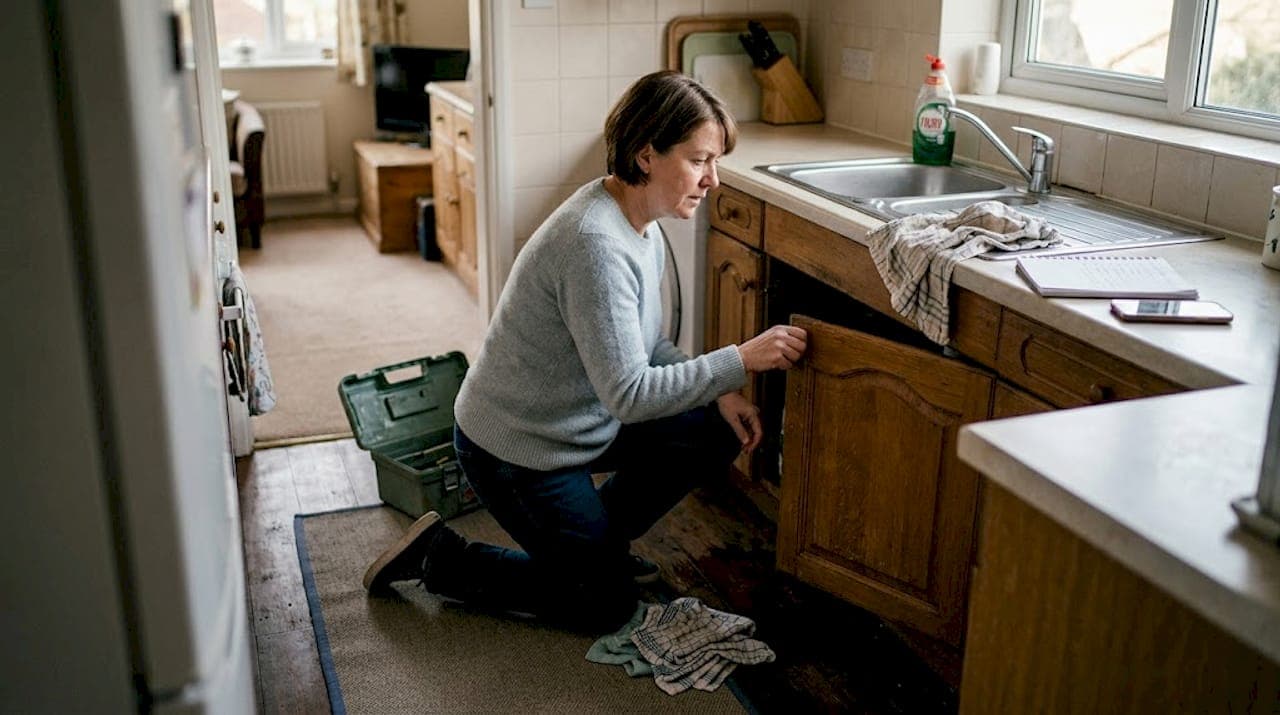
When you suspect an emergency, your very first move is the main water shut-off valve. In most UK homes, this is located under the kitchen sink or near the water meter at the front of the property. Turn it clockwise to close it. If there is any risk of water near electrical sockets or fuse boxes, switch off the electricity at the consumer unit too.
It is worth noting that 54% of emergency plumbing demand peaks in winter, when frozen pipes are most likely to crack and burst. Cold snaps in the UK can happen fast, so awareness of seasonal risk is genuinely important.
Remember: Never attempt to inspect pipework behind walls or under floors if you are not certain the water supply is fully isolated. Making a guess and being wrong can escalate a repair into a rebuild.
Pro Tip: Use your phone's torch rather than fumbling with a lamp. Keep it pointed at the floor, not the source of the leak, so you can see where water is travelling and track its true origin safely.
Essential tools, contacts, and pre-emergency preparation
Once you spot an emergency, being prepared is your best defence against chaos. A moment spent gathering supplies and contacts now is worth an hour of panicked searching at midnight.
Every UK home should have a basic emergency plumbing kit ready to go:
- A waterproof torch and spare batteries
- Old towels, a bucket, and a mop for immediate containment
- Plumber's tape (PTFE tape) for temporary pipe sealing
- Rubber gloves for handling contaminated water safely
- A written note of your main shut-off valve location and your plumber's number
- A small adjustable spanner for basic tap and valve work
A quick comparison shows why having this kit ready matters so much:
| Situation | Professional callout | DIY interim action |
|---|---|---|
| Burst pipe | Permanent repair, guaranteed | Reduce flow with tape or towels |
| Blocked drain | Jet wash and inspection | Plunger or drain rod attempt |
| Boiler failure | Safe service and fix | Switch off and ventilate |
| Sewage backflow | Full drain clearance | Avoid use, block affected drains |
Prevention is the real priority. Simple drain prevention tips from Which? confirm that insulating pipes and annual checks can help avoid the majority of common plumbing emergencies before they ever start. Scheduling annual plumbing checks is one of the most straightforward ways to catch weak joints, corroding pipework, or failing valves well before winter arrives.
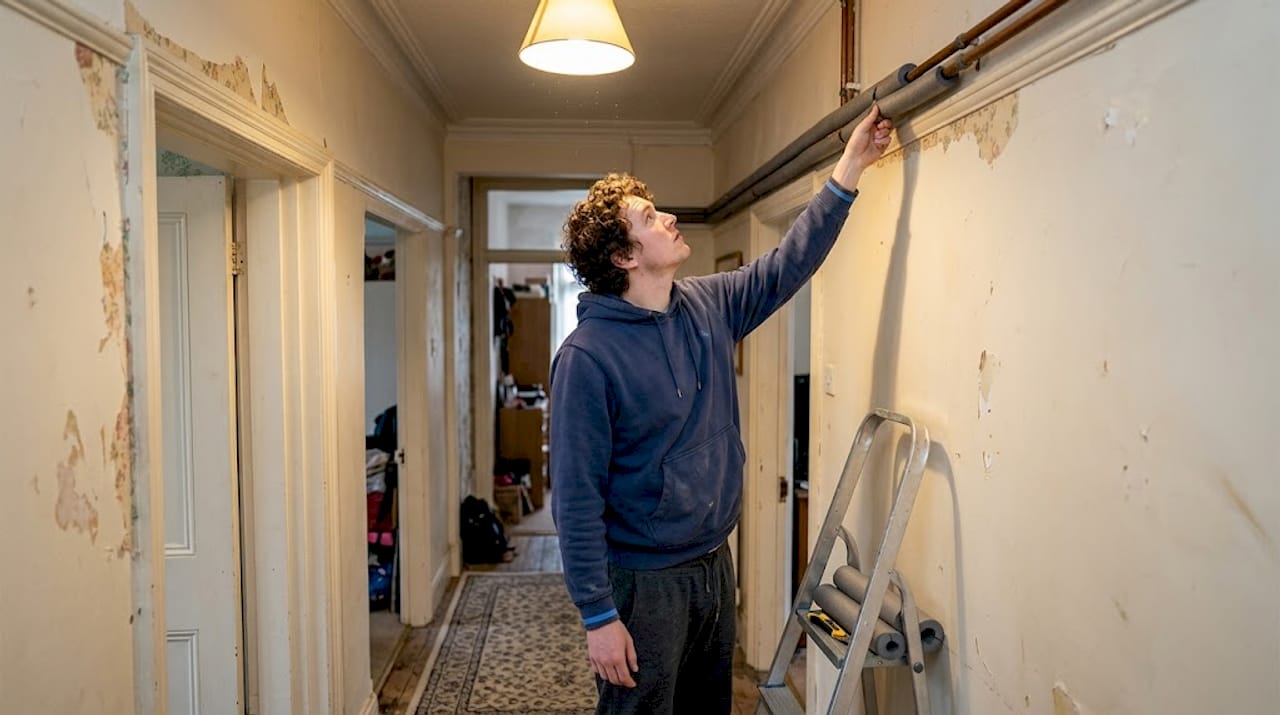
It also helps to know which common repair types are most likely in your type of property. Older Victorian terraces, for example, face different risks than modern new builds.
Pro Tip: Create a one-page emergency reference sheet and stick it inside your kitchen cupboard. Include your main shut-off location, your boiler reset instructions, and your preferred plumber's number. Update it whenever you move or change suppliers.
Step-by-step emergency plumbing workflow
With your toolkit and prevention in place, here is the workflow you should follow when an emergency strikes. Move through each step calmly and in order.
- Shut off the water supply at the main valve without delay.
- Isolate electricity in any room where water is present or near sockets.
- Contain the spread using towels, buckets, and any absorbent materials to hand.
- Document the damage with photos and a short written list of affected areas.
- Call your pre-vetted plumber and describe the situation clearly and briefly.
- Notify your insurer if damage to property or belongings appears significant.
- Follow any safety guidance your plumber gives you while they are in transit.
Following urgent repair steps in this order keeps you safe and gives the attending professional the clearest possible picture of what they are walking into.
Here is what a realistic UK emergency callout looks like in terms of timing:
| Stage | Typical timeframe |
|---|---|
| Initial call to plumber | Under 5 minutes |
| Confirmation and ETA | Within 15 minutes |
| Plumber arrival (urban areas) | 30 to 90 minutes |
| Initial assessment on site | 10 to 20 minutes |
| First containment or repair | 30 to 120 minutes |
Given that 82% of UK homeowners expect same-day service, choosing a provider who can genuinely deliver on that promise matters enormously. Always confirm response times when you call.
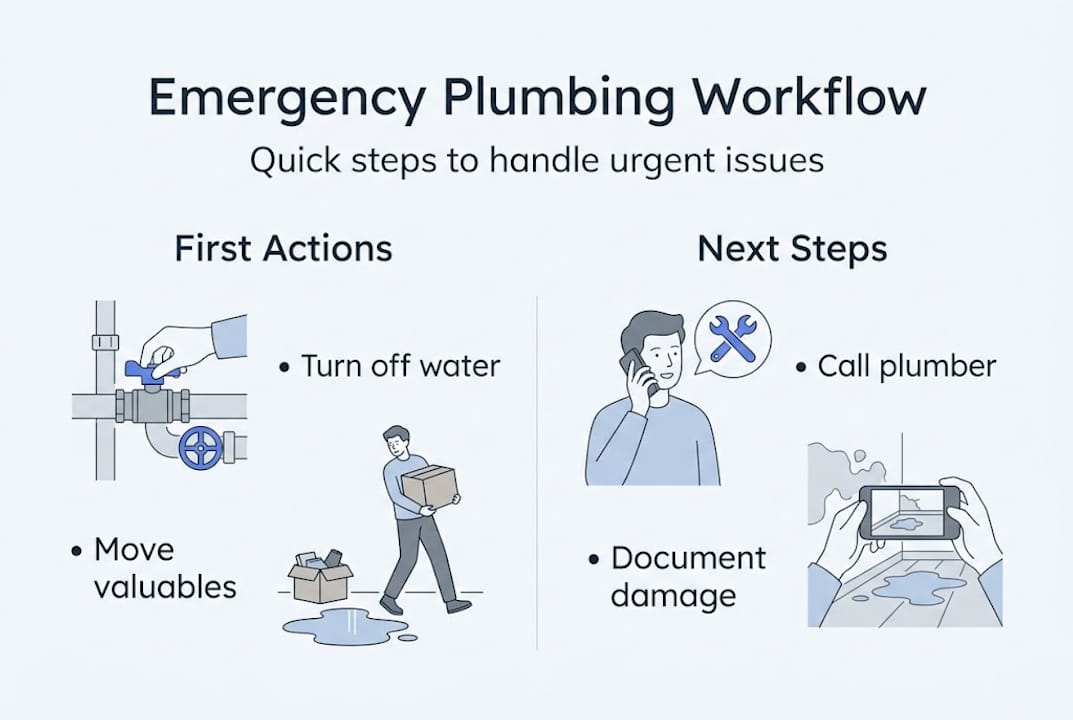
Pro Tip: Your photos are evidence. Take wide shots showing the full affected area, then close-ups of the source if it is safe to do so. A timestamped photo on your phone is one of the strongest tools you have when submitting an insurance claim later.
Selecting reliable professionals and ensuring quality service
Once the emergency is contained, ensuring you get safe and professional repairs is the final key step. Choosing the wrong plumber under pressure is a very common and very costly mistake.
Here is what to check before you confirm a booking:
- Gas Safe registration (mandatory in the UK for any gas-related work)
- Public liability insurance and proof they are fully employed, not a subcontractor
- Verifiable local reviews on Google or Checkatrade
- Transparent, written pricing with no hidden call-out charges
- A clear explanation of the repair plan before work begins
App-based platforms can connect you quickly, but they vary enormously in the quality of professionals they list. A personal recommendation from a neighbour or a pre-vetted local firm you have already researched tends to deliver more consistent results in a genuine crisis. Take time now to find a qualified plumber before you actually need one.
Safety note: For any work involving your boiler, gas lines, or heating system, only a Gas Safe registered engineer should touch it. Unregistered gas work is not just illegal. It is genuinely dangerous.
Looking at reliable UK solutions before an emergency means you are never scrambling to assess credentials while water pours across your floor. Choosing Gas Safe registered professionals with strong reviews is the single most effective way to protect both your home and your peace of mind.
Avoid any firm that cannot provide credentials on request, asks for full cash payment upfront, or refuses to give you a written quote. These are clear warning signs.
Why urgency and preparation beat luck every time
Here is something the plumbing industry rarely says out loud: most emergencies are not truly sudden. They are the end result of warning signs that were noticed and then ignored. That patch of damp, the faint gurgling, the boiler that took two attempts to fire up. These things spoke clearly before the crisis arrived.
Relying on luck to get through a plumbing emergency is genuinely expensive. A homeowner who has done nothing to prepare will spend far more in reactive repairs than one who invested a small amount of time each year. As most plumbing emergencies can be prevented with the right habits, the question is not really whether to prepare. It is how soon you start.
We see this regularly. Customers who have followed expert home plumbing advice and scheduled seasonal checks rarely face the same scale of emergency as those who wait until something fails. The cost difference is stark.
Pro Tip: Book a plumbing check before October every year. Catching a weak pipe joint in September costs far less than dealing with a burst pipe in January.
Share this workflow with your neighbours too. The more informed your community is, the better everyone fares when winter arrives.
Find trusted emergency plumbing help near you
Preparation only goes so far without the right team behind you. When an emergency happens, knowing exactly who to call makes all the difference between a stressful night and a swift, clean resolution.

At 777 Plumber, our fully employed engineers are available around the clock with no call-out charges and no nasty surprises on your bill. Whether you need a local Hotwells plumber, a trusted Eastfield plumber, or rapid cover across Bristol, we respond fast and fix things properly. Save our number now at 777plumber.co.uk before an emergency leaves you searching in a panic. A two-minute action today could save you a very difficult night later.
Frequently asked questions
What should I do first in a plumbing emergency?
Turn off your home's main water supply immediately and move electrical items away from water before calling a professional. Immediate shut-off and safety checks are the most critical first steps in any plumbing crisis.
How can I prevent plumbing emergencies?
Insulate pipes before winter, arrange annual checks, and avoid putting fats or coffee grounds down the drain. Insulating pipes and annual checks are among the most effective preventive measures available to UK homeowners.
How do I choose a reliable emergency plumber?
Look for Gas Safe registration, strong local reviews, and clear credentials before confirming any booking. Gas Safe registered professionals with verified reviews offer the best combination of safety and quality.
Is it safe to try fixing emergencies myself?
You can manage basic containment such as shutting off water and placing towels, but leave technical or gas-related repairs to certified professionals. For gas or technical issues, an unregistered repair is both illegal and potentially life-threatening.