Many homeowners assume that if water comes out of the tap, the plumbing is fine. But mains pressure, the force at which water enters your home from the public supply, tells a very different story. Too low and your shower trickles, your boiler struggles, and appliances wear out faster. Too high and pipes crack, joints fail, and washing machines spring leaks. Pressure drops at peak demand and high pressure risks real damage, yet most homeowners never check their readings until something goes wrong. This guide explains what mains pressure means, how to measure it, and what you can do to protect your home.
Table of Contents
- What mains pressure means for your home
- Common pressure problems: risks, locations and symptoms
- How mains pressure affects plumbing efficiency and heating
- Regulations, standards and compensation: what to do if your mains pressure is too low
- Practical solutions: improving and maintaining mains pressure
- Need expert help with mains pressure?
- Frequently asked questions
Key Takeaways
| Point | Details |
|---|---|
| Mains pressure matters | Knowing your mains pressure prevents plumbing inefficiencies and costly damage. |
| Benchmark for quality | Aim for pressure around 1–3 bar and flow above 15 litres per minute for optimal performance. |
| Check and act promptly | Measure at your boundary, address issues quickly and claim compensation if standards aren’t met. |
| Prevention saves money | Regular maintenance, upgrades and professional checks help avoid pressure-related problems. |
What mains pressure means for your home
Mains pressure is not the same as water flow. Pressure is the force pushing water through your pipes, measured in bar. Flow is the volume of water that actually comes out, measured in litres per minute. You can have decent pressure but poor flow if your pipes are narrow or partially blocked. Understanding the difference helps you diagnose problems accurately rather than guessing.
In the UK, water suppliers are required to maintain a minimum standard at your boundary stopcock, which is the point where the public supply meets your private pipework. Good flow is above 15 L/min, and if your supplier consistently delivers below 1 bar, you may be entitled to compensation under Ofwat's Guaranteed Standards Scheme. Most UK homes sit somewhere between 1 and 3 bar under normal conditions.
Why does this matter day to day? Your shower needs adequate pressure to deliver a satisfying rinse. Your combi boiler relies on consistent mains pressure to heat water on demand. Dishwashers and washing machines have minimum pressure requirements printed in their manuals. Understanding your plumbing system types helps you see how pressure interacts with every part of your home.
Here is what mains pressure directly affects in a typical UK home:
- Shower performance: Low pressure means weak flow, even with a quality showerhead
- Combi boiler output: Most combis need at least 1.5 bar to fire correctly
- Hot water speed: Higher pressure delivers hot water to taps faster
- Appliance lifespan: Consistently high pressure stresses seals and valves
- Pipe integrity: Pressure spikes can cause joints to weep or burst over time
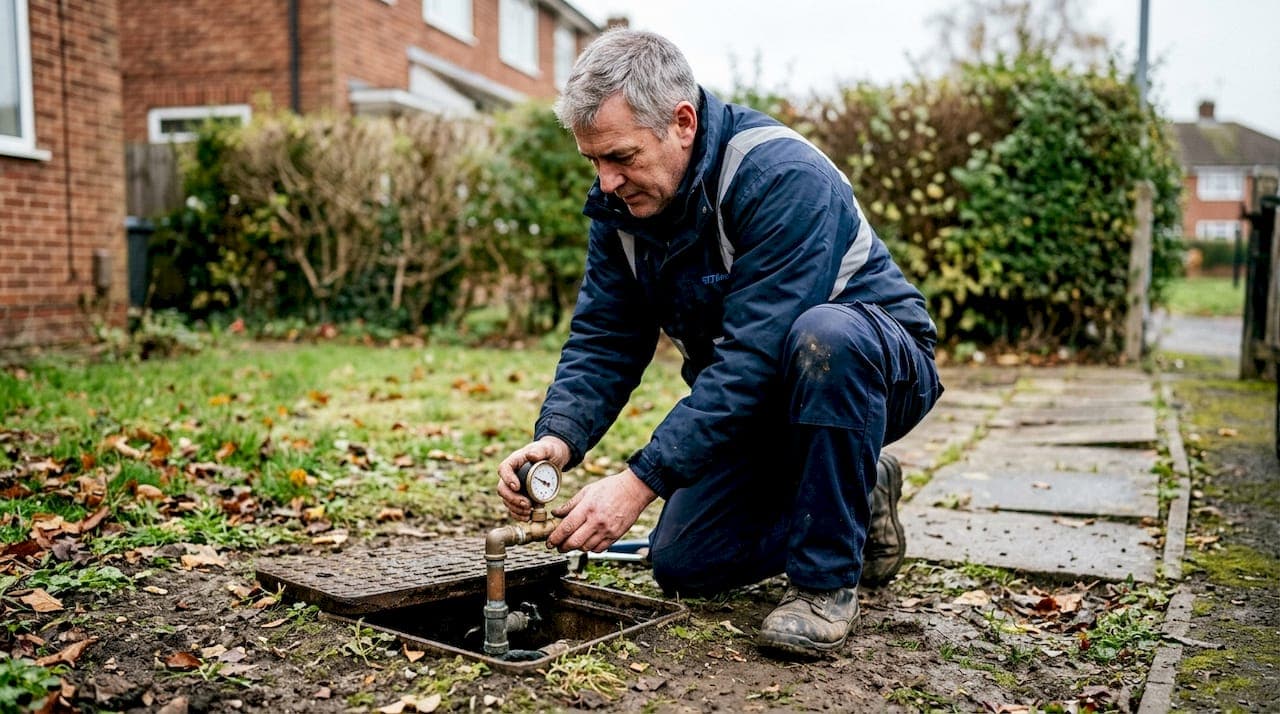
Pro Tip: Always test pressure at your boundary stopcock rather than at an indoor tap. Indoor readings are affected by your internal pipework and will not reflect the true mains supply.
Common pressure problems: risks, locations and symptoms
Not every home experiences the same pressure. Where you live makes a significant difference. Rural properties at the end of long supply runs often see lower pressure. High-rise flats lose pressure simply due to height, since water must travel upward against gravity. In London, pressure commonly ranges between 0.8 and 1.8 bar, which is lower than many homeowners expect, and drops further during peak demand periods such as early mornings.
High pressure is equally problematic. Readings above 3 bar put stress on every component in your system. Appliance seals degrade faster, flexible hoses on washing machines and dishwashers are at greater risk of bursting, and even small pipe joints can develop slow weeps that go unnoticed for months.
Worth knowing: A burst flexible hose under a kitchen sink can release hundreds of litres of water in an hour. High mains pressure is one of the leading causes of this type of failure in UK homes.
Here are the most common symptoms that suggest a pressure problem:
- Inconsistent flow that varies throughout the day
- Noisy pipes, particularly banging or hammering sounds when taps are turned off
- Slow-filling cisterns or appliances
- Unexplained damp patches or rising water bills pointing to a hidden leak
- Showers that fluctuate between strong and weak without any change in usage
You can explore common plumbing problems in more detail to see how pressure issues connect to other faults. If you suspect a hidden leak, leaking pipe repair guidance can help you act quickly. For more serious concerns, professional water leak detection is the most reliable way to locate the source without unnecessary disruption.
| Location type | Typical pressure range | Common issue |
|---|---|---|
| Rural property | 0.5 to 1.2 bar | Persistently low pressure |
| Urban terraced house | 1.5 to 3 bar | Generally adequate |
| High-rise flat | 0.8 to 1.5 bar | Low pressure on upper floors |
| London property | 0.8 to 1.8 bar | Peak demand drops |
| Any home with old pipes | Variable | Blockages reducing flow |
Pro Tip: If your pressure gauge consistently reads above 3 bar, fit a pressure reducing valve (PRV) at the point where the mains enters your home. This single step protects every appliance and fitting downstream.
How mains pressure affects plumbing efficiency and heating
Pressure and efficiency are closely linked. A combi boiler that receives inconsistent mains pressure will cycle on and off more frequently, using more gas and delivering less reliable hot water. Pressure drops during peak demand and multi-outlet use, meaning if someone is showering while the dishwasher runs, both suffer. This is not a fault in your boiler. It is a supply issue.
For central heating systems, low pressure can prevent the boiler from reaching its target flow temperature efficiently. Over time, this increases wear on the heat exchanger and pump. A good flow rate above 15 L/min is the benchmark that separates a well-performing system from one that is quietly underperforming.
Key efficiency comparison:
| Pressure reading | Shower performance | Boiler efficiency | Appliance risk |
|---|---|---|---|
| Below 1 bar | Weak, unsatisfying | Reduced, may cut out | Low risk of damage |
| 1 to 3 bar | Good to excellent | Optimal range | Minimal risk |
| Above 3 bar | Strong but wasteful | No benefit, extra wear | High risk of failure |
Here are three practical steps to check and improve pressure for better efficiency:
- Measure at the boundary stopcock using a pressure gauge. This gives you the true incoming reading before any internal losses.
- Check all outlets simultaneously to identify pressure drop under load. If readings fall sharply, your supply pipe may be undersized or partially blocked.
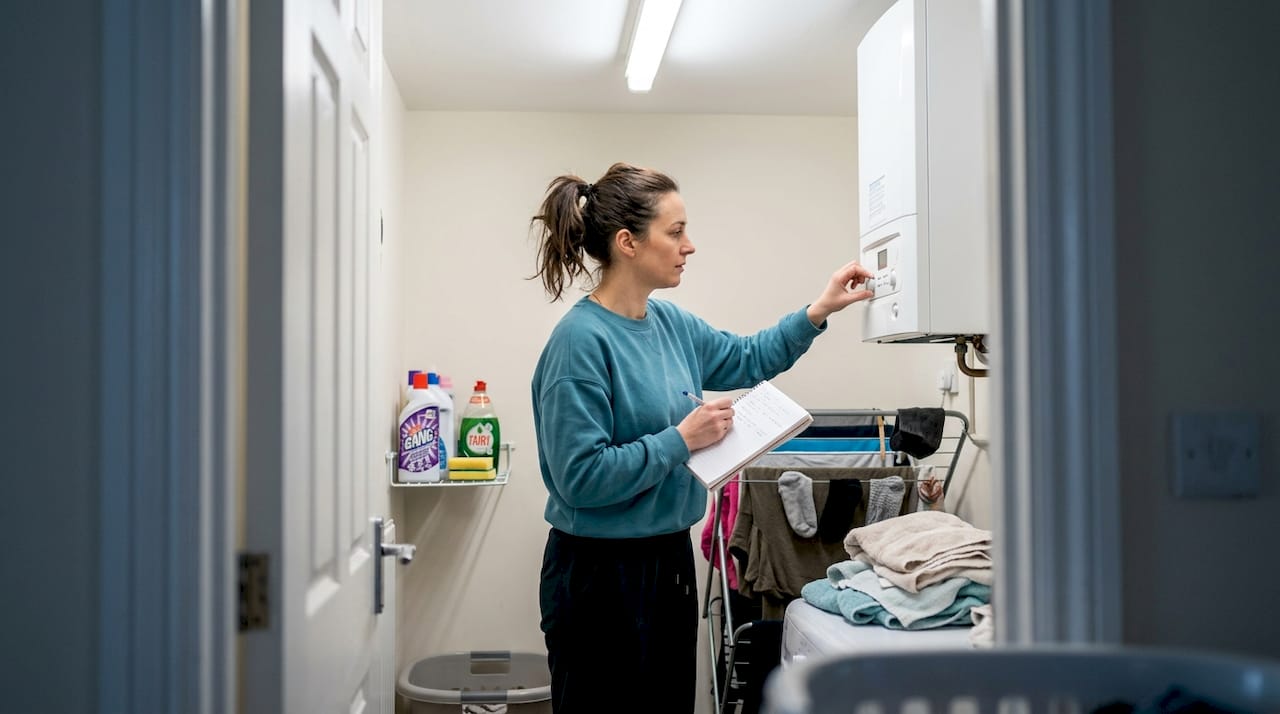
- Inspect your boiler pressure gauge separately. Heating system pressure is separate from mains pressure, but both need to be within range for efficient operation.
Understanding how plumbing ensures home safety puts pressure management in a broader context. And if you are unsure whether a drop in performance is pressure-related or something else, the advantages of professional leak detection explain why expert diagnosis saves money in the long run.
Regulations, standards and compensation: what to do if your mains pressure is too low
You have rights when it comes to mains pressure. Ofwat, the water services regulator for England and Wales, sets clear standards that your supplier must meet. If your mains pressure falls below 1 bar consistently, you are entitled to a £25 payment under the Guaranteed Standards Scheme. This is not a goodwill gesture. It is a regulated obligation.
However, the process requires you to document the problem properly. A single low reading on a busy morning is not enough. You need to show a pattern.
Here is how to approach a low pressure complaint step by step:
- Measure and record pressure readings at your boundary stopcock over several days, noting the time and any concurrent usage in the home.
- Rule out internal causes such as a partially closed stopcock, blocked filter, or old pipework that may be restricting flow before blaming the supplier.
- Contact your water supplier in writing, providing your documented readings and the dates they were taken.
- Request a site visit if the supplier disputes your readings. They are obliged to investigate.
- Escalate to the Consumer Council for Water if your supplier fails to act within a reasonable timeframe.
Key facts to keep in mind:
- The minimum standard is 1 bar at the boundary stopcock
- Compensation under the GSS is £25 per qualifying incident
- Suppliers must respond to complaints within set timeframes or face further penalties
- Issues caused by your own internal pipework are your responsibility, not the supplier's
If you suspect a leak on your supply pipe is contributing to low pressure, mains water leak investigation should be your first step. It is also worth familiarising yourself with UK plumbing standards so you know what qualified work looks like when repairs are needed.
Practical solutions: improving and maintaining mains pressure
Once you understand your pressure situation, taking action is straightforward. The goal is consistent pressure within the safe range of 1 to 3 bar, with no sudden spikes or sustained drops.
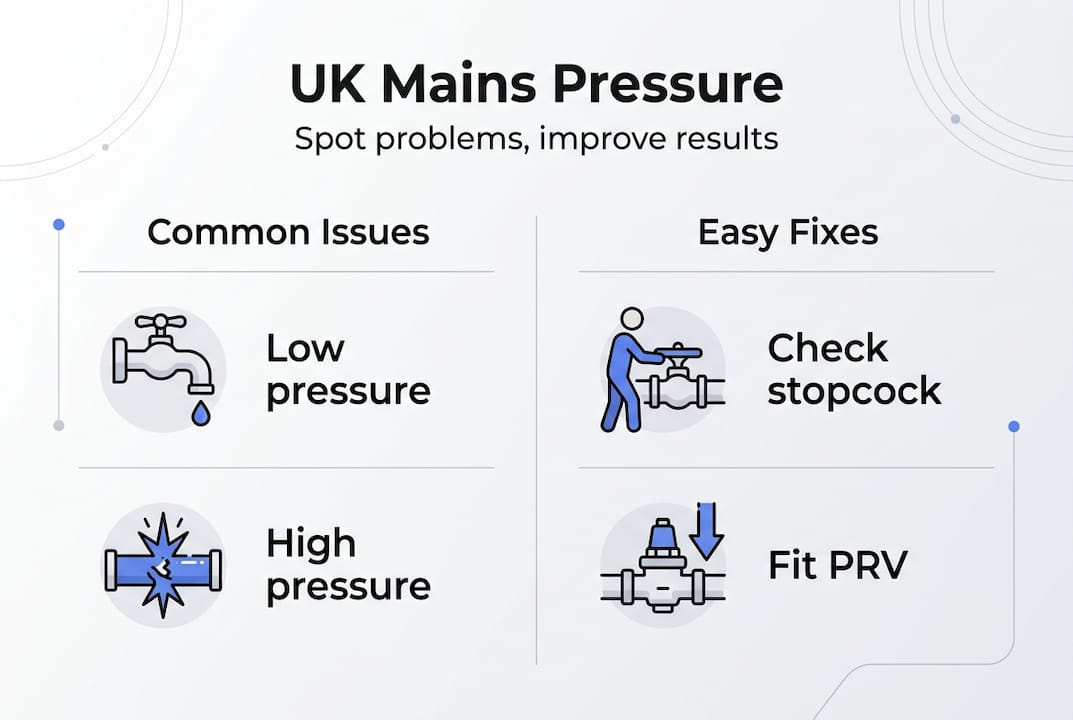
For homes with high pressure above 3 bar, a pressure reducing valve is the most effective solution. A PRV is fitted to the incoming supply and automatically limits pressure to a set level, typically around 2 to 2.5 bar. It protects every appliance, fitting, and pipe in your home from that point forward.
For low pressure, the solutions depend on the cause:
- Check for partial blockages in filters, strainers, and old galvanised pipes that may have corroded internally
- Inspect your boundary stopcock to confirm it is fully open. A partially closed valve is a surprisingly common cause of low pressure
- Consider a booster pump if your supply is genuinely low and your supplier cannot improve it, particularly useful in high-rise flats
- Replace old lead or narrow-bore pipework which restricts flow regardless of incoming pressure
- Schedule annual plumbing inspections to catch developing issues before they become costly faults
Working with a professional plumber means pressure testing is done accurately and any remedial work meets current standards. If something does go wrong suddenly, having an emergency plumbing repair guide to hand helps you act fast and limit damage.
Pro Tip: Book a pressure check as part of any routine plumbing visit. It takes minutes, costs nothing extra, and gives you a baseline reading you can compare against in future years.
Need expert help with mains pressure?
If your pressure readings are outside the safe range, or you are simply not sure where to start, getting a professional assessment is the most reliable next step. At 777 Plumber, our fully employed technicians carry out pressure testing, PRV installation, pipe upgrades, and boiler checks with no call-out fees and transparent pricing from the outset.

You can book a heating engineer online in minutes for a boiler or heating pressure check, or browse our plumbing project gallery to see the standard of work we deliver. If you are based locally, our Hotwells plumber service is available for fast, reliable appointments. We do not use subcontractors, so the same quality standard applies to every job, every time.
Frequently asked questions
What is the minimum legal mains pressure in the UK?
UK water suppliers must maintain at least 1 bar at the boundary stopcock, and homeowners can claim £25 compensation under the Ofwat Guaranteed Standards Scheme if this is not met consistently.
How can I check if my mains pressure is too high or too low?
Attach a pressure gauge to your boundary stopcock for an accurate reading. Readings above 3 bar risk appliance damage, while readings below 1 bar indicate a supply problem that may warrant a compensation claim.
What should I do if my pressure drops during peak times?
Keep a log of your readings with times and dates, then report the pattern to your supplier. Pressure drops with peak demand are common but sustained drops should be formally investigated rather than accepted.
Are pressure reducing valves necessary for all homes?
Not every home needs one, but if your mains pressure consistently exceeds 3 bar, a PRV is a cost-effective way to protect your pipework, appliances, and fittings from long-term stress damage.