TL;DR:
- Most homeowners only call a plumber after visible problems occur, but early drain surveys can prevent costly repairs. Using waterproof cameras and locating technology, surveys identify issues like blockages, cracks, and root intrusion before they escalate. Regular inspections save money, protect property, and ensure a clear understanding of underground drainage health, especially when buying or maintaining a home.
Most homeowners only call a plumber once something goes visibly wrong. A blocked sink, a gurgling toilet, water backing up in the shower. But by that point, the problem has often been building for months underground, well out of sight and out of mind. Understanding why perform drain surveys matters is not just useful knowledge; it is the difference between catching a £200 repair early and facing a £3,000 excavation later. This guide explains what drain surveys involve, what they find, and why proactive inspections are one of the smartest maintenance decisions you can make for your home.
Table of Contents
- What is a drain survey and why perform one in the first place
- Common drain problems identified by surveys
- Benefits of performing regular drain surveys
- When to schedule a drain survey and what to expect
- Comparing drain survey methods and technologies
- A fresh look at drain surveys: avoiding costly surprises through informed choices
- Get expert drain surveys with 777 Plumber
- Frequently asked questions
Key Takeaways
| Point | Details |
|---|---|
| Drain surveys explained | They use waterproof cameras to inspect pipe interiors and identify hidden issues without digging. |
| Detect common problems | Surveys reveal blockages, cracks, root intrusion, corrosion, and old pipe deterioration early. |
| Save money and stress | Regular surveys catch problems before they cause costly damage or flooding. |
| Schedule proactively | Inspect before symptoms worsen or prior to rainy seasons for ageing systems. |
| Choose expert plumbers | Professional surveyors provide clear reports, precise problem location, and efficient repair plans. |
What is a drain survey and why perform one in the first place
Understanding what a drain survey involves is the first step to appreciating why it is essential for any UK homeowner.
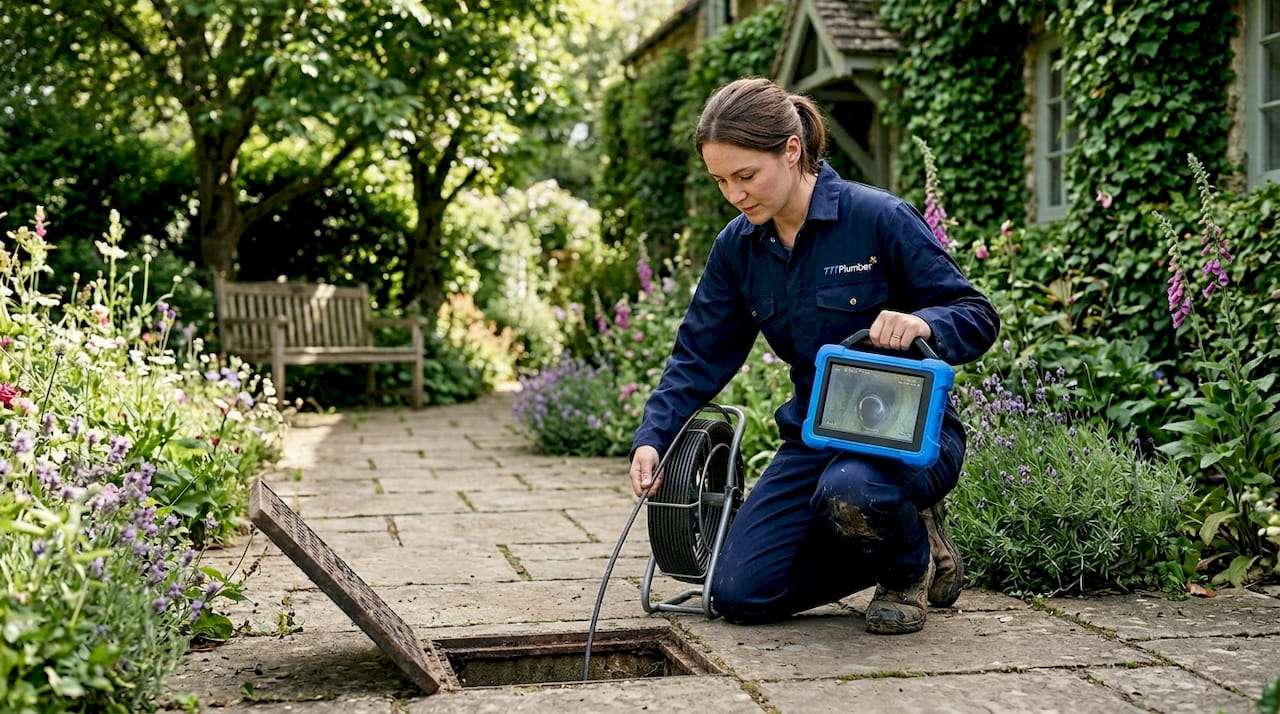
A drain survey is a visual inspection of your underground drainage system using a small, waterproof camera fed directly into your pipes. There is no digging, no guesswork, and no relying on a plumber's instinct alone. By sending a waterproof camera through a drain line, technicians can view and document the interior condition in real time without invasive demolition. What was once invisible is now recorded footage your plumber can analyse, replay, and use to plan precise repairs.
The camera transmits live footage to a screen, allowing the technician to see exactly what is happening inside your pipes. Modern systems also include locating technology, which pinpoints the depth and position of any problems to the nearest centimetre above ground. No guessing which section of the garden to dig up.
Here is what a standard drain survey can reveal:
- Blockages caused by grease, wet wipes, or built-up debris
- Cracks or fractures in the pipe walls
- Root intrusion from nearby trees or shrubs
- Collapsed or misaligned pipe sections
- Corrosion in older metal pipes
- Pipe bellies (low spots where waste pools and sits)
If you are dealing with recurring plumbing issues, understanding the benefits of professional leak detection alongside drain surveys gives you a far clearer picture of your property's overall health.
Pro Tip: Always ask for a copy of the survey footage and a written report. A reputable plumber will provide both. If they cannot, that is a red flag.
Common drain problems identified by surveys
Knowing what problems drain surveys find helps explain their importance in prevention and planning.
The variety of issues a drain survey can uncover surprises most homeowners. It is not just about blockages. Structural damage, environmental wear, and material degradation all affect your pipes silently over time.
Inspections can reveal blockages from grease, debris, and mineral build-up, structural defects like cracks and offset joints, as well as environmental issues such as root intrusion and pipe corrosion. Each of these problems behaves differently and requires a different repair approach, which is exactly why visual evidence matters so much.
Older properties face a particularly serious risk. Homes with old cast iron pipes may experience severe internal corrosion, pipe bellies where wastewater pools, and flow blockages that increase the risk of sewage backups. Many UK homes built before the 1970s still have cast iron or clay drainage systems that have never been inspected.
| Problem type | Typical cause | Risk if untreated |
|---|---|---|
| Grease blockage | Fat and oil build-up | Overflow and backups |
| Root intrusion | Tree roots seeking moisture | Pipe collapse |
| Cracked pipe | Ground movement, age | Leaks into soil, subsidence |
| Offset joint | Ground settlement | Partial or full blockage |
| Pipe corrosion | Age, chemical exposure | Structural failure |
| Pipe belly | Ground shift, poor installation | Chronic pooling and backups |
To understand how these issues sit within the wider picture of home plumbing, it helps to read about common plumbing repairs UK homeowners regularly face.
Benefits of performing regular drain surveys
With these benefits clear, it becomes easier to see how drain surveys fit into broader home maintenance.
The most obvious advantage is cost. Finding a hairline crack in a pipe early costs far less to repair than waiting until it collapses and takes a section of your driveway with it. Regular inspections identify hidden issues early, saving homeowners from stress, damage, and unexpected expenses. Early intervention almost always means simpler, cheaper work.
Beyond cost, drain surveys protect your property from secondary damage. A leaking underground pipe can erode the soil around your foundations, cause subsidence, and contaminate your garden with wastewater. These consequences are far more expensive to fix than the original pipe problem.
The drain survey advantages for property maintenance include:
- Early detection: Problems caught before they become failures
- No unnecessary digging: Video inspection reduces unnecessary labour and excavation by identifying exactly where problems are
- Documented evidence: Survey footage gives your plumber a precise repair brief and gives you a record for insurance or conveyancing purposes
- Peace of mind: Knowing your drains are clear removes a major source of anxiety for homeowners with older properties
Stat to consider: Industry estimates suggest that undetected drainage problems are one of the leading contributors to unexpected major repair bills for UK homeowners, with some drainage collapses costing upwards of £5,000 to fully remediate once access work and reinstatement are included.
Booking regular drainage maintenance and combining it with annual plumbing checks creates a genuinely complete picture of your home's plumbing health throughout the year.
Pro Tip: If you are buying a property, always request a pre-purchase drain survey. It is not standard practice in England and Wales, but it should be. Problems found before exchange give you negotiating power or grounds to walk away entirely.
When to schedule a drain survey and what to expect
Knowing when and how to book a drain survey helps homeowners act before problems worsen.
You do not have to wait for disaster. In fact, the whole point of proactive drain surveys is that you schedule them before symptoms appear. But when symptoms do appear, act fast.
Symptoms such as slow drainage, recurring backups, unusual odours, or surface pooling near drains are common signs that a survey should be considered without delay. Experts recommend scheduling surveys before risk seasons, particularly before heavy rainfall periods, especially for homes with ageing pipes.
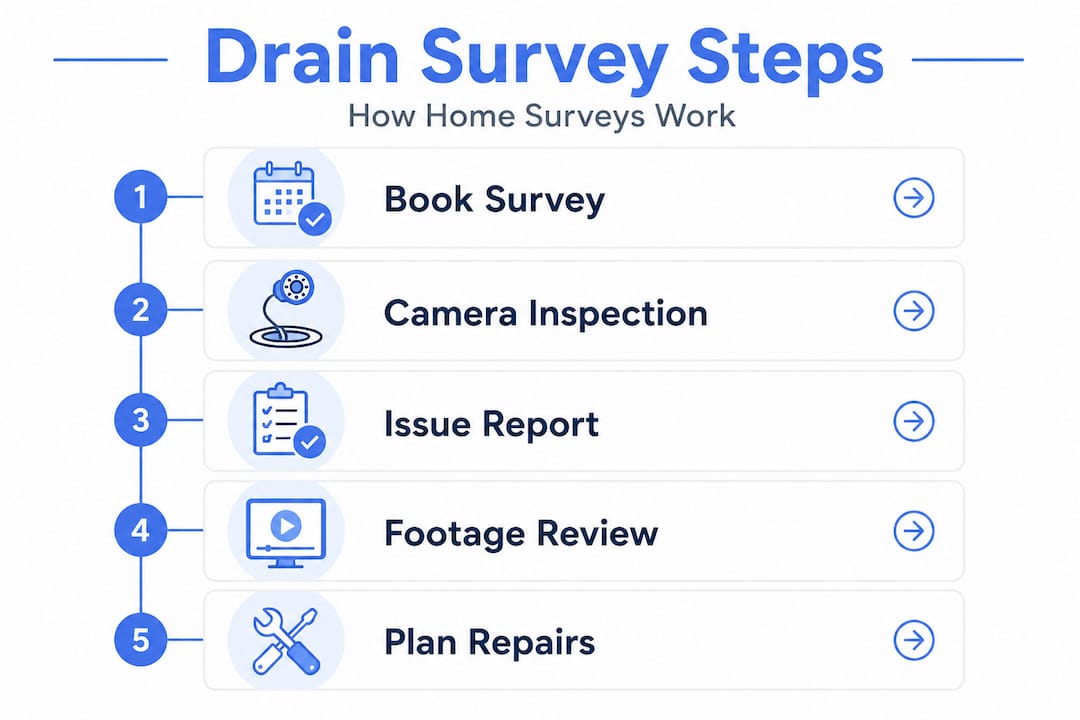
Here is what to expect when you book a professional drain survey:
- Access point preparation: The technician locates a cleanout point or drain inspection chamber to insert the camera.
- Camera insertion: A flexible rod with a high-resolution camera is fed through the pipe system.
- Real-time viewing: You and the technician can watch live footage on a screen as the camera travels through.
- Problem logging: Any issues are recorded with location data so the exact spot above ground can be identified.
- Report and recommendations: You receive a written report, usually with footage, and a clear explanation of any required repairs or further monitoring.
The whole process typically takes one to two hours for a standard residential property. You do not need to move furniture, vacate rooms, or prepare anything beyond ensuring the technician has access to your drainage inspection chambers, usually located outside in the garden or driveway.
Pro Tip: Book your survey in late summer or early autumn, before the heavy rainfall season arrives. Blocked or weakened drains struggle most in wet weather, and identifying issues in advance gives you time to arrange repairs without the urgency of a flooded garden driving up costs.
If you suspect a leak running alongside the drainage issue, combining the survey with professional leak detection in a single visit saves time and often reduces the overall call-out cost.
Comparing drain survey methods and technologies
Understanding the available technologies ensures homeowners make informed choices for their drain surveys.
Not all drain surveys are equal, and it is worth knowing the difference before you book. The technology used directly affects the quality of information you receive.
Camera resolution, reach, and location capability are important considerations when selecting an inspection service. A low-resolution camera might miss a small crack that a high-definition unit would catch clearly. Similarly, a system without locating capability leaves you knowing there is a problem but not exactly where to find it.
| Method | What it does | Best suited for | Limitations |
|---|---|---|---|
| Standard CCTV camera | Records footage of pipe interior | Most residential properties | Relies on picture quality |
| High-definition CCTV | Sharper footage, clearer diagnosis | Older or complex pipe systems | Slightly higher cost |
| Locator technology | Pinpoints problem location above ground | Properties with buried pipes | Needs operator experience |
| Thermal imaging | Detects heat differences to find leaks | Suspected leaks near walls or floors | Less effective underground |
For most UK homes, a high-definition CCTV survey with locating technology is the most practical and informative option. Thermal imaging is a valuable addition when you suspect a leak inside a wall or under a floor but should be considered alongside, not instead of, a camera survey for underground drainage. Learn more about how thermal imaging for leak detection works as a complementary tool.
When asking for quotes, check whether the survey footage is included in the price, whether the technician carries locating equipment, and how quickly you will receive your written report.
A fresh look at drain surveys: avoiding costly surprises through informed choices
There is a pattern we see repeatedly with UK homeowners. They tolerate slow drains for months, tell themselves it is probably just a bit of build-up, and pour another bottle of supermarket drain cleaner down the sink. Then one day the garden floods, the ground starts to sink near the driveway, or a surveyor flags a potential drainage defect during a house sale. And suddenly what could have been a routine repair becomes a crisis.
The uncomfortable truth is that most homeowners do not think about their drains until those drains make them think about them. That is entirely understandable. Drainage is invisible, unexciting, and easy to deprioritise. But it is also one of the most consequential systems in your home. A failed drain can damage your foundations, contaminate your garden, attract pests, and create health hazards. The cost is not just financial.
What drain surveys actually do, beyond finding problems, is remove guesswork from repair planning. Without a survey, a plumber is working from symptoms alone. With one, they know exactly what is wrong, where it is, and what it will take to fix it. That specificity means better quotes, faster repairs, and far fewer nasty surprises once work begins.
Choosing a professional plumber you can trust also matters enormously here. A drain survey is only as useful as the person interpreting it. An experienced, fully qualified technician with the right equipment will give you information you can act on. An inexperienced one with a low-resolution camera might give you footage that raises more questions than it answers.
Treat a drain survey the same way you treat a boiler service or a roof inspection: not as a response to failure, but as a scheduled, sensible part of owning a home. The cost is modest. The savings, when it catches something serious early, can be substantial.
Get expert drain surveys with 777 Plumber
If you have been wondering whether your drains need attention, the honest answer is that a professional inspection will tell you far more than any symptom alone. At 777 Plumber, our fully employed technicians carry out thorough drain surveys using advanced camera technology, providing you with clear footage, a written report, and practical recommendations with no jargon.

We do not use subcontractors, so you always deal with a consistent, accountable team. Whether you are dealing with recurring blockages, slow drains, or want to get ahead of a potential issue before winter, we are ready to help. If you are in the area, our local plumber in Eastfield team can respond quickly and fit around your schedule. Transparent pricing, no call-out fees, and real results. Book online or call us today.
Frequently asked questions
How often should I have a drain survey for my home?
For most UK homes, a drain survey every two to three years is a sensible baseline, though you should book one immediately if you notice slow drainage, recurring smells, or unusual gurgling. Regular inspections identify hidden problems early, saving you from unexpected and costly repairs.
Can a drain survey detect all types of plumbing problems?
Drain surveys are highly effective at identifying internal pipe issues, but they focus on your underground drainage system rather than your entire plumbing network. Video inspection reveals blockages, structural defects and root intrusion in real time, though a separate assessment may be needed for internal pipework or heating systems.
Are drain surveys disruptive or do they require excavation?
In the vast majority of cases, no excavation is needed at all. Video inspection reduces unnecessary labour by locating problems without digging, with the camera fed through an existing inspection chamber or cleanout point.
What are common signs that indicate a drain survey is needed?
Slow drainage, gurgling sounds from toilets or sinks, recurring clogs, unpleasant odours near drains, and pooling water in the garden are all warning signs worth taking seriously. Slow drainage and unusual odours often indicate hidden problems that a camera survey will quickly locate and clarify.