TL;DR:
- Pipe relining repairs pipes from inside without excavation, reducing disruption and cost.
- It is suitable for various pipe issues like cracks, root intrusion, and corrosion.
- Proper assessment, including CCTV surveys, is essential to determine if relining is appropriate.
Most homeowners assume that fixing a damaged pipe means ripping up floorboards, digging through gardens, and living on a building site for days. That assumption is wrong, and it costs people unnecessary stress and money. Pipe relining is a trenchless method that repairs pipes from the inside, without excavation. In this guide, we explain what pipe relining actually is, how to tell if your home needs it, what the process involves from start to finish, and how to care for your pipes once the job is done.
Table of Contents
- What is pipe relining?
- Signs you might need pipe relining
- The pipe relining process explained
- Benefits and limitations of pipe relining
- What to do after your pipes have been relined
- A homeowner's perspective: what most guides leave out about pipe relining
- Next steps: finding reliable pipe relining experts in your area
- Frequently asked questions
Key Takeaways
| Point | Details |
|---|---|
| Pipe relining is trenchless | It repairs pipes from within, avoiding the need for disruptive digging. |
| Ideal for many common issues | It’s especially useful for leaks, cracks, and root-damaged pipes. |
| Quick and long-lasting repair | Most relining jobs are completed within a day and last for decades. |
| Professional inspection is critical | Always seek expert assessment to confirm if relining is suitable for your pipes. |
What is pipe relining?
Pipe relining is a repair technique that fixes damaged or deteriorated pipes without removing them. Instead of digging up the old pipe and replacing it with a new one, a specialist inserts a flexible liner coated with resin directly into the existing pipe. Once in position, the liner is inflated and left to cure, forming a smooth, hard new surface inside the original pipe. The result is essentially a pipe within a pipe.
This approach sits within a category of plumbing repair types known as trenchless technology. Unlike traditional pipe replacement, there is no need to excavate driveways, tear up gardens, or lift floors. The entry and exit points required are usually small and already accessible through existing inspection chambers.
Many homeowners hear the term and instantly assume it is only for major commercial jobs. That is one of several myths worth clearing up before you decide anything.
Common misconceptions about pipe relining:
- It is only for large commercial pipes (it works on domestic drains too)
- It is a temporary fix (properly installed liners last decades)
- It weakens the pipe's flow capacity significantly (diameter reduction is small, usually 6 to 8 millimetres)
- It is more expensive than traditional replacement (in most cases, it is cheaper)
- Any plumber can do it (specialist equipment and training are required)
Here is a straightforward comparison to help you weigh up the two main options:
| Feature | Pipe relining | Traditional replacement |
|---|---|---|
| Excavation required | No | Yes |
| Typical completion time | 1 day | Several days |
| Disruption to home | Minimal | Significant |
| Average UK cost | £500 to £3,000 | £1,000 to £6,000+ |
| Lifespan of repair | 20 to 50 years | 25 to 50 years |
| Suitable for collapsed pipes | No | Yes |
The Which? guide to pipe relining offers further clarity on how the lining materials and resin types differ depending on the pipe's size and condition. The key takeaway is that relining is a genuine, long-term solution for the right situation, not a patch-up job.
Signs you might need pipe relining
With a clear idea of what relining involves, you can now assess whether your plumbing problems might call for this innovative solution. Leaking, slow drains, and recurring blockages can indicate pipe damage that goes beyond a simple blockage or worn washer.
The important thing to understand is that these symptoms often point to structural problems inside the pipe itself, such as cracks, corrosion, or root intrusion. Pouring drain cleaner down repeatedly only masks the issue. Relining addresses the actual cause.
Learn to recognise the signs of spotting pipe leaks early, because catching damage before it worsens gives you far more options. You should also be aware of plumbing emergency signs that suggest urgent action is needed.
Common scenarios where pipe relining is ideal:
- Old clay or pitch-fibre pipes that have cracked with age
- Tree root intrusion into underground drain runs
- Hairline cracks or fractures in plastic or clay pipes
- Persistent slow drainage that does not respond to clearing
- Joints that have shifted or separated over time
- Corrosion inside older metal pipes
- Recurring blockages in the same section of pipework
Knowing about common plumbing problems in UK homes can also help you spot patterns early, before a repairable crack becomes a full collapse.
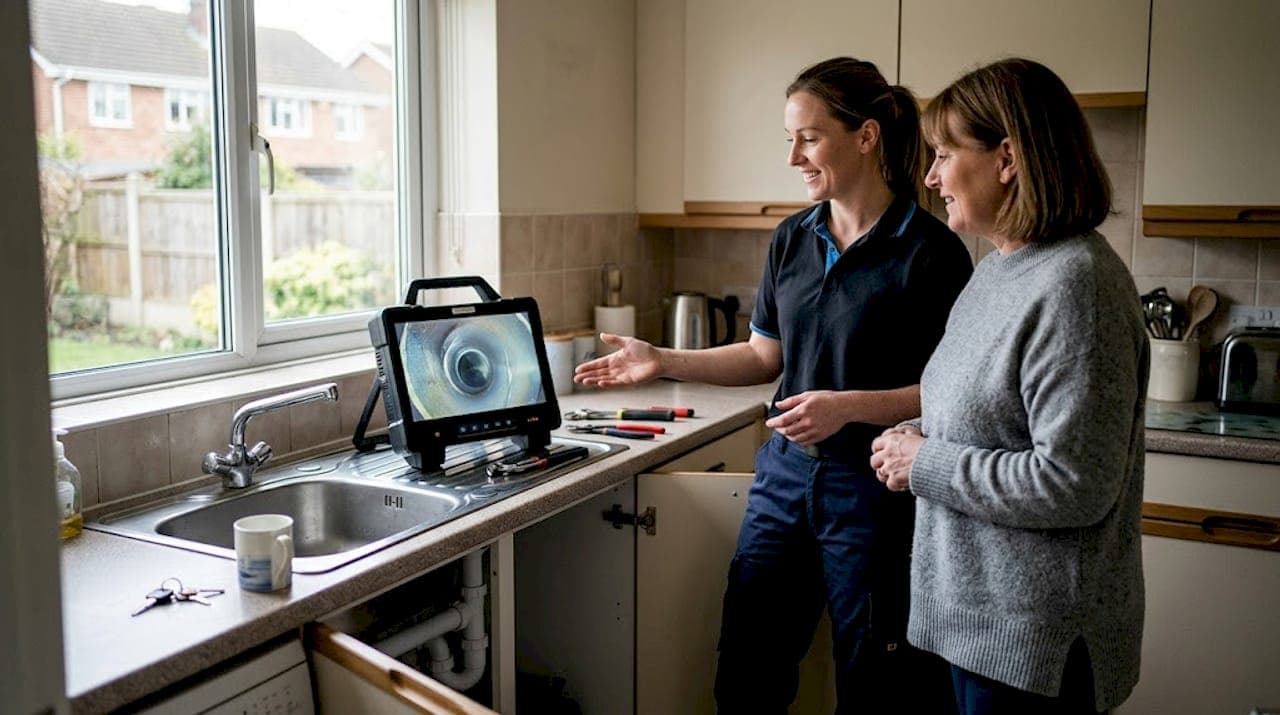
Pro Tip: If you are experiencing any of the above symptoms more than twice a year, book a CCTV drain survey before spending money on repeated clearing or temporary repairs. A camera inspection gives a precise picture of what is happening inside the pipe and whether relining is viable.
The pipe relining process explained
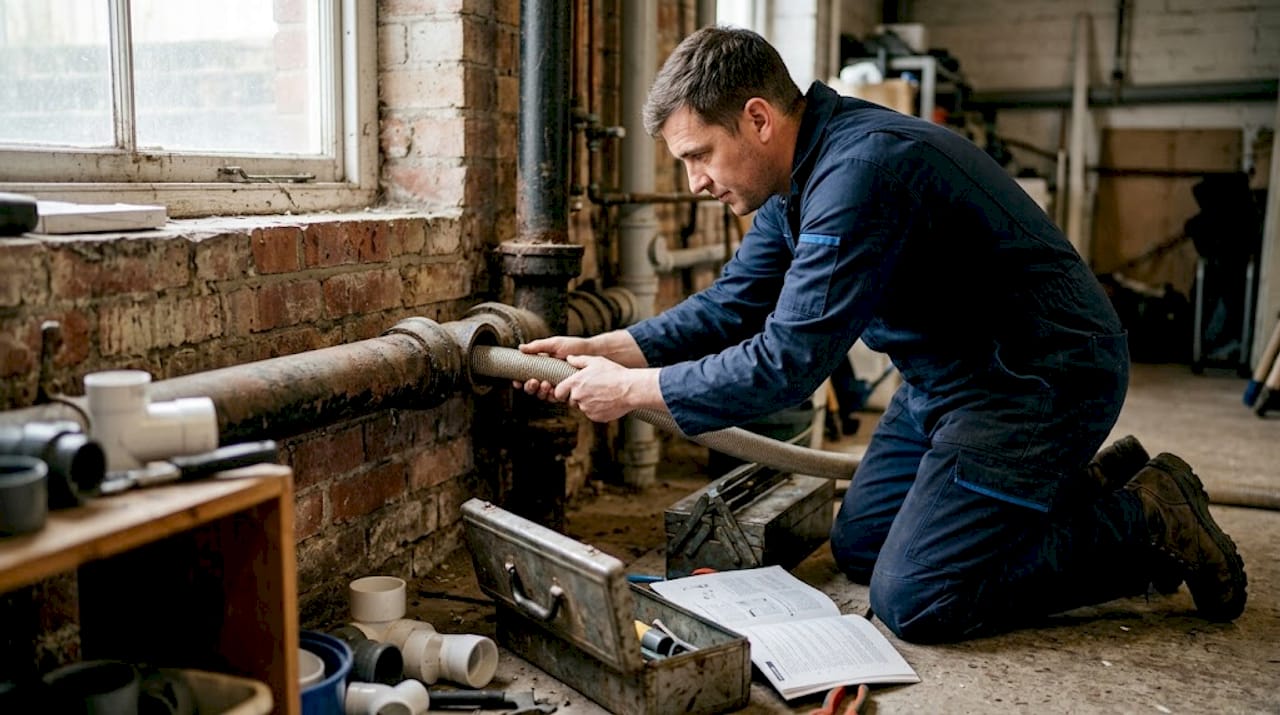
Once you recognise the signs, it helps to understand exactly what happens during a relining job. The relining process often requires only a day and causes minimal disruption, which is one of the reasons it has become so popular with UK homeowners.
Here is how the job typically unfolds:
- CCTV inspection – A small camera is fed into the pipe to assess the damage and confirm that relining is suitable.
- Pipe cleaning – High-pressure water jetting clears the pipe of debris, roots, and scale so the liner can bond properly.
- Liner preparation – The flexible felt or fibreglass liner is cut to size and saturated with resin.
- Liner insertion – The liner is pulled or inverted into position using compressed air or water pressure.
- Curing – Heat, UV light, or ambient temperature causes the resin to harden, usually within two to four hours.
- Final inspection – Another CCTV survey confirms the liner has set correctly and the pipe is flowing freely.
Understanding the full pipework installation process helps you ask informed questions before any work begins. If you are thinking ahead to a broader renovation, knowing how to approach planning plumbing refurbishments will save you time and money.
What to expect on installation day:
| Stage | Typical duration | Notes |
|---|---|---|
| CCTV inspection | 30 to 60 minutes | Confirms suitability |
| Jetting and cleaning | 1 to 2 hours | May vary with blockage severity |
| Liner insertion and curing | 2 to 4 hours | Resin type affects cure time |
| Final inspection | 30 minutes | Checks flow and bond quality |
| Total job time | 4 to 8 hours | Most jobs finish within one day |
Benefits and limitations of pipe relining
Having seen the process, you can weigh up whether relining fits your needs by considering its real-world strengths and its limits.
Main benefits:
- No digging – Your garden, driveway, and floors stay intact
- Fast turnaround – Most domestic jobs are done within a single working day
- Long-lasting repair – Liners commonly last between 20 and 50 years
- Cost-effective – Avoiding excavation reduces labour costs significantly
- Eco-friendly – Less material waste and no ground disruption
- Improved flow – The smooth inner surface often drains better than the original pipe
"Relined pipes create a jointless, seamless surface that resists future root intrusion and corrosion far better than patched or replaced sections." This is why many drainage specialists consider it a preferred first option for cracked or root-damaged runs.
However, relining lasts decades but is not suitable for totally collapsed pipes. If a pipe has completely caved in, there is no structural support for the liner to bond to, and traditional excavation becomes unavoidable. Similarly, very small pipes or those with severe misalignment may not accommodate the liner equipment.
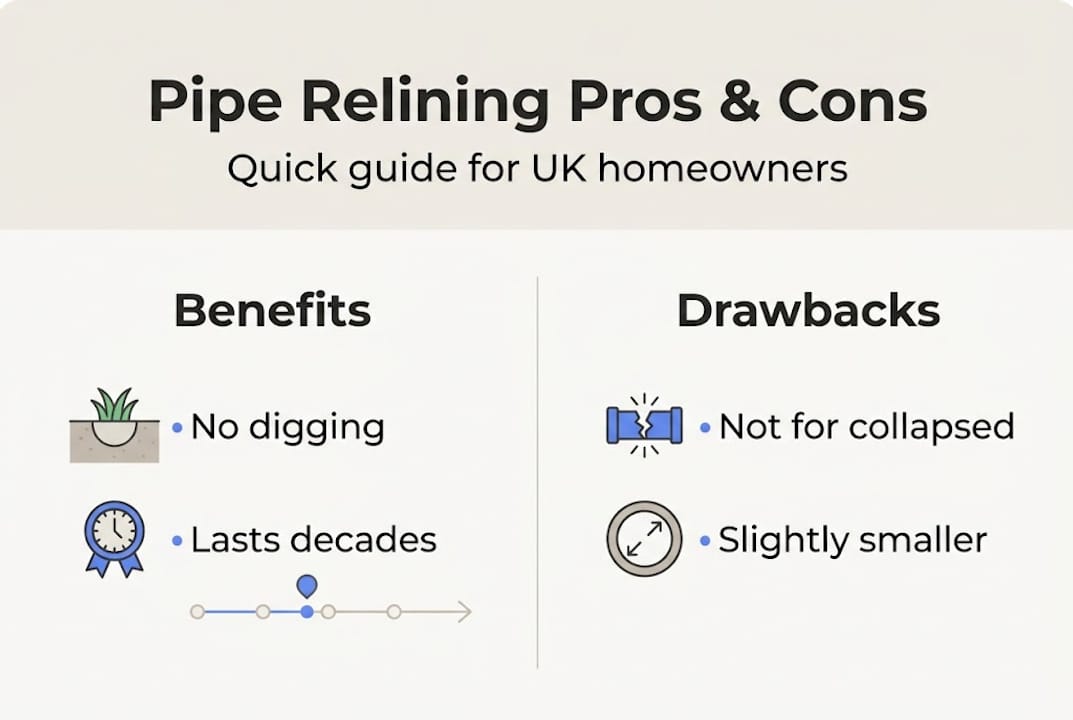
The slight reduction in internal diameter is rarely a practical problem for household drains, but it is worth discussing with your engineer before proceeding.
Pro Tip: Never skip the professional assessment. The decision to reline should always follow a CCTV survey. Knowing why using a professional plumber matters will help you avoid the costly mistake of choosing a solution before confirming it is appropriate.
What to do after your pipes have been relined
After your relining is complete, a little attention can help your pipes last for decades. Post-relining maintenance is simple, but vigilance prevents future problems, and most homeowners find it far less demanding than they expect.
The newly cured liner is smooth and resistant, but your habits still influence how long it performs well. Certain chemicals and practices can degrade the resin over time or cause build-up that restricts flow.
Post-relining care checklist:
- Avoid pouring harsh chemical drain cleaners down relined pipes
- Do not flush wet wipes, cooking fat, or other non-degradables
- Run hot water through kitchen drains regularly to keep grease moving
- Listen for any gurgling sounds that might suggest a new partial blockage
- Schedule an annual visual check if you have older pipework elsewhere in the system
- Book a follow-up CCTV survey every five years as a precaution
Understanding the plumber's role in home maintenance goes beyond emergency callouts. Routine professional checks catch issues early. If you ever notice a drop in drainage speed or detect unusual odours after relining, act quickly rather than waiting. Guidance on fixing a leaking pipe can also help you understand when an issue is minor and when it requires a specialist.
The good news is that most homeowners report zero problems for many years after a professionally completed reline. The investment in aftercare is genuinely small compared to the cost of ignoring early warning signs.
A homeowner's perspective: what most guides leave out about pipe relining
Most articles about pipe relining read like brochures. They list the benefits, describe the steps, and leave you feeling confident. What they rarely mention is this: pipe relining is not always the right answer, and pushing ahead without proper diagnostics can waste your money.
We have seen homeowners convinced by a quick inspection and a persuasive quote, only to discover later that their pipe had partially collapsed and the liner had not bonded correctly. The result was a second repair job that cost more than the original replacement would have.
The smartest thing you can do before agreeing to any relining work is insist on a full CCTV survey report, not just a verbal assessment. Ask to see the footage. A reputable firm will show you exactly what they found and explain why relining is appropriate for your specific situation.
If something feels rushed or the quote arrives without a survey, get a second opinion. Our advice on choosing a UK plumber walks you through the questions worth asking before any work begins. Pipe relining, done well, is excellent. Done carelessly, it is an expensive lesson.
Next steps: finding reliable pipe relining experts in your area
If your drains have been giving you trouble, or you simply want peace of mind about the condition of your pipes, now is a good time to take action. Getting a professional assessment costs very little compared to the damage a worsening pipe problem can cause.

At 777 Plumber, our fully employed, in-house team carries out CCTV surveys and pipe repair work with transparent pricing and no call-out charges. Whether you are in need of a Hotwells plumber for pipe relining or looking for Eastfield plumbing experts, we cover local areas with the same consistent standard of service. Book online today or call us to discuss what your pipes actually need.
Frequently asked questions
How long does pipe relining last?
Pipe relining can extend pipe life by decades, with most liners lasting between 20 and 50 years depending on material quality and how well they were installed.
Can all pipes be relined?
Totally collapsed pipes cannot be relined as there is no structural support for the liner. Pipes must retain some integrity and be accessible for the process to work.
Is pipe relining more affordable than pipe replacement?
Pipe relining is often less expensive because it removes the need for excavation, which is where the bulk of traditional replacement costs come from.
Is there much disruption to the home during relining?
Pipe relining does not require digging and is typically completed within a single day, making it far less disruptive than traditional pipe replacement methods.