TL;DR:
- Regular autumn inspections can prevent costly winter plumbing failures caused by frozen or burst pipes.
- Insulating exposed pipes and outdoor taps reduces the risk of freezing damage and subsequent repairs.
Every year, thousands of UK homeowners face the same preventable nightmare: burst pipes, failed boilers, and flooded rooms caused by nothing more than skipped seasonal checks. The cost of emergency plumbing repairs in winter can easily reach hundreds or even thousands of pounds, yet most of these emergencies are entirely avoidable. A few hours of preparation in autumn can protect your home throughout the coldest months, saving you money, stress, and the misery of a cold house at the worst possible time.
Table of Contents
- Assess your plumbing risks before the first frost
- Insulate exposed pipes and water tanks
- Protect outdoor taps and garden plumbing
- Service your boiler and bleed your radiators
- Create your personal winter plumbing checklist
- The real cost of ignoring winter plumbing prep (and what actually works))
- Get help with professional plumbing support in winter
- Frequently asked questions
Key Takeaways
| Point | Details |
|---|---|
| Act early | Prepare your plumbing before the first frost to avoid expensive winter emergencies. |
| Insulate key zones | Focus insulation efforts on exposed pipes and outdoor taps for maximum protection. |
| Maintain heating systems | Service your boiler and bleed radiators each year to prevent winter breakdowns. |
| Use a checklist | Follow a step-by-step list to cover all plumbing prep tasks and ensure nothing is overlooked. |
Assess your plumbing risks before the first frost
Most plumbing disasters don't happen without warning. They build gradually from small vulnerabilities that nobody notices until a hard frost turns a minor issue into a major emergency. Catching these problems early is what separates a straightforward winter from a very expensive one.
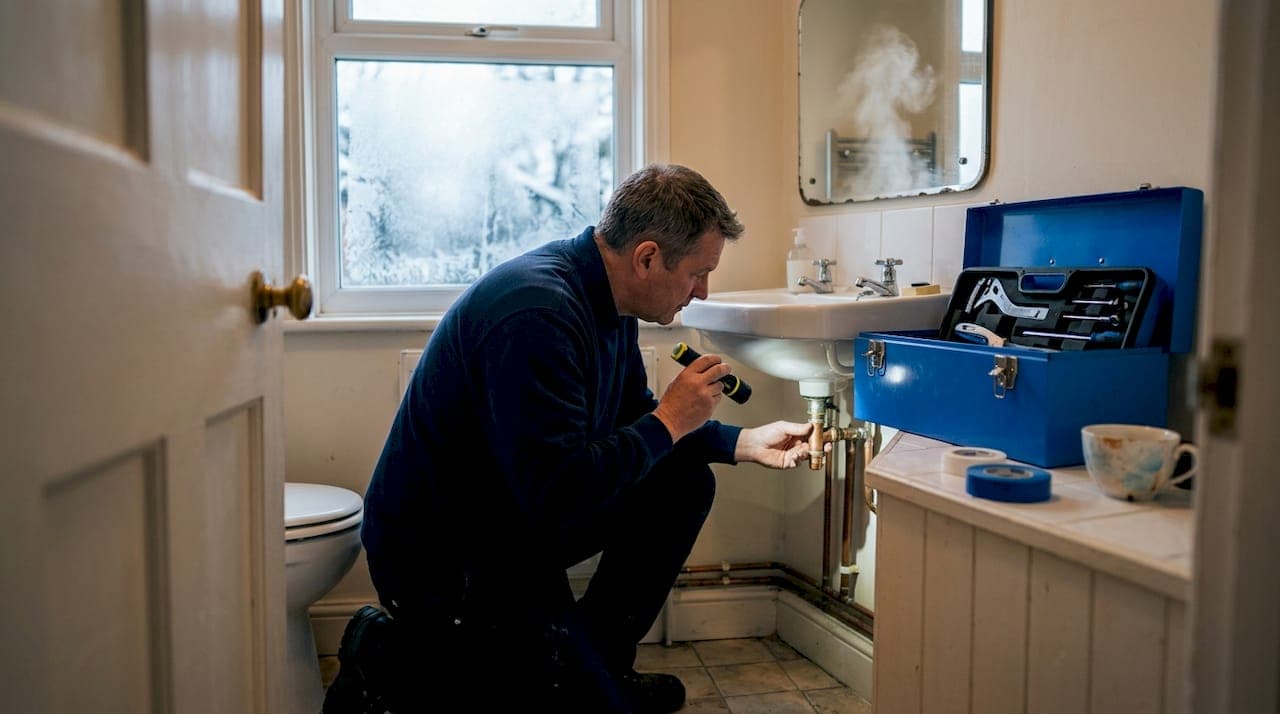
Start your inspection well before October ends. Walk through your home and look specifically at areas where pipes run through unheated spaces. The most common problem spots in UK homes include:
- Loft pipes and tanks: These are frequently uninsulated and completely exposed to the cold. A single freezing night can split a loft pipe wide open.
- Garage pipework: If your washing machine or utility sink is in an attached or detached garage, the pipes feeding them are at serious risk.
- Under kitchen and bathroom sinks: Cold draughts from outside can make under-sink areas surprisingly cold, particularly in older properties.
- Visible joints and bends: Water collects at low points and bends. These are the first places to freeze and the last to thaw.
- Outdoor tap connections: The pipe running to an outside tap often passes through an external wall and is minimally insulated.
When you're checking these areas, look beyond the obvious. Spotting pipe leaks at an early stage means watching for damp patches on walls or ceilings, discolouration on floorboards, or any soft patches in plaster. Even a small, slow drip can weaken a joint enough that it fails completely once the temperature drops and the pipe contracts.
Also look for missing or crumbling insulation. Foam lagging that has been there for fifteen years may look intact but crumbles when squeezed. Replace it without hesitation — foam lagging is cheap, and the time it takes to fit it is minimal compared to the time it takes to deal with a burst pipe.
If you're unsure what to look for, reviewing the signs of plumbing emergencies before you start your walkthrough gives you a much clearer picture of what counts as a warning sign versus normal wear.
Pro Tip: Set a calendar reminder for the 1st of October every year. A 30-minute inspection of your loft, garage, and external pipes before the first cold snap is one of the highest-value tasks you can do as a homeowner.
Insulate exposed pipes and water tanks
Once you've spotted potential issues, the next priority is effective insulation for exposed parts of your plumbing system. Insulation is your first line of defence, and the good news is that even a modest effort dramatically reduces your risk.
Here's how to insulate your pipes and tanks properly:
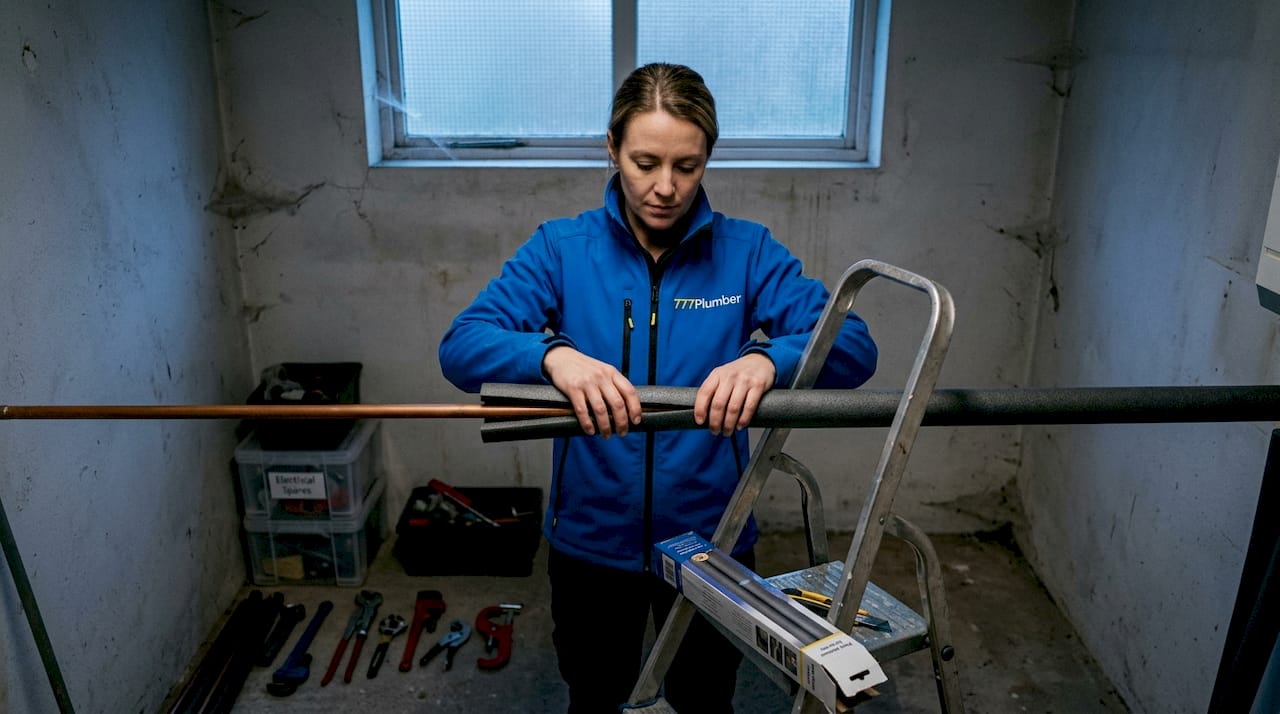
- Buy the right foam lagging. Foam pipe lagging comes in various diameters. Measure your pipe's outer diameter before you head to the builders' merchant. A loose-fitting sleeve loses most of its effectiveness.
- Cut lagging to length. Use a sharp knife or scissors. Cut at a 45-degree angle at joints and bends so the sections overlap cleanly, leaving no gaps.
- Secure with tape. Use waterproof tape at every join and around any split in the foam. Even a small gap at a joint can let cold air straight in.
- Insulate the cold water tank. If you have a cold water tank in your loft, fit a purpose-made insulation jacket around it. Do not insulate the floor beneath the tank — you want a small amount of rising warmth from the rooms below to keep the tank above freezing.
- Check the overflow pipe. This short pipe often exits through the loft wall and is one of the most neglected items. Insulate right up to the wall and consider fitting a mesh cover to prevent cold air blowing back inside.
When choosing insulation materials, it helps to understand the options available:
| Material | Best use | Ease of fitting | Cost | Durability |
|---|---|---|---|---|
| Foam pipe lagging | Standard household pipes | Very easy | Low | 5 to 10 years |
| Pre-slit foam sleeves | Visible pipes and loft runs | Easy | Low | 5 to 10 years |
| Fibreglass wrap | Complex pipe arrangements | Moderate | Medium | 10 to 15 years |
| Mineral wool lagging | High-temperature pipe runs | Difficult | Higher | 15 to 20 years |
For most UK homes, foam lagging or pre-slit sleeves cover all the bases. They're quick to fit, inexpensive, and effective in normal UK winter conditions. Save the more robust materials for specific situations, such as a pipe running through a particularly draughty outbuilding.
Following a thorough pipe repair checklist before and after you insulate ensures nothing is missed.
Before you invest time in planning a plumbing refurbishment, consider whether simple insulation and maintenance work might solve your current problems without the upheaval of a full replumb.
Pro Tip: Pay extra attention to joints, bends, and any tap connections when applying lagging. These are the areas where heat escapes most quickly and where freezing occurs first.
Protect outdoor taps and garden plumbing
Beyond indoor pipes, don't overlook the vulnerable plumbing outside your home. Outdoor taps and garden water supplies are almost always the first to freeze in a UK cold snap, and many homeowners simply forget about them until it's too late.
Outdoor taps are fed by a pipe that passes through an exterior wall. When that pipe freezes, the ice expands and can crack the pipe, the tap fitting, or both. Repairs to external tap pipework often require opening up the wall, which is far more disruptive than the simple seasonal precautions that prevent the problem.
Here's what to do before the cold arrives:
- Locate the isolation valve. Most outdoor taps have a separate isolation valve on the internal pipe, usually under the kitchen sink or in a utility room. Turn this off when the tap won't be used until spring.
- Open the outdoor tap fully. After turning off the isolation valve, open the outdoor tap and leave it open. This allows any residual water in the pipe to drain out by gravity, removing the water that would otherwise freeze.
- Disconnect hoses and fittings. Water left in a connected hose can freeze and force ice back into the tap body. Remove all hose connectors and store them inside.
- Fit a tap cover. These foam insulating covers cost a few pounds and slip over the tap body. They're especially useful if your isolation valve is difficult to access or you prefer an extra layer of protection.
- Drain garden irrigation pipes. If you have any permanent irrigation systems, drain and blow through all the pipework before the first frost.
If you're dealing with a tap that's already partly frozen or a fitting that looks damaged, reviewing DIY pipe repair guidance first will help you understand what you can fix yourself and where you need a professional.
Understanding the types of plumbing repairs UK homes typically require in winter also helps you make informed decisions about when to act immediately and when you have time to plan.
Pro Tip: After shutting off the supply to an outdoor tap, leave the tap itself in the slightly open position overnight. This releases any residual pressure in the line and prevents ice from forming in the tap body itself.
Service your boiler and bleed your radiators
Maintaining what keeps your home warm is just as vital as protecting the pipes themselves. A well-serviced boiler running through clean radiators is far less likely to let you down during a January cold snap.
Boiler servicing is not optional maintenance — it's essential. Annual plumbing checks covering the heating system can identify worn components, pressure problems, and efficiency losses before they become failures. Industry estimates suggest that up to 15% of UK winter heating breakdowns involve systems that have missed regular servicing. That's thousands of households spending nights in cold homes for the sake of an annual service appointment.
Book your boiler service in September or early October at the latest. Engineers are much harder to schedule in November and December when demand peaks. During a service, a Gas Safe registered engineer will check the heat exchanger, burner, flue, seals, and controls. They'll also check the system pressure and look for signs of sludge or corrosion in the system.
Between professional services, there are several tasks you can carry out yourself:
- Bleed your radiators. Cold spots at the top of a radiator mean trapped air is blocking hot water from filling the whole panel. Use a radiator key to open the bleed valve until you hear the hissing of air escaping, then close it once a small drip of water appears.
- Check the boiler pressure. Most combi boilers run best between 1.0 and 1.5 bar when cold. If yours reads below 1.0 bar, top it up via the filling loop — your boiler manual explains exactly how to do this.
- Test your programmer and thermostat. Set the heating to come on and verify that each zone responds correctly. Replace thermostat batteries if needed.
- Check for unusual boiler noises. Banging, kettling, or gurgling sounds usually indicate scale build-up or a circulation issue. Report these to your engineer.
- Ensure boiler vents and flues are clear. Leaves, bird nests, and general debris can block external flues, causing boilers to cut out on safety grounds.
If your boiler does fail during a cold spell, knowing how to handle an emergency plumbing situation calmly will help you minimise damage while you wait for a professional.
Create your personal winter plumbing checklist
You now understand what to look for and maintain, so let's organise these actions into a straightforward plan you can follow each year.
| Task | Ideal timing | DIY or professional? |
|---|---|---|
| Inspect loft pipes and tanks | September to October | DIY |
| Fit or replace pipe lagging | October | DIY |
| Insulate cold water tank | October | DIY |
| Service the boiler | September to October | Professional (Gas Safe) |
| Bleed radiators | October to November | DIY |
| Shut off and drain outdoor taps | Before first frost | DIY |
| Fit outdoor tap covers | October | DIY |
| Check for slow leaks and drips | Any time | DIY initially, pro if needed |
| Test heating programmer | October | DIY |
| Professional pipe inspection | Every two to three years | Professional |
Working through this table as a checklist each autumn means nothing gets missed. Tick each item off once done and note any concerns that need professional attention.
"The homeowners who never face winter plumbing emergencies aren't lucky. They're simply the ones who check the basics every autumn before the cold arrives. Ten years of experience tells us that consistent, simple preparation eliminates the vast majority of call-outs we receive in January and February."
For burst pipes or urgent leaks that occur despite your best preparation, having a clear emergency repair plan ready means you can act fast, reduce water damage, and contact the right professionals without panic. Keep your stopcock location noted somewhere accessible and make sure all adults in the household know where it is.
The real cost of ignoring winter plumbing prep (and what actually works)
Here's the uncomfortable truth that most articles don't say plainly: a great many UK homeowners skip annual plumbing preparation because they assume their home insurance will cover the cost if something goes wrong. That assumption is wrong in ways that matter.
Home insurance policies frequently exclude damage caused by failure to maintain your property. A burst pipe in an uninsulated loft — especially if the pipe had no lagging at all — can be classified as a maintenance failure rather than an insurable event. Even where a claim is accepted, the excess, the disruption, and the loss of your no-claims record make it far more expensive than prevention.
The practical signs of plumbing emergencies that experienced plumbers recognise are almost always visible weeks before a failure. A slow drip under a sink, a small damp patch on a wall, a radiator that never quite heats evenly. These aren't minor annoyances. They're the plumbing system asking for attention before it demands it.
We've seen homeowners face two or three separate emergencies in a single winter because one initial failure went unaddressed and weakened connected parts of the system. A £150 repair in October can prevent a £600 emergency in December and a further £400 repair in February. The maths is not complicated.
Relying on clever gadgets like frost stat thermostats or smart water leak detectors is worthwhile as a supplement, but it is never a substitute for hands-on inspection and basic insulation. Technology fails. Foam lagging around a pipe in your loft does not.
Keeping a copy of pipe repair essentials accessible means that when something does need attention, you can assess the situation quickly and decide whether it's within your DIY capability or needs a call to us.
Pro Tip: Set two annual reminders on your phone: one in September to book your boiler service, and one in October to complete your full plumbing inspection. That's it. Those two prompts, acted upon consistently, will save you more money than any insurance upgrade or smart home device.
Get help with professional plumbing support in winter
If working through this checklist has revealed issues you're not comfortable tackling yourself, or if it's simply time for a professional set of eyes on your plumbing system, don't wait until the first freeze to act.

At 777 Plumber, our fully employed team of skilled plumbers is ready to help UK homeowners get their properties winter-ready quickly and affordably. We don't charge call-out fees, we don't use subcontractors, and we arrive when we say we will. Whether you need pipe lagging fitted, a leak traced, or a boiler service arranged, we're the team to call. If you're based locally, our plumber in Eastfield service offers fast-response support right on your doorstep. Book online today and face winter with complete confidence.
Frequently asked questions
What temperature will pipes freeze in the UK?
Pipes usually begin to freeze when external temperatures fall below zero degrees Celsius for extended periods. Prolonged sub-zero nights are the highest-risk time, and burst pipe risks increase significantly with each additional hour of freezing conditions.
How can I tell if my pipes are at risk before winter?
Look for pipes in unheated or exposed areas, and check for existing leaks, moisture, or lack of insulation. Reviewing the signs of plumbing emergencies before your inspection helps you know exactly what you're looking for.
Should I insulate all pipes or just exposed areas?
Prioritise insulating pipes in lofts, garages, and exterior walls, but addressing all exposed pipes offers the best protection. The types of repairs most common in winter are almost always linked to pipes that missed seasonal insulation.
How often should I service my boiler before winter?
It's best to service your boiler once a year, ideally before the coldest weather begins. Annual plumbing checks that include the heating system significantly reduce the likelihood of an unexpected breakdown in December or January.
Can I winterise plumbing myself or do I need a plumber?
Many tasks are perfectly manageable yourself, including fitting lagging, bleeding radiators, and draining outdoor taps. For pipe repairs, persistent leaks, or boiler servicing, a step-by-step professional approach is the safer and more reliable option.